
Survey Shows 51 Percent of U.S. Crypto Users Misunderstand Tax Obligations
Here's what it means for you.
If you’re involved in cryptocurrency trading in the U.S., understanding your tax obligations is crucial to avoid penalties.
Why it matters
The confusion over taxable events in cryptocurrency trading can lead to significant financial repercussions for users and complicate IRS compliance.
What happened (in 30 seconds)
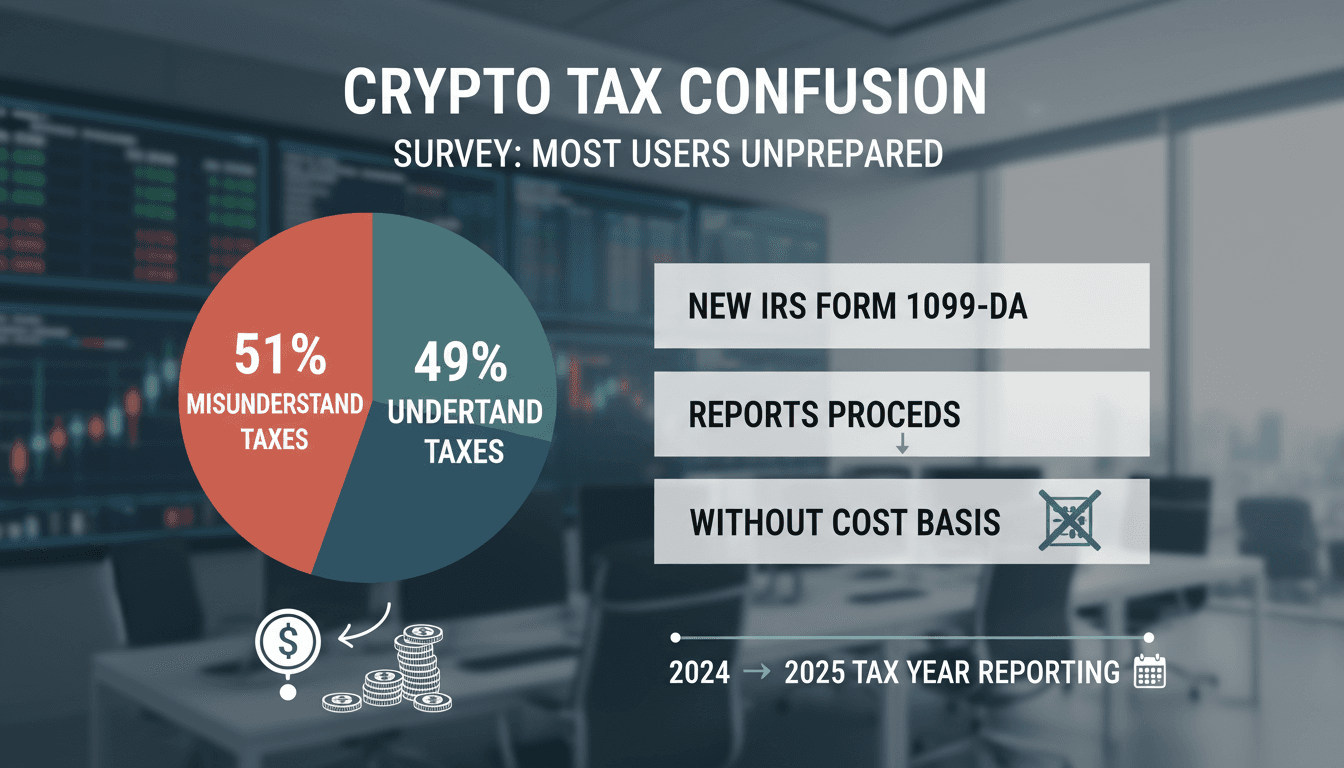
- Survey findings: A Coinbase and CoinTracker survey revealed that only 49% of U.S. crypto users correctly identify that taxes apply upon asset sales.
- Widespread misunderstanding: Despite 74% being aware of crypto taxability, 61% were unaware of the new IRS Form 1099-DA requirements.
- Complex compliance landscape: Users average 2.5 wallets and 83% engage in self-custody, complicating their ability to track taxable events.
The context you actually need
- Taxation history: Since 2014, the IRS has treated cryptocurrencies as property, making sales, trades, and certain uses taxable events.
- New reporting requirements: The 2021 Infrastructure Investment and Jobs Act expanded broker reporting obligations, leading to the introduction of Form 1099-DA for 2025 transactions.
- User challenges: The decentralized nature of cryptocurrency and the rise of self-custody wallets make it difficult for users to maintain accurate records for tax reporting.
What's really happening
The Coinbase and CoinTracker survey, conducted in September-October 2025, highlights a significant gap in understanding among U.S. cryptocurrency users regarding their tax obligations. While 74% of respondents were aware that cryptocurrencies are taxable, only 49% correctly identified that taxes apply specifically when assets are sold. This confusion is particularly concerning given the evolving regulatory landscape, which has introduced new reporting requirements through IRS Form 1099-DA.
The IRS has treated cryptocurrencies as property since 2014, meaning that any sale or trade of these assets is a taxable event. However, the recent expansion of broker reporting obligations under the Infrastructure Investment and Jobs Act has added layers of complexity. The Form 1099-DA, which reports gross proceeds from cryptocurrency transactions, does not include the cost basis, leaving users responsible for tracking their own gains and losses. This is particularly challenging for individuals who hold assets across multiple platforms—averaging 2.5 wallets per user—and engage in self-custody, with 83% of respondents indicating they manage their own assets.
The implications of this confusion are significant. Users who fail to accurately report their taxable events risk penalties and audits from the IRS, which could lead to financial strain. Moreover, the lack of clarity around the new reporting requirements may deter potential investors from entering the cryptocurrency market, fearing the complexities of compliance. The survey findings have prompted calls from industry leaders, such as Coinbase VP Lawrence Zlatkin and CoinTracker CPA Shehan Chandrasekera, for specialized software and AI tools to assist users in navigating their tax obligations.
As the cryptocurrency market continues to grow, the need for clear guidance and education on tax responsibilities becomes increasingly urgent. The survey results underscore the importance of proactive compliance measures and the potential for technological solutions to bridge the knowledge gap.
Who feels it first (and how)
- Individual traders: Those actively buying and selling cryptocurrencies face the most immediate risk of penalties due to misunderstanding tax obligations.
- Tax professionals: Accountants and tax advisors may experience increased demand for guidance on cryptocurrency taxation as clients seek clarity.
- Regulatory bodies: The IRS and other regulatory agencies may need to allocate more resources to address compliance issues stemming from widespread misunderstanding.
What to watch next
- Increased regulatory scrutiny: Watch for potential IRS audits targeting cryptocurrency users, which may rise as the agency seeks to enforce compliance.
- Emergence of tax software solutions: Monitor the development of specialized tools designed to help users track their taxable events more accurately.
- Market reactions to compliance changes: Keep an eye on how the cryptocurrency market responds to new regulations and reporting requirements, which could influence trading behavior.
The IRS treats cryptocurrencies as property, making sales and trades taxable events.
Increased demand for tax compliance tools and services will emerge as users seek to navigate their obligations.
The long-term impact of these tax reporting requirements on cryptocurrency market participation remains uncertain.
Frequently Asked Questions
- Why it matters?
- The confusion over taxable events in cryptocurrency trading can lead to significant financial repercussions for users and complicate IRS compliance.
- What happened (in 30 seconds)?
- Survey findings: A Coinbase and CoinTracker survey revealed that only 49% of U.S. crypto users correctly identify that taxes apply upon asset sales. Widespread misunderstanding: Despite 74% being aware of crypto taxability, 61% were unaware of the new IRS Form 1099-DA requirements. Complex compliance landscape: Users average 2.5 wallets and 83% engage in self-custody, complicating their ability to track taxable events.
- What's really happening?
- The Coinbase and CoinTracker survey, conducted in September-October 2025, highlights a significant gap in understanding among U.S. cryptocurrency users regarding their tax obligations. While 74% of respondents were aware that cryptocurrencies are taxable, only 49% correctly identified that taxes apply specifically when assets are sold. This confusion is particularly concerning given the evolving regulatory landscape, which has introduced new reporting requirements through IRS Form 1099-DA. The
- Who feels it first (and how)?
- Individual traders: Those actively buying and selling cryptocurrencies face the most immediate risk of penalties due to misunderstanding tax obligations. Tax professionals: Accountants and tax advisors may experience increased demand for guidance on cryptocurrency taxation as clients seek clarity. Regulatory bodies: The IRS and other regulatory agencies may need to allocate more resources to address compliance issues stemming from widespread misunderstanding.
- What to watch next?
- Increased regulatory scrutiny: Watch for potential IRS audits targeting cryptocurrency users, which may rise as the agency seeks to enforce compliance. Emergence of tax software solutions: Monitor the development of specialized tools designed to help users track their taxable events more accurately. Market reactions to compliance changes: Keep an eye on how the cryptocurrency market responds to new regulations and reporting requirements, which could influence trading behavior.
Covers blockchain, cryptocurrency news, project analysis, and market insights.
"Cointelegraph is a leading crypto-focused media outlet known for timely news, analysis, and educational content related to blockchain and digital assets."
— A47 Editor
Coinbase survey finds many crypto users still misunderstand taxes
A recent survey conducted by Coinbase and CoinTracker revealed that less than half of cryptocurrency users correctly understand the tax implications of their digital assets, highlighting a significant gap in knowledge regarding when these assets beco...
Bitcoin news, technical analysis, and forecasts across crypto markets.
"NewsBTC covers Bitcoin news, technical analysis, and forecasts across crypto markets and major blockchain projects."
— A47 Editor
Over Half Of US Crypto Users Don’t Understand This Scary Tax Rule
A recent survey by Coinbase revealed that over half of U.S. cryptocurrency users do not understand the tax implications of their digital assets, mistakenly believing that simple transfers trigger tax events. This confusion persists despite the IRS's ...
Covers blockchain, cryptocurrency news, project analysis, and market insights.
"CoinDesk is a well-established cryptocurrency and blockchain news provider, offering comprehensive insights, market data, and industry research."
— A47 Editor
Coinbase survey finds over half of investors don’t understand crypto tax
A recent survey conducted by Coinbase and CoinTracker revealed that only 49% of cryptocurrency investors understand that crypto is taxable whenever it is sold, highlighting a significant gap in knowledge regarding tax implications.