
Republic of Congo presidential election set for March 15 with Sassou Nguesso seeking extended rule
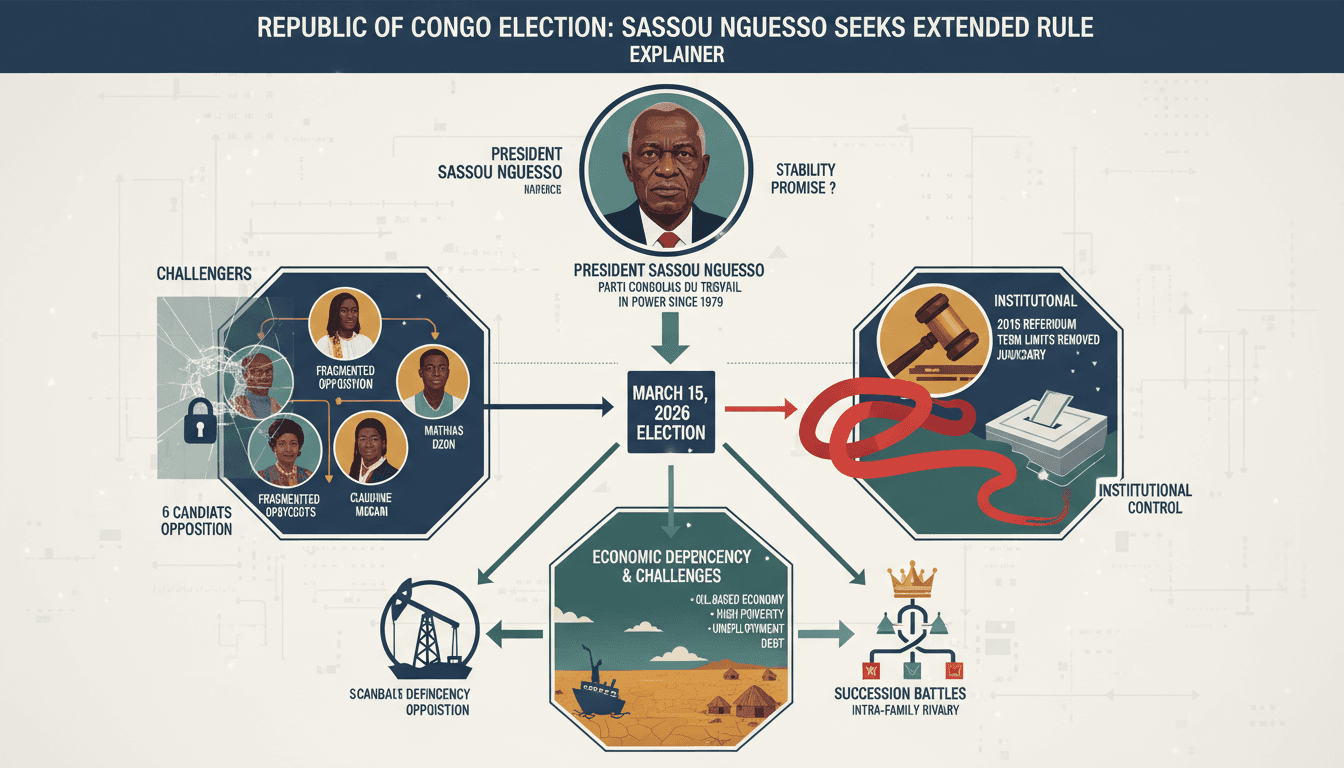
Here's what it means for you.
Understanding the political landscape in the Republic of Congo can provide insights into regional stability and energy supply chains that impact global markets.
Why it matters
The outcome of this election could shape the future of oil exports and governance in a country heavily reliant on its petroleum sector.
What happened (in 30 seconds)
- Incumbent President Denis Sassou Nguesso is expected to secure re-election on March 15, 2026, amid a backdrop of political repression.
- Seven candidates are contesting the election, but opposition is weakened by jailed leaders and a boycott from some parties.
- The Republic of Congo faces significant economic challenges, including a 50% poverty rate and a reliance on oil for 80% of its exports.
The context you actually need
- Denis Sassou Nguesso has ruled the Republic of Congo since 1997, following a civil war, and previously held power from 1979 to 1992.
- Political repression is prevalent, with a Freedom House score of 17 out of 100, indicating significant restrictions on civil liberties.
- Economic dependence on oil has left the country vulnerable, with production levels between 236,000 and 252,000 barrels per day and a high unemployment rate of 40%.
What's really happening
The 2026 presidential election in the Republic of Congo is set against a backdrop of entrenched political power and economic vulnerability. Denis Sassou Nguesso, who has been in power for nearly three decades, is likely to win re-election due to a combination of political repression and a fragmented opposition. The opposition is significantly weakened, with key figures like Jean-Marie Michel Mokoko serving lengthy prison sentences and others boycotting the election. This creates an environment where dissent is stifled, and the incumbent faces little real challenge.
The political landscape is compounded by economic realities. The Republic of Congo is heavily reliant on oil, which accounts for 80% of its exports. This dependency makes the country susceptible to fluctuations in global oil prices and highlights the need for economic diversification. With a poverty rate of 50% and unemployment at 40%, the majority of the population faces significant economic challenges, which could lead to social unrest if not addressed.
The recent elimination of term limits and age caps through a 2015 referendum has further solidified Sassou Nguesso's grip on power, allowing him to sidestep potential succession challenges. His son, Denis-Christel Sassou Nguesso, is already being positioned as a potential successor, indicating a dynastic approach to governance that could stifle democratic processes.
The upcoming election is not just a political event; it is a litmus test for the country's future. Analysts predict that voter apathy will be high, particularly among the youth, who feel disillusioned by the political process. This could lead to low turnout rates, which would further legitimize Sassou Nguesso's rule despite a lack of genuine support. The government has also closed borders during the election period, raising concerns about potential protests and civil unrest.
In summary, the 2026 election is a critical juncture for the Republic of Congo, with implications for governance, economic stability, and social cohesion. The interplay of political repression, economic dependence on oil, and the potential for succession challenges will shape the country's trajectory in the years to come.
Who feels it first (and how)
- Voters: Disillusioned citizens may feel apathetic, leading to low turnout and a lack of representation.
- Opposition parties: They face significant challenges in mobilizing support due to repression and internal divisions.
- Oil sector workers: Economic instability may affect job security and wages in an industry that is the backbone of the economy.
What to watch next
- Voter turnout rates: Low participation could signal widespread discontent and potential unrest.
- Protests or civil unrest: Increased public demonstrations could indicate a backlash against the election results and governance.
- Succession signals: Watch for any moves by Denis-Christel Sassou Nguesso that could indicate a planned transition of power.
Sassou Nguesso is expected to win the election.
Political repression will continue to stifle opposition and dissent.
The potential for social unrest and its impact on governance remains uncertain.
Frequently Asked Questions
- Why it matters?
- The outcome of this election could shape the future of oil exports and governance in a country heavily reliant on its petroleum sector.
- What happened (in 30 seconds)?
- Incumbent President Denis Sassou Nguesso is expected to secure re-election on March 15, 2026, amid a backdrop of political repression. Seven candidates are contesting the election, but opposition is weakened by jailed leaders and a boycott from some parties. The Republic of Congo faces significant economic challenges, including a 50% poverty rate and a reliance on oil for 80% of its exports.
- What's really happening?
- The 2026 presidential election in the Republic of Congo is set against a backdrop of entrenched political power and economic vulnerability. Denis Sassou Nguesso, who has been in power for nearly three decades, is likely to win re-election due to a combination of political repression and a fragmented opposition. The opposition is significantly weakened, with key figures like Jean-Marie Michel Mokoko serving lengthy prison sentences and others boycotting the election. This creates an environment w
- Who feels it first (and how)?
- Voters: Disillusioned citizens may feel apathetic, leading to low turnout and a lack of representation. Opposition parties: They face significant challenges in mobilizing support due to repression and internal divisions. Oil sector workers: Economic instability may affect job security and wages in an industry that is the backbone of the economy.
- What to watch next?
- Voter turnout rates: Low participation could signal widespread discontent and potential unrest. Protests or civil unrest: Increased public demonstrations could indicate a backlash against the election results and governance. Succession signals: Watch for any moves by Denis-Christel Sassou Nguesso that could indicate a planned transition of power.
Global news coverage with extensive reporting on Middle Eastern conflicts and geopolitics.
"Al Jazeera is a Qatar-based broadcaster known for wide regional coverage and alternative perspectives."
— A47 Editor
Republic of Congo election: Who is running and what’s at stake?
Analysts indicate that the upcoming elections in the Republic of Congo, specifically in Congo Brazzaville, are largely a formality, as President Sassou Nguesso is poised to extend his long-standing rule. This situation raises concerns about the democ...
Comprehensive coverage of Middle Eastern and global issues.
"Al Jazeera is a prominent voice from the Global South, especially the Middle East, with an emphasis on underreported stories."
— A47 Editor
Republic of Congo election: Who is running and what’s at stake?
The Republic of Congo is holding presidential elections, with analysts suggesting the process is largely a formality as President Sassou Nguesso is expected to extend his long-standing rule.
News, politics, and cultural topics across the African continent.
"France 24 is viewed as a globally focused outlet with balanced coverage and a European perspective."
— A47 Editor
Republic of Congo youth disillusioned by politics ahead of presidential elections
The Republic of Congo is preparing for its next presidential election, with some young voters expressing growing disillusionment with the political process.