
U.S. Dollar Stabilizes After U.S.-Iran Ceasefire Announcement
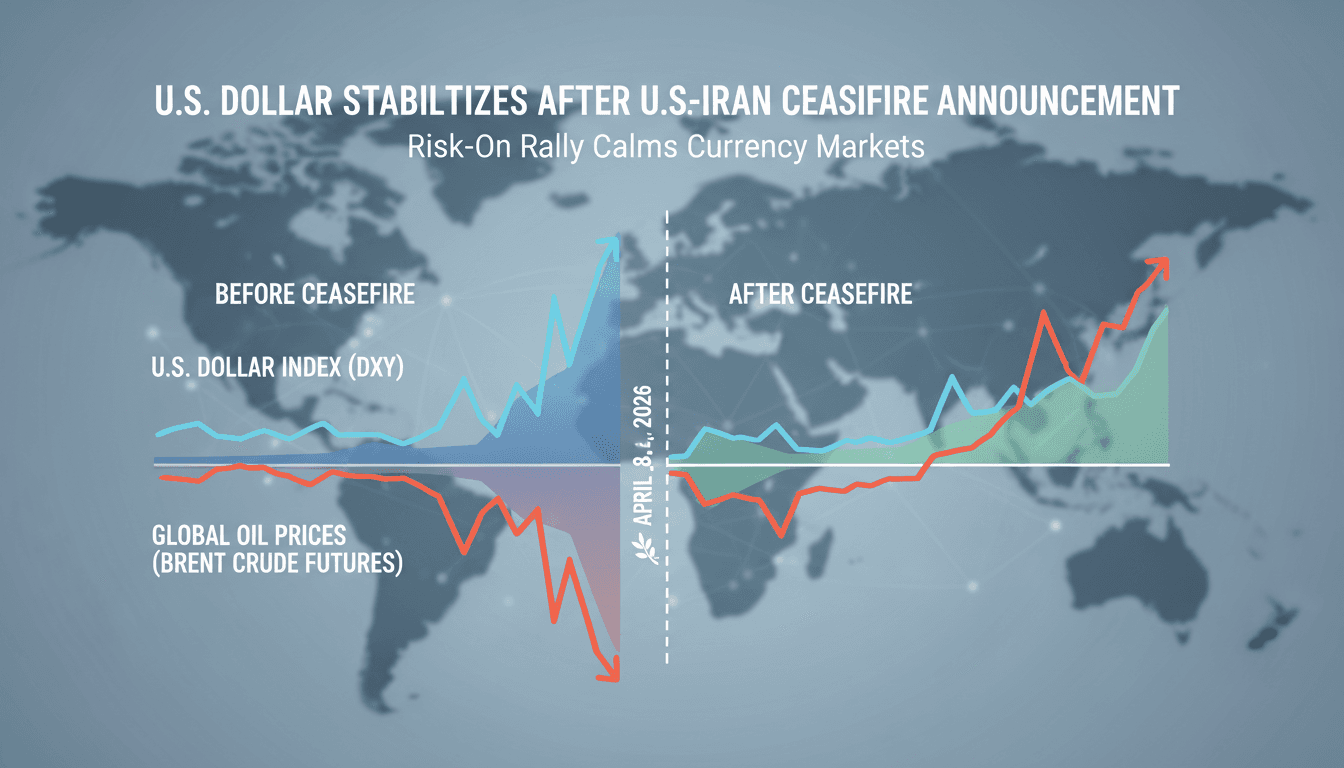
Here's what it means for you.
If you’re involved in global trade or finance, the recent U.S.-Iran ceasefire could reshape market dynamics and impact your operations.
Why it matters
The ceasefire reduces geopolitical risk, influencing currency valuations and global market stability.
What happened (in 30 seconds)
- On April 7, President Trump announced a two-week ceasefire between the U.S. and Iran, contingent on reopening the Strait of Hormuz.
- Following the announcement, the ICE U.S. Dollar Index fell by 1.2% as risk appetite surged, benefiting equities and commodity currencies.
- Global markets reacted positively, with oil prices dropping 15% to $95 per barrel and stocks rallying significantly.
The context you actually need
- The U.S.-Iran conflict had previously disrupted oil shipments through the Strait of Hormuz, raising global energy prices and bolstering the dollar's safe-haven status.
- The ceasefire was mediated by Pakistan and aims to restore shipping traffic, which is crucial for global oil supply chains.
- Market analysts predict potential sustained weakness in the dollar if the ceasefire holds, as risk aversion diminishes.
What's really happening
The recent ceasefire between the U.S. and Iran is a pivotal moment that has immediate implications for global financial markets. The announcement came after escalating tensions had disrupted oil shipments through the strategically vital Strait of Hormuz, a chokepoint for nearly 20% of the world's oil supply. This disruption had elevated oil prices and reinforced the U.S. dollar's status as a safe-haven asset, attracting investors seeking stability amid geopolitical uncertainty.
However, the ceasefire announcement has flipped this narrative. The initial market reaction saw the ICE U.S. Dollar Index drop by 1.2%, signaling a shift in investor sentiment from risk aversion to risk appetite. As geopolitical tensions ease, investors are more willing to engage in riskier assets, such as equities and commodity currencies like the Australian dollar, which surged by 1.33% following the announcement. This shift indicates a broader market trend where the dollar's appeal diminishes as stability returns to the region.
The implications of this ceasefire extend beyond immediate market reactions. If the ceasefire holds, analysts predict a potential return to pre-conflict bearishness for the dollar, particularly if the volatility index (VIX) continues to decline. A lower VIX, which measures market risk and investor sentiment, suggests that fear is subsiding, leading to increased investments in riskier assets. This could result in a sustained weakening of the dollar, affecting global trade dynamics and currency valuations.
Moreover, the ceasefire's impact on oil prices cannot be overstated. With oil prices tumbling to $95 per barrel, businesses and consumers alike could benefit from lower fuel costs. However, the situation remains fragile, with ongoing tensions in the region and reports of Israeli actions that could reignite conflict. The delicate balance of peace in the Middle East will be crucial in determining the future trajectory of oil prices and, consequently, the dollar's strength.
In summary, the U.S.-Iran ceasefire represents a significant turning point in global markets, with the potential for lasting effects on currency valuations, trade dynamics, and investor sentiment. As the situation develops, stakeholders across various sectors must remain vigilant to navigate the evolving landscape.
Who feels it first (and how)
- Global traders and investors: They will experience immediate impacts on currency valuations and asset prices.
- Energy sector companies: Lower oil prices will affect profit margins and operational costs.
- Consumers in oil-dependent regions: They may benefit from reduced fuel costs, impacting disposable income.
- Financial institutions: Banks and investment firms will need to adjust strategies based on changing risk appetites and currency fluctuations.
What to watch next
- VIX movements: A continued decline below 20 could indicate sustained risk-on sentiment, impacting the dollar's strength.
- Oil price trends: Watch for fluctuations in oil prices as geopolitical tensions evolve, influencing global trade costs.
- Market reactions to further developments: Pay attention to how equities and commodity currencies respond to any shifts in the ceasefire's status.
The U.S. dollar initially fell by 1.2% following the ceasefire announcement.
If the ceasefire holds, the dollar may continue to weaken as risk appetite grows.
The long-term stability of the ceasefire and its impact on oil prices and geopolitical tensions remains uncertain.
Frequently Asked Questions
- Why it matters?
- The ceasefire reduces geopolitical risk, influencing currency valuations and global market stability.
- What happened (in 30 seconds)?
- On April 7, President Trump announced a two-week ceasefire between the U.S. and Iran, contingent on reopening the Strait of Hormuz. Following the announcement, the ICE U.S. Dollar Index fell by 1.2% as risk appetite surged, benefiting equities and commodity currencies. Global markets reacted positively, with oil prices dropping 15% to $95 per barrel and stocks rallying significantly.
- What's really happening?
- The recent ceasefire between the U.S. and Iran is a pivotal moment that has immediate implications for global financial markets. The announcement came after escalating tensions had disrupted oil shipments through the strategically vital Strait of Hormuz, a chokepoint for nearly 20% of the world's oil supply. This disruption had elevated oil prices and reinforced the U.S. dollar's status as a safe-haven asset, attracting investors seeking stability amid geopolitical uncertainty. However, the cea
- Who feels it first (and how)?
- Global traders and investors: They will experience immediate impacts on currency valuations and asset prices. Energy sector companies: Lower oil prices will affect profit margins and operational costs. Consumers in oil-dependent regions: They may benefit from reduced fuel costs, impacting disposable income. Financial institutions: Banks and investment firms will need to adjust strategies based on changing risk appetites and currency fluctuations.
- What to watch next?
- VIX movements: A continued decline below 20 could indicate sustained risk-on sentiment, impacting the dollar's strength. Oil price trends: Watch for fluctuations in oil prices as geopolitical tensions evolve, influencing global trade costs. Market reactions to further developments: Pay attention to how equities and commodity currencies respond to any shifts in the ceasefire's status.
Markets desk coverage, trading insights, and investor updates.
"WSJ’s markets reporting provides in-depth analysis and context for investors."
— A47 Editor
The WSJ Dollar Index Falls 0.67% to 95.82
The WSJ Dollar Index has decreased by 0.67%, reaching a value of 95.82, marking its third consecutive day of decline. This downturn reflects ongoing volatility in the currency market, influenced by various economic factors and geopolitical tensions.
Currency market headlines, FX rates, central-bank chatter, and macro drivers moving major pairs.
"Investing.com’s forex stream is useful for fast updates across USD, EUR, JPY, GBP and emerging-market FX."
— A47 Editor
Dollar heads for worst day since April after U.S. and Iran agree to ceasefire
The U.S. dollar is on track for its worst day since April, following the announcement of a ceasefire agreement between the United States and Iran. This two-week truce aims to ease military tensions in the region, which has led to fluctuations in fina...