
French Finance Minister Supports Euro-Pegged Stablecoins to Challenge U.S. Market Dominance
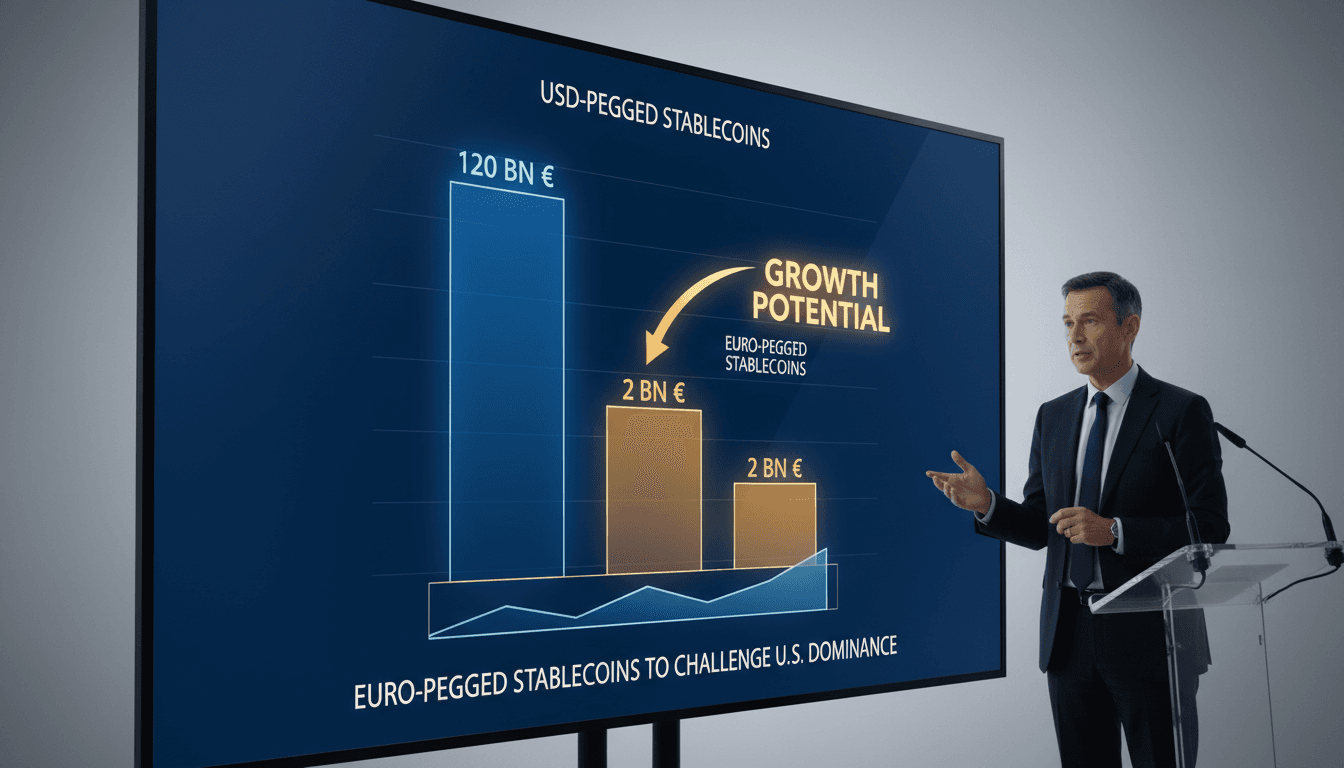
Here's what it means for you.
If you operate in the digital finance space, the rise of euro-pegged stablecoins could reshape your payment options and competitive landscape.
Why it matters
This initiative aims to reduce Europe's reliance on U.S. stablecoins, potentially altering the dynamics of global digital payments.
What happened (in 30 seconds)
- On April 17, 2026, French Finance Minister Roland Lescure endorsed euro-pegged stablecoins at a crypto conference in Paris.
- Lescure criticized the low volume of euro stablecoins compared to dollar-pegged ones, calling it "not satisfactory."
- The Qivalis consortium, formed by major European banks, plans to launch a euro-pegged stablecoin under the EU's MiCA framework in late 2026.
The context you actually need
- The EU's MiCA regulation, effective by late 2024, allows for regulated stablecoin issuance, paving the way for this initiative.
- U.S. stablecoins dominate the market with over $300 billion in total market cap, creating a significant gap with euro alternatives.
- Geopolitical concerns over dollar hegemony in digital finance have prompted European efforts to develop competitive alternatives.
What's really happening
The endorsement of euro-pegged stablecoins by French Finance Minister Roland Lescure marks a significant shift in European monetary policy, reflecting a growing recognition of the need for alternatives to U.S. dollar-dominated digital assets. The Qivalis consortium, which includes major banks like ING, UniCredit, and BNP Paribas, is spearheading this initiative under the EU's Markets in Crypto-Assets (MiCA) regulation, which is set to be fully effective by late 2024.
Historically, European officials have expressed skepticism towards private stablecoins, viewing them as potential threats to monetary sovereignty. However, recent developments indicate a pivot towards embracing tokenization as a means to enhance financial innovation and competitiveness. The Banque de France's Governor, François Villeroy de Galhau, highlighted the potential of tokenization at the January 2026 World Economic Forum, signaling a shift in the narrative surrounding stablecoins.
The current landscape shows a stark contrast between U.S. and European stablecoins. Tether's USDT, the largest dollar-pegged stablecoin, boasts a circulation of approximately $185 billion, while the euro-pegged stablecoin from Société Générale has only reached €107 million. This disparity underscores the urgency for Europe to bolster its digital currency offerings to mitigate reliance on U.S. assets.
The Qivalis consortium's plans to launch a euro-pegged stablecoin in the second half of 2026 aim to address this imbalance. By creating a stablecoin that is pegged to the euro, European banks hope to provide a viable alternative for digital transactions, particularly in cross-border trade within the Eurozone. This initiative is not just about creating a new financial product; it is about reclaiming a degree of monetary sovereignty in an increasingly digital economy dominated by U.S. entities.
As the Qivalis consortium moves forward, it will likely engage in advanced discussions with exchanges and other stakeholders to ensure a successful launch. The endorsement from Lescure, who stated, "That is what we need, and that is what we want," reflects a broader commitment to fostering a competitive digital finance ecosystem in Europe.
Who feels it first (and how)
- European banks: They will be directly involved in the development and issuance of euro-pegged stablecoins.
- Digital payment providers: Companies that rely on stablecoins for transactions may need to adapt to new options.
- Businesses engaged in Eurozone trade: They could benefit from reduced transaction costs and increased efficiency with euro-pegged stablecoins.
What to watch next
- Qivalis launch timeline: The consortium's progress towards a late 2026 launch will indicate the viability of euro-pegged stablecoins.
- Market response: Observing how businesses and consumers react to the introduction of euro stablecoins will provide insights into their adoption.
- Regulatory developments: Any updates from U.S. regulators or the European Central Bank regarding stablecoins could impact market dynamics.
The Qivalis consortium is actively working on a euro-pegged stablecoin under the MiCA framework.
The launch of euro-pegged stablecoins will prompt increased competition in the digital payments space.
The extent to which euro-pegged stablecoins will be adopted by businesses and consumers in Europe.
Frequently Asked Questions
- Why it matters?
- This initiative aims to reduce Europe's reliance on U.S. stablecoins, potentially altering the dynamics of global digital payments.
- What happened (in 30 seconds)?
- On April 17, 2026, French Finance Minister Roland Lescure endorsed euro-pegged stablecoins at a crypto conference in Paris. Lescure criticized the low volume of euro stablecoins compared to dollar-pegged ones, calling it "not satisfactory." The Qivalis consortium, formed by major European banks, plans to launch a euro-pegged stablecoin under the EU's MiCA framework in late 2026.
- What's really happening?
- The endorsement of euro-pegged stablecoins by French Finance Minister Roland Lescure marks a significant shift in European monetary policy, reflecting a growing recognition of the need for alternatives to U.S. dollar-dominated digital assets. The Qivalis consortium, which includes major banks like ING, UniCredit, and BNP Paribas, is spearheading this initiative under the EU's Markets in Crypto-Assets (MiCA) regulation, which is set to be fully effective by late 2024. Historically, European off
- Who feels it first (and how)?
- European banks: They will be directly involved in the development and issuance of euro-pegged stablecoins. Digital payment providers: Companies that rely on stablecoins for transactions may need to adapt to new options. Businesses engaged in Eurozone trade: They could benefit from reduced transaction costs and increased efficiency with euro-pegged stablecoins.
- What to watch next?
- Qivalis launch timeline: The consortium's progress towards a late 2026 launch will indicate the viability of euro-pegged stablecoins. Market response: Observing how businesses and consumers react to the introduction of euro stablecoins will provide insights into their adoption. Regulatory developments: Any updates from U.S. regulators or the European Central Bank regarding stablecoins could impact market dynamics.
Covers blockchain, cryptocurrency news, project analysis, and market insights.
"Cointelegraph is a leading crypto-focused media outlet known for timely news, analysis, and educational content related to blockchain and digital assets."
— A47 Editor
French finance minister backs euro-pegged stablecoins to compete with US
The French finance minister has expressed support for the Qivalis initiative, which aims to establish a euro-pegged stablecoin under the Markets in Crypto-Assets (MiCA) framework, set to launch in 2025. This initiative is seen as a strategic move to ...
Real-time updates, analysis, and reports on the blockchain and cryptocurrency sectors.
"Crypto News delivers real-time updates, analysis, and reports on the blockchain and cryptocurrency sectors."
— A47 Editor
France’s Lescure backs euro stablecoins as Qivalis readies 2026 launch
France's Finance Minister Roland Lescure has endorsed the development of euro-denominated stablecoins, emphasizing the importance of maintaining Europe's digital financial infrastructure in euros rather than dollars, as Qivalis prepares for its launc...
Covers blockchain, cryptocurrency news, project analysis, and market insights.
"CoinDesk is a well-established cryptocurrency and blockchain news provider, offering comprehensive insights, market data, and industry research."
— A47 Editor
France's finance minister calls for more euro stablecoins in sign of government policy shift
France's finance minister has called for an increase in euro stablecoins, indicating a potential shift in the government's approach to cryptocurrency regulation. This statement reflects a growing recognition of the importance of stablecoins in the fi...