
Australia Amends Export Finance Laws to Enhance Fuel Security Amid Iran Conflict
Here's what it means for you.
If you're in Australia or rely on its fuel imports, expect changes in fuel availability and pricing dynamics.
Why it matters
Australia's reliance on imported fuel makes it vulnerable to geopolitical disruptions, impacting both consumers and businesses.
What happened (in 30 seconds)
- On March 28, 2026, Prime Minister Anthony Albanese announced amendments to export-finance laws to enhance fuel security.
- The legislation, set for parliamentary introduction on March 30, allows underwriting of private sector fuel purchases amid supply chain disruptions from the Iran war.
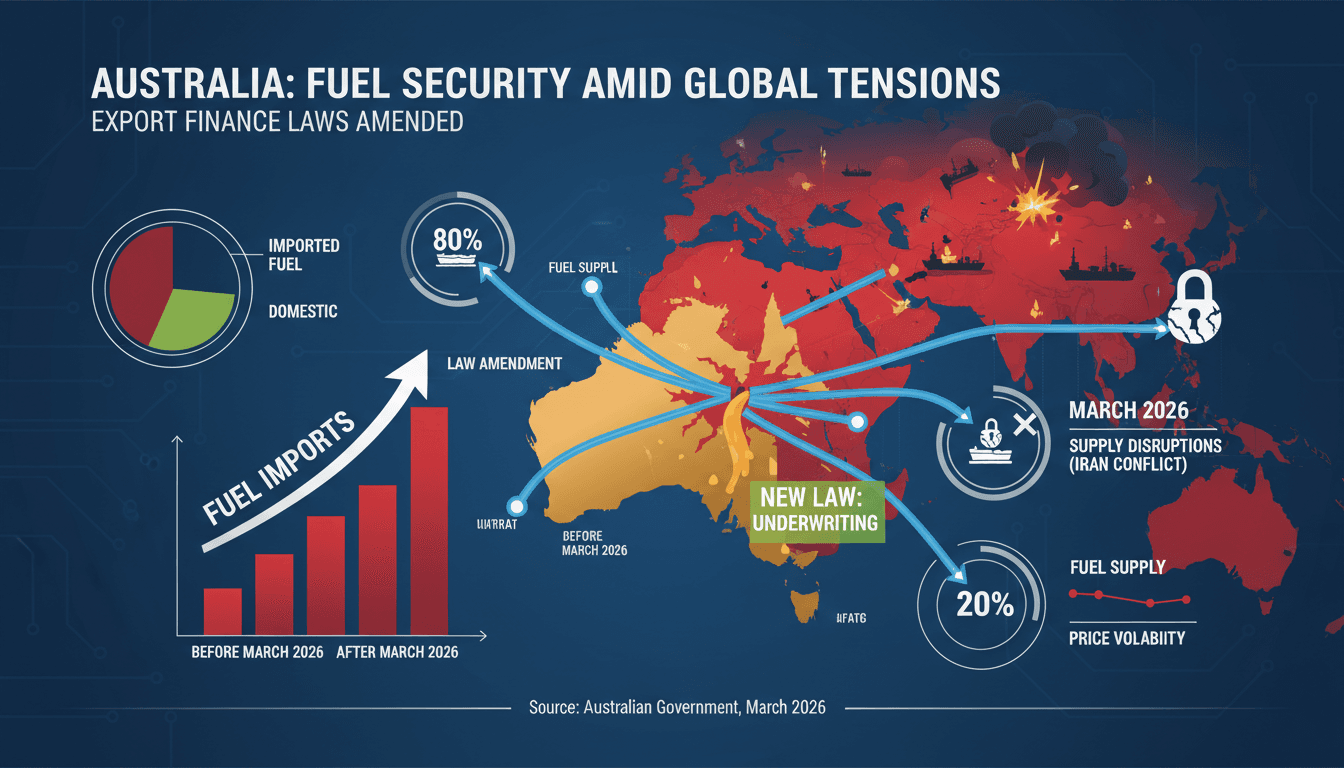
- Australia, which imports approximately 90% of its refined fuel, faces heightened risks of shortages due to recent geopolitical tensions.
The context you actually need
- Australia's fuel imports account for about 90% of its refined fuel needs, primarily sourced from Asia, following the closure of domestic refineries.
- The Iran war, escalating since late February 2026, has disrupted global shipping routes, leading to the cancellation of six fuel shipments to Australia.
- Panic buying and localized shortages have emerged, particularly in New South Wales and Queensland, prompting the government to tap into strategic reserves.
What's really happening
The recent amendments to Australia's export-finance laws are a direct response to the escalating Iran conflict, which has severely disrupted global fuel supply chains. With Australia importing around 90% of its refined fuel, the government is taking proactive measures to ensure that fuel remains available and affordable for its citizens and businesses.
The legislation allows Export Finance Australia to underwrite additional international fuel shipments for private importers. This is particularly crucial for discretionary cargoes that may be cost-prohibitive without government support. The aim is to stabilize the market and prevent panic buying, which has already led to shortages at service stations across the country.
In the backdrop, the geopolitical climate has shifted dramatically due to U.S. and Israeli military actions in Iran, which have not only affected fuel supply but also raised global oil prices. This volatility can trickle down to consumers, impacting fuel prices at the pump. The Albanese government is prioritizing supply security over immediate price cuts, as evidenced by its rejection of opposition calls to halve the fuel excise, which would have provided temporary relief but potentially exacerbated supply issues.
By introducing these amendments, the government is also signaling its commitment to maintaining a robust fuel supply chain, which is vital for the economy. The legislation extends beyond fuel to include essentials like fertilizer, indicating a broader strategy to safeguard critical imports against future disruptions.
In summary, the amendments are designed to create a safety net for fuel imports, ensuring that Australia can navigate the current geopolitical tensions without succumbing to shortages or price spikes. This proactive approach aims to instill confidence in both consumers and businesses, who rely on stable fuel supplies for their daily operations.
Who feels it first (and how)
- Consumers: Individuals may experience fluctuations in fuel prices and availability at service stations.
- Businesses: Companies reliant on fuel for logistics and operations may face increased costs or supply chain challenges.
- Transport sector: Airlines and freight companies could see rising operational costs due to higher aviation fuel prices.
- Government agencies: Increased scrutiny on fuel stock levels and supply chain management will affect regulatory oversight.
What to watch next
- Legislative progress: Monitor the introduction and passage of the new export-finance laws in Parliament, as this will determine the speed of implementation.
- Global oil prices: Keep an eye on fluctuations in global oil prices, which could impact domestic fuel costs and availability.
- Consumer behavior: Watch for changes in consumer purchasing patterns, particularly concerning fuel, as panic buying could resurface if tensions escalate.
Australia imports approximately 90% of its refined fuel.
Fuel prices may rise due to global tensions and supply chain disruptions.
The long-term effectiveness of the new underwriting measures in stabilizing fuel supply.
Frequently Asked Questions
- Why it matters?
- Australia's reliance on imported fuel makes it vulnerable to geopolitical disruptions, impacting both consumers and businesses.
- What happened (in 30 seconds)?
- On March 28, 2026, Prime Minister Anthony Albanese announced amendments to export-finance laws to enhance fuel security. The legislation, set for parliamentary introduction on March 30, allows underwriting of private sector fuel purchases amid supply chain disruptions from the Iran war. Australia, which imports approximately 90% of its refined fuel, faces heightened risks of shortages due to recent geopolitical tensions.
- What's really happening?
- The recent amendments to Australia's export-finance laws are a direct response to the escalating Iran conflict, which has severely disrupted global fuel supply chains. With Australia importing around 90% of its refined fuel, the government is taking proactive measures to ensure that fuel remains available and affordable for its citizens and businesses. The legislation allows Export Finance Australia to underwrite additional international fuel shipments for private importers. This is particular
- Who feels it first (and how)?
- Consumers: Individuals may experience fluctuations in fuel prices and availability at service stations. Businesses: Companies reliant on fuel for logistics and operations may face increased costs or supply chain challenges. Transport sector: Airlines and freight companies could see rising operational costs due to higher aviation fuel prices. Government agencies: Increased scrutiny on fuel stock levels and supply chain management will affect regulatory oversight.
- What to watch next?
- Legislative progress: Monitor the introduction and passage of the new export-finance laws in Parliament, as this will determine the speed of implementation. Global oil prices: Keep an eye on fluctuations in global oil prices, which could impact domestic fuel costs and availability. Consumer behavior: Watch for changes in consumer purchasing patterns, particularly concerning fuel, as panic buying could resurface if tensions escalate.
Regional coverage and analysis focused on politics, diplomacy, and business across the Middle East.
"Al-Monitor is known for analytical reporting on Middle East politics and policy developments."
— A47 Editor
Australia to amend export-finance laws to boost fuel security, PM Albanese says
Australia plans to amend its export-finance laws to enhance fuel security amid ongoing disruptions caused by the conflict in Iran, which has significantly impacted the nation's fuel supply chain. Prime Minister Anthony Albanese announced these change...
International coverage from The Guardian's global desks.
"The Guardian is known for its progressive editorial stance and in-depth analysis."
— A47 Editor
Labor to use new fuel security powers to underwrite extra shipments to Australia
The Australian government, led by Prime Minister Anthony Albanese, has announced the use of new fuel security powers to underwrite additional shipments of petrol, diesel, and fertiliser in response to supply shortages exacerbated by the ongoing confl...
Corporate news, economic trends, and markets with UK and global scope.
"BBC News is widely regarded as reputable and impartial, with a public service mandate."
— A47 Editor
Panic buying prompts PM to reassure Australians over fuel supply
Australian Prime Minister Anthony Albanese has reassured the public that the nation's fuel supply remains secure amid reports of panic buying and shortages at service stations. This announcement comes as concerns grow over fuel availability due to ri...