
United Nations Proposes Safe Fertilizer Transit Through Strait of Hormuz Amid Ongoing Conflict
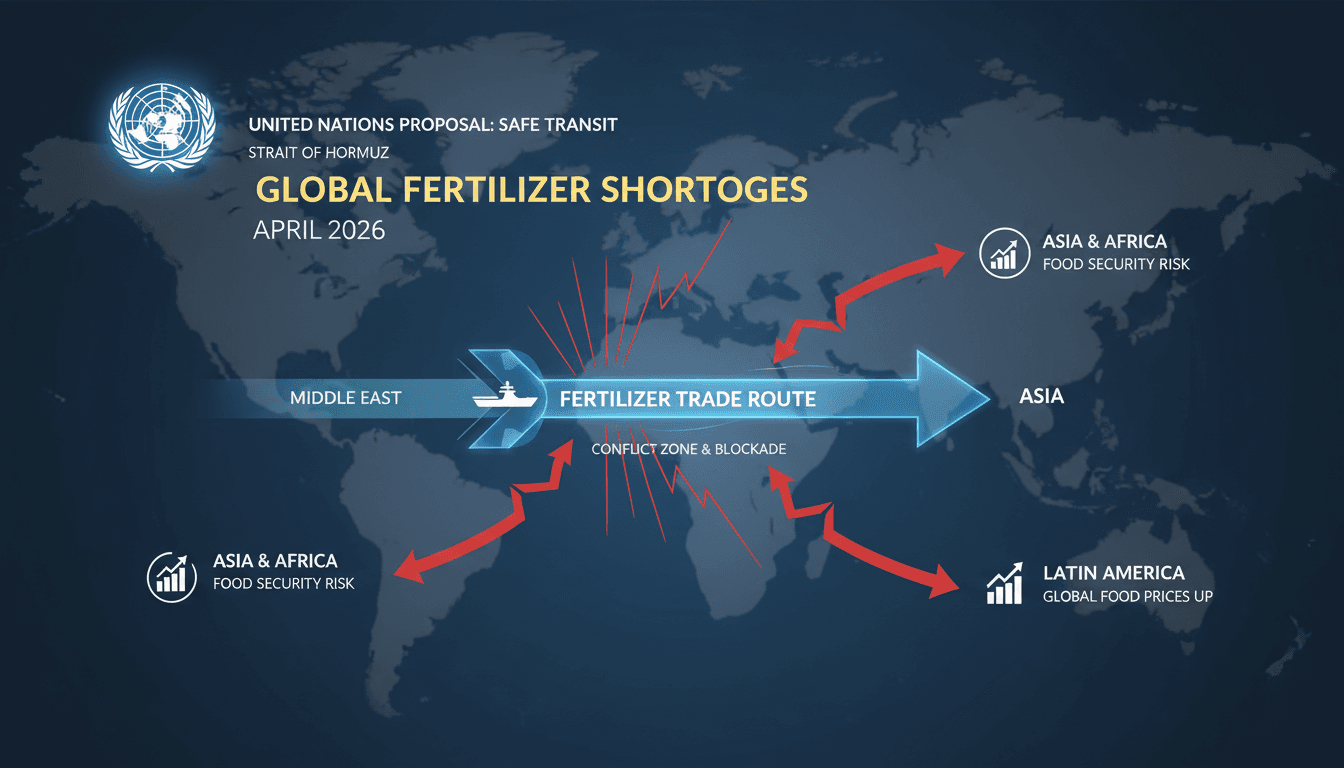
Here's what it means for you.
Rising food prices and supply chain disruptions could soon affect your grocery bills as global fertilizer shortages intensify.
Why it matters
This initiative is crucial for stabilizing global food supply chains amid escalating geopolitical tensions and agricultural production risks.
What happened (in 30 seconds)
- On April 13, 2026, the United Nations announced a diplomatic push to secure safe passage for fertilizer shipments through the Strait of Hormuz.
- Fertilizer shortages have surged due to a 90% drop in tanker traffic, following U.S.-Israeli strikes on Iran and subsequent regional conflict.
- Ongoing negotiations are underway to establish a humanitarian maritime transit mechanism, as global food security hangs in the balance.
The context you actually need
- The Strait of Hormuz is a critical chokepoint for about one-third of global seaborne fertilizer trade, impacting agricultural sectors worldwide.
- Recent conflict has led to a fragile ceasefire and heightened urgency for a safe transit mechanism, as food security risks escalate in Asia, Africa, and Latin America.
- Fertilizer prices have spiked, with Gulf urea prices increasing by approximately 40%, affecting costs for agriculture-dependent goods.
What's really happening
The UN's intensified diplomatic efforts stem from a complex interplay of geopolitical tensions and economic vulnerabilities. The conflict ignited in late February 2026, following coordinated U.S.-Israeli strikes on Iranian targets, which led to widespread fighting and a near-total halt of shipping traffic through the Strait of Hormuz. This vital waterway is essential for the transport of fertilizers, particularly nitrogen-based products like urea, primarily produced by Gulf nations such as Qatar.
As a result of the conflict, tanker traffic through the Strait of Hormuz plummeted by over 90%, severely disrupting the global fertilizer supply chain. The UN responded by launching a task force on March 27, 2026, aimed at facilitating humanitarian transits, explicitly including fertilizers. This initiative is spearheaded by UNOPS Executive Director Jorge Moreira da Silva, who has been coordinating extensive meetings with member states in New York to operationalize the proposal.
The urgency of these discussions has been amplified by the U.S. military's recent blockade of Iranian ports, which further complicates the situation. The blockade not only threatens the safe passage of fertilizers but also exacerbates food security risks in regions heavily reliant on these imports. The UN's proposal seeks to establish a humanitarian maritime transit mechanism to ensure that essential goods, particularly fertilizers, can reach agricultural sectors in Asia, Africa, and Latin America.
The implications of this initiative extend beyond immediate humanitarian concerns. Fertilizer markets have already reacted, with prices for urea in the Gulf surging by 40%. This price increase has led to force majeure declarations from major producers, including QatarEnergy, indicating that they cannot fulfill contracts due to the crisis. The ripple effects of these disruptions are likely to be felt across global food markets, with potential skipped corn plantings in Latin America and looming yield losses in Africa.
As negotiations continue, the stakes remain high. Businesses are advocating for escort-free navigation mechanisms that could potentially be expanded to other goods, highlighting the interconnectedness of global trade and the fragility of supply chains in times of conflict.
Who feels it first (and how)
- Farmers in Asia and Africa: They rely heavily on imported fertilizers for crop production, facing potential yield losses.
- Consumers in the UAE: Rising food prices due to increased costs of agricultural goods will impact household budgets.
- Global fertilizer producers: Companies like QatarEnergy may face operational disruptions and financial losses due to force majeure declarations.
What to watch next
- Negotiation outcomes: The success or failure of UN-led talks will directly impact fertilizer availability and prices.
- Market reactions: Monitor fluctuations in fertilizer prices and their effects on global food costs, particularly in vulnerable regions.
- Geopolitical developments: Any escalation or de-escalation in the U.S.-Iran conflict could significantly alter shipping dynamics through the Strait of Hormuz.
The UN is actively pursuing a proposal for safe fertilizer transit through the Strait of Hormuz.
Fertilizer prices will continue to rise as supply chain disruptions persist.
The long-term effectiveness of the proposed humanitarian maritime transit mechanism remains uncertain.
Frequently Asked Questions
- Why it matters?
- This initiative is crucial for stabilizing global food supply chains amid escalating geopolitical tensions and agricultural production risks.
- What happened (in 30 seconds)?
- On April 13, 2026, the United Nations announced a diplomatic push to secure safe passage for fertilizer shipments through the Strait of Hormuz. Fertilizer shortages have surged due to a 90% drop in tanker traffic, following U.S.-Israeli strikes on Iran and subsequent regional conflict. Ongoing negotiations are underway to establish a humanitarian maritime transit mechanism, as global food security hangs in the balance.
- What's really happening?
- The UN's intensified diplomatic efforts stem from a complex interplay of geopolitical tensions and economic vulnerabilities. The conflict ignited in late February 2026, following coordinated U.S.-Israeli strikes on Iranian targets, which led to widespread fighting and a near-total halt of shipping traffic through the Strait of Hormuz. This vital waterway is essential for the transport of fertilizers, particularly nitrogen-based products like urea, primarily produced by Gulf nations such as Qatar
- Who feels it first (and how)?
- Farmers in Asia and Africa: They rely heavily on imported fertilizers for crop production, facing potential yield losses. Consumers in the UAE: Rising food prices due to increased costs of agricultural goods will impact household budgets. Global fertilizer producers: Companies like QatarEnergy may face operational disruptions and financial losses due to force majeure declarations.
- What to watch next?
- Negotiation outcomes: The success or failure of UN-led talks will directly impact fertilizer availability and prices. Market reactions: Monitor fluctuations in fertilizer prices and their effects on global food costs, particularly in vulnerable regions. Geopolitical developments: Any escalation or de-escalation in the U.S.-Iran conflict could significantly alter shipping dynamics through the Strait of Hormuz.
Regional coverage and analysis focused on politics, diplomacy, and business across the Middle East.
"Al-Monitor is known for analytical reporting on Middle East politics and policy developments."
— A47 Editor
Diplomatic push underway on Hormuz fertiliser proposal, UN says, as shortages bite
A diplomatic initiative is underway led by the U.N. to facilitate safe passage for fertilizer shipments through the Strait of Hormuz, amid escalating shortages exacerbated by recent conflicts in the region. The fighting, ignited by U.S.-Israeli strik...
Oil, metals, and agriculture: supply/demand headlines, OPEC chatter, inventories, and price action.
"Solid tape for energy and metals traders tracking macro and micro catalysts."
— A47 Editor
Diplomatic push underway on Hormuz fertiliser proposal, UN says, as shortages bite
The United Nations has initiated a diplomatic effort regarding a proposal for fertilizer supply through the Strait of Hormuz, as global shortages of essential agricultural inputs intensify. This comes amid ongoing disruptions in the region that have ...