
Denmark's Cryptocurrency Ownership Remains at 4% in 2025
Here's what it means for you.
Understanding Denmark's cautious approach to cryptocurrency can inform your investment strategies in more crypto-friendly markets.
Why it matters
Denmark's low cryptocurrency ownership highlights a broader trend of cautious financial behavior in Europe, impacting market dynamics and investment opportunities.
What happened (in 30 seconds)
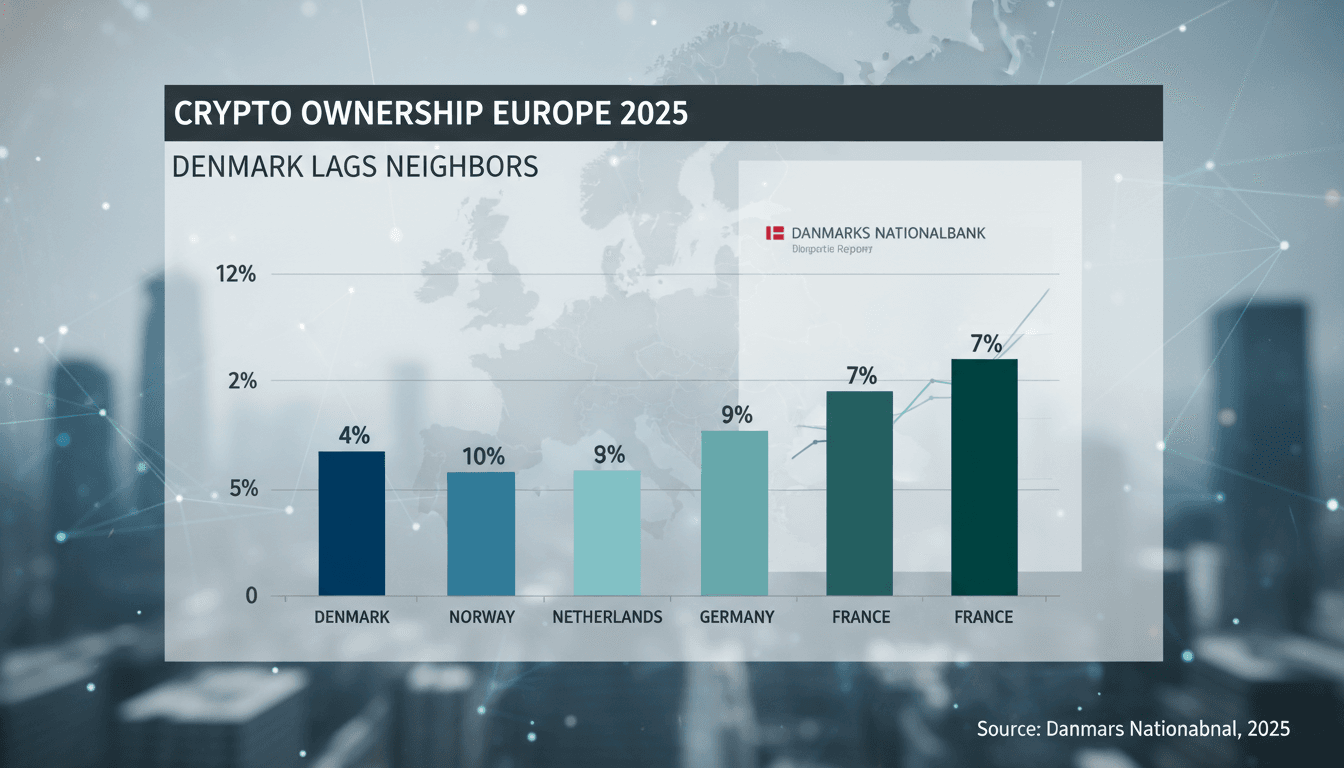
- 4% of Danish citizens owned cryptocurrency in 2025, unchanged from 2023, according to Danmarks Nationalbank.
- Denmark's ownership rate is among the lowest in Europe, significantly lower than countries like Norway and Finland, where rates exceed 10%.
- Factors such as cautious banking policies and high tax rates contribute to the stagnation of cryptocurrency adoption in Denmark.
The context you actually need
- Cautious banking policies: Danish banks have been reluctant to facilitate cryptocurrency purchases, warning customers about the associated risks.
- Asymmetric tax treatment: Capital gains on crypto are taxed up to 53%, while losses have limited deductibility, discouraging potential investors.
- Institutional shifts: Despite the low ownership rate, Denmark is seeing gradual changes, such as Danske Bank's introduction of Bitcoin and Ether exchange-traded products (ETPs) in early 2026.
What's really happening
Denmark's cryptocurrency landscape is characterized by a stable ownership rate of 4%, as reported in the recent Staff Paper No. 3 by Danmarks Nationalbank. This figure, derived from a survey conducted by Epinion, reflects a consistent trend observed since 2023. Approximately 200,000 Danish citizens aged 15 and above hold crypto-assets, primarily skewed towards younger, high-income demographics. Most of these holdings are small, with the majority under DKK 10,000, indicating a cautious approach to investment.
The reluctance to adopt cryptocurrency in Denmark can be attributed to several factors. Firstly, the banking sector's conservative stance plays a significant role. Danish banks have largely refused to facilitate cryptocurrency transactions, citing high volatility and risks associated with digital assets. This has created a barrier for potential investors who may be interested but lack the means to easily purchase cryptocurrencies.
Additionally, the tax environment in Denmark is particularly unfriendly towards crypto investments. With capital gains taxed at rates as high as 53%, the financial incentive to invest in cryptocurrencies diminishes significantly. Conversely, losses incurred from crypto investments offer limited deductibility, further discouraging individuals from entering the market. This asymmetric tax treatment creates a disincentive for many potential investors, contributing to the stagnation of ownership rates.
Despite these challenges, there are signs of gradual institutional acceptance of cryptocurrencies in Denmark. The introduction of Bitcoin and Ether ETPs by Danske Bank in February 2026 reflects a growing demand among clients for regulated crypto investment options. However, this shift has not yet translated into increased ownership among the general public, as the overall appetite for risk remains low.
Moreover, the broader European context reveals a stark contrast. Countries like Norway, Finland, and the United Kingdom boast ownership rates exceeding 10%, suggesting that cultural attitudes towards risk and investment differ significantly across the region. In comparison, Denmark's cautious approach may limit its potential to capitalize on the growing global interest in cryptocurrencies.
As Denmark navigates its unique challenges, the implications for investors and financial institutions are clear. The current landscape suggests that while institutional interest is rising, the general public's reluctance to engage with cryptocurrencies will likely persist unless significant changes occur in banking policies and tax regulations.
Who feels it first (and how)
- Young investors: This demographic shows the highest interest in cryptocurrencies but faces barriers due to banking policies and tax implications.
- High-income individuals: Those with disposable income may be more inclined to invest but are deterred by the high tax rates on capital gains.
- Financial institutions: Banks and investment firms are adapting to client demand for crypto products, but their cautious approach limits broader market engagement.
What to watch next
- Regulatory changes: Monitor any shifts in banking policies or tax regulations that could encourage greater cryptocurrency adoption in Denmark.
- Market response to ETPs: Watch how the introduction of Bitcoin and Ether ETPs affects public interest and ownership rates in the coming months.
- Comparative ownership trends: Keep an eye on ownership rates in neighboring countries to gauge whether Denmark's low rate influences or diverges from regional trends.
Denmark's cryptocurrency ownership rate remains stable at 4%.
Institutional interest in cryptocurrencies will continue to grow, but public adoption may remain stagnant without regulatory changes.
The long-term impact of the EU's MiCA regulation on Denmark's crypto landscape is still uncertain.
Frequently Asked Questions
- Why it matters?
- Denmark's low cryptocurrency ownership highlights a broader trend of cautious financial behavior in Europe, impacting market dynamics and investment opportunities.
- What happened (in 30 seconds)?
- 4% of Danish citizens owned cryptocurrency in 2025, unchanged from 2023, according to Danmarks Nationalbank. Denmark's ownership rate is among the lowest in Europe, significantly lower than countries like Norway and Finland, where rates exceed 10%. Factors such as cautious banking policies and high tax rates contribute to the stagnation of cryptocurrency adoption in Denmark.
- What's really happening?
- Denmark's cryptocurrency landscape is characterized by a stable ownership rate of 4%, as reported in the recent Staff Paper No. 3 by Danmarks Nationalbank. This figure, derived from a survey conducted by Epinion, reflects a consistent trend observed since 2023. Approximately 200,000 Danish citizens aged 15 and above hold crypto-assets, primarily skewed towards younger, high-income demographics. Most of these holdings are small, with the majority under DKK 10,000, indicating a cautious approach t
- Who feels it first (and how)?
- Young investors: This demographic shows the highest interest in cryptocurrencies but faces barriers due to banking policies and tax implications. High-income individuals: Those with disposable income may be more inclined to invest but are deterred by the high tax rates on capital gains. Financial institutions: Banks and investment firms are adapting to client demand for crypto products, but their cautious approach limits broader market engagement.
- What to watch next?
- Regulatory changes: Monitor any shifts in banking policies or tax regulations that could encourage greater cryptocurrency adoption in Denmark. Market response to ETPs: Watch how the introduction of Bitcoin and Ether ETPs affects public interest and ownership rates in the coming months. Comparative ownership trends: Keep an eye on ownership rates in neighboring countries to gauge whether Denmark's low rate influences or diverges from regional trends.
News and analysis on Bitcoin, altcoins, and blockchain innovation.
"Bitcoinist delivers news and analysis on Bitcoin, altcoins, and blockchain innovation with a focus on market trends and industry updates."
— A47 Editor
Denmark’s Crypto Ownership Rate Among Lowest In Europe At 4%: Report
A recent report indicates that only 4% of Danish citizens own cryptocurrency, a figure that is significantly lower than in other European countries. This limited adoption is attributed to years of restrictive banking policies and tax regulations that...
Covers Bitcoin plus altcoin news, market updates, and educational resources.
"Bitcoin.com provides news, market data, and guides focused on Bitcoin and the wider crypto industry."
— A47 Editor
Crypto Ownership in Denmark Flat at 4% Despite Global Hype
A recent report indicates that cryptocurrency ownership in Denmark remains stagnant at 4%, a figure that has not changed despite the global surge in interest and investment in digital currencies. This statistic highlights a significant gap in adoptio...
Covers blockchain, cryptocurrency news, project analysis, and market insights.
"Cointelegraph is a leading crypto-focused media outlet known for timely news, analysis, and educational content related to blockchain and digital assets."
— A47 Editor
Only 4% of Danish citizens hold crypto, far below other European countries
A recent report from Denmark's central bank reveals that only 4% of Danish citizens own cryptocurrency, a figure significantly lower than in other European nations. This limited adoption is attributed to concerns over banking regulations, taxation, a...