
Israeli Restrictions Lead to Critical Prosthetic Limb Shortage for Amputees in Gaza
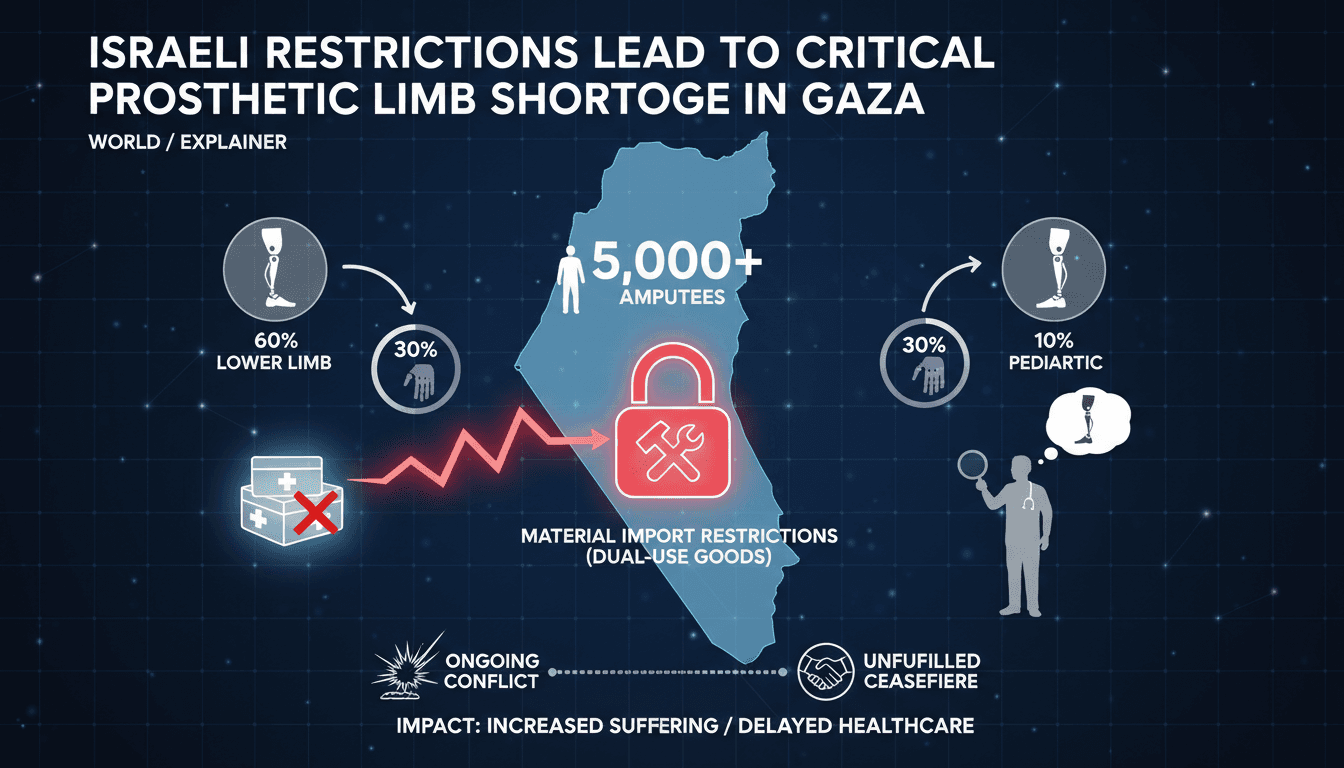
Here's what it means for you.
The ongoing humanitarian crisis in Gaza could influence global perceptions of conflict-related medical supply chains.
Why it matters
The shortage of prosthetic limbs in Gaza highlights the intersection of humanitarian needs and geopolitical tensions, affecting international aid dynamics.
What happened (in 30 seconds)
- Israeli restrictions on dual-use materials, particularly gypsum, have led to a critical shortage of prosthetic limbs for nearly 5,000 war amputees in Gaza.
- Aid organizations report that only eight prosthetists remain in Gaza, complicating the fitting process for growing children.
- Post-ceasefire commitments from international leaders, including U.S. President Donald Trump, remain unfulfilled amid ongoing restrictions and medical evacuations.
The context you actually need
- The Gaza Strip has the highest per capita rate of child amputees globally, with approximately 25% of cases involving children, exacerbating the humanitarian crisis.
- The two-year conflict between Israel and Hamas has resulted in thousands of amputations, surpassing historical rates seen in Cambodia due to landmines.
- Aid groups like Humanity & Inclusion have resorted to makeshift solutions, risking infections and further complications for amputees.
What's really happening
The ongoing conflict in Gaza, which escalated in late 2023, has resulted in a staggering increase in amputations, with nearly 5,000 new cases reported by April 2026. This crisis is compounded by Israeli restrictions on dual-use materials, particularly gypsum, which is essential for creating prosthetic molds. Despite a ceasefire in October 2025, Israeli authorities have maintained stringent controls on material imports, citing security concerns over potential misuse by militants. This has left aid organizations scrambling to provide adequate support to the growing number of amputees.
As of April 2026, the remaining stocks of gypsum are projected to last only until mid-summer, severely limiting the ability of local prosthetists to create new limbs. The World Health Organization reports that only eight qualified prosthetists are currently operating in Gaza, making it increasingly difficult to provide custom fittings, especially for children whose needs are rapidly changing. Aid groups like Humanity & Inclusion have managed to fit only 118 temporary prosthetics since early 2025, relying on dwindling supplies from late 2024.
The situation is dire for many amputees, such as 14-year-old Fadel al-Najji, who lost his legs in a drone strike, and 40-year-old Hazem Foura, who lost a leg in December 2024. Both have described feelings of isolation and a loss of independence due to the lack of proper prosthetic care. The ongoing conflict has also led to additional casualties, with Palestinian officials reporting 750 deaths post-ceasefire, further straining already limited resources.
Internationally, the Trump-led Board of Peace has labeled the needs of amputees as "urgent civilian obligations," but conditions for aid, including disarmament of Hamas, complicate the delivery of necessary support. Aid organizations have highlighted the risks to the futures of children and the independence of amputees, while UNICEF has noted some improvements in wheelchair access, though challenges remain due to rubble and infrastructure damage.
Who feels it first (and how)
- Amputees in Gaza: Nearly 5,000 individuals, including a significant number of children, are directly affected by the prosthetic limb shortage.
- Healthcare providers: The limited number of prosthetists and medical facilities strains their ability to deliver care.
- Aid organizations: Groups like Humanity & Inclusion and the International Committee of the Red Cross face operational challenges due to material restrictions.
- International community: Diplomatic negotiations and humanitarian aid efforts are impacted by the ongoing conflict and restrictions.
What to watch next
- Negotiations for material imports: Watch for any changes in Israeli policy regarding the importation of dual-use materials, as this will directly affect the availability of prosthetics.
- International aid commitments: Monitor the fulfillment of post-ceasefire commitments from international leaders, particularly the Trump-led Board of Peace's plans for humanitarian aid.
- Health outcomes for amputees: Keep an eye on reports from aid organizations regarding the health and rehabilitation outcomes for amputees, especially children, as this will indicate the long-term impact of the crisis.
The shortage of prosthetic limbs in Gaza is critical, affecting nearly 5,000 amputees.
Continued Israeli restrictions on dual-use materials will prolong the humanitarian crisis and complicate aid efforts.
The effectiveness of international diplomatic efforts to resolve the situation and improve access to necessary medical supplies remains uncertain.
Frequently Asked Questions
- Why it matters?
- The shortage of prosthetic limbs in Gaza highlights the intersection of humanitarian needs and geopolitical tensions, affecting international aid dynamics.
- What happened (in 30 seconds)?
- Israeli restrictions on dual-use materials, particularly gypsum, have led to a critical shortage of prosthetic limbs for nearly 5,000 war amputees in Gaza. Aid organizations report that only eight prosthetists remain in Gaza, complicating the fitting process for growing children. Post-ceasefire commitments from international leaders, including U.S. President Donald Trump, remain unfulfilled amid ongoing restrictions and medical evacuations.
- What's really happening?
- The ongoing conflict in Gaza, which escalated in late 2023, has resulted in a staggering increase in amputations, with nearly 5,000 new cases reported by April 2026. This crisis is compounded by Israeli restrictions on dual-use materials, particularly gypsum, which is essential for creating prosthetic molds. Despite a ceasefire in October 2025, Israeli authorities have maintained stringent controls on material imports, citing security concerns over potential misuse by militants. This has left ai
- Who feels it first (and how)?
- Amputees in Gaza: Nearly 5,000 individuals, including a significant number of children, are directly affected by the prosthetic limb shortage. Healthcare providers: The limited number of prosthetists and medical facilities strains their ability to deliver care. Aid organizations: Groups like Humanity & Inclusion and the International Committee of the Red Cross face operational challenges due to material restrictions. International community: Diplomatic negotiations and humanitarian aid eff
- What to watch next?
- Negotiations for material imports: Watch for any changes in Israeli policy regarding the importation of dual-use materials, as this will directly affect the availability of prosthetics. International aid commitments: Monitor the fulfillment of post-ceasefire commitments from international leaders, particularly the Trump-led Board of Peace's plans for humanitarian aid. Health outcomes for amputees: Keep an eye on reports from aid organizations regarding the health and rehabilitation outcomes
Pan-Arab news coverage spanning politics, business, sports, and regional affairs.
"Asharq Al-Awsat reflects a broad Arab editorial perspective with strong attention to regional geopolitics."
— A47 Editor
القيود الإسرائيلية تزيد من معاناة مبتوري الأطراف في غزة
Fourteen-year-old Palestinian child Fadl Al-Naji, who once loved playing football, now spends most of his time confined to his home in Gaza due to the impact of Israeli restrictions. These limitations have exacerbated the challenges faced by amputees...
Arabic-language UAE newspaper coverage focused on domestic affairs, public institutions, business, society, and regional developments.
"Al Khaleej coverage generally reflects a mainstream UAE editorial lens with strong attention to public affairs, institutions, and regional developments."
— A47 Editor
القيود الإسرائيلية تزيد معاناة مبتوري الأطراف في غزة
Fourteen-year-old Palestinian child Fadl Al-Naji, who loved playing football, is now confined to his home in Gaza after losing both legs due to an Israeli drone strike in September. His mother, Najwa Al-Naji, shared old videos of him playing football...
Regional coverage and analysis focused on politics, diplomacy, and business across the Middle East.
"Al-Monitor is known for analytical reporting on Middle East politics and policy developments."
— A47 Editor
Gaza's war amputees short of prostheses under Israeli restrictions
In Gaza, the ongoing conflict has left many individuals, including 14-year-old Fadel al-Naji, without access to essential medical supplies such as prostheses. Al-Naji lost both legs in an Israeli drone strike, highlighting the severe impact of milita...