
US to Facilitate Israel-Lebanon Ceasefire Negotiations Amid Escalating Violence
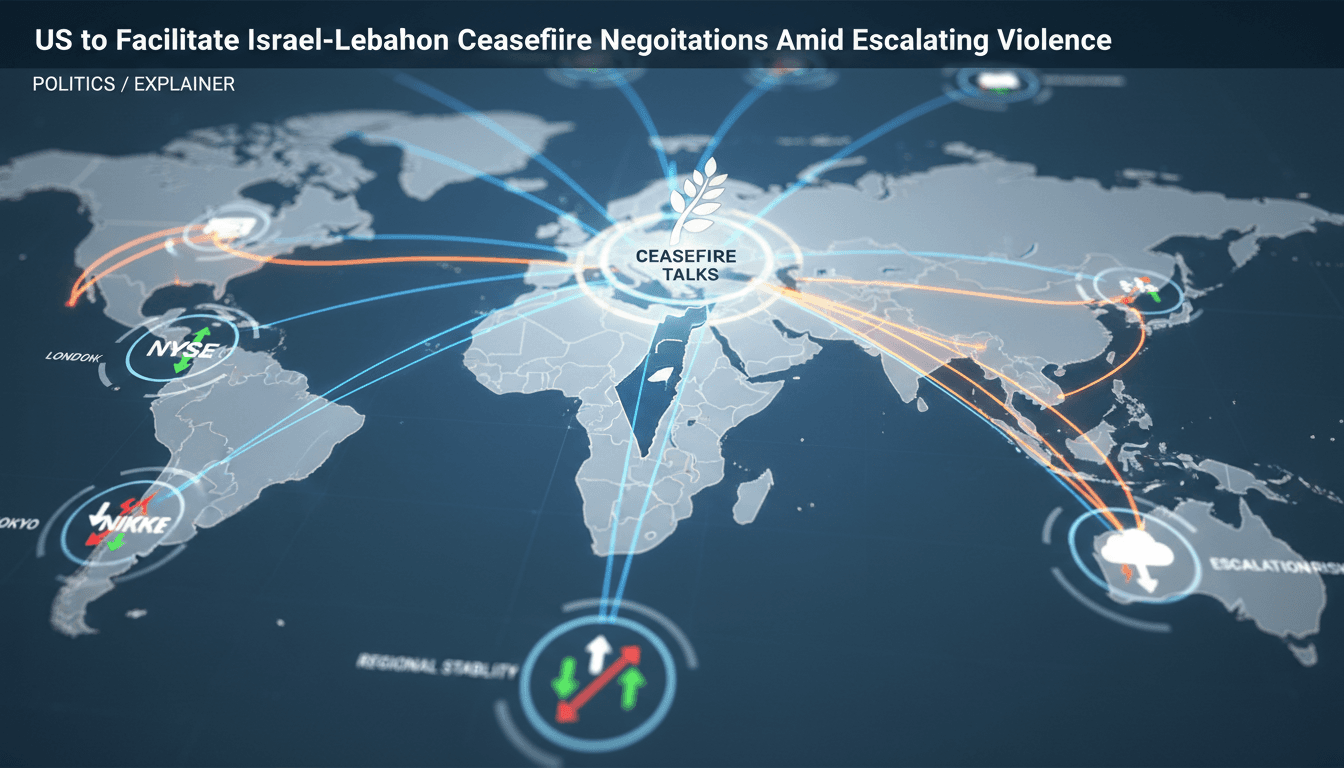
Here's what it means for you.
The outcome of these talks could significantly impact global markets and security dynamics, affecting your investments and travel plans.
Why it matters
The ongoing conflict and ceasefire negotiations directly influence energy prices, market stability, and geopolitical relations.
What happened (in 30 seconds)
- The US announced it will host ceasefire talks between Israel and Lebanon in Washington, D.C., scheduled for the week of April 14, 2026.
- Israeli airstrikes in southern Lebanon have killed over 200 people, raising tensions and threatening a fragile US-Iran ceasefire established on April 8.
- Iran has warned that the ceasefire is at risk if Lebanon and Hezbollah are not included in negotiations, complicating the regional security landscape.
The context you actually need
- The 2026 Iran War began in early 2026, following the assassination of Iran's Supreme Leader, leading to direct US and Israeli military actions against Iranian targets.
- Hezbollah's involvement has opened a secondary front in the conflict, complicating ceasefire efforts and regional stability.
- The fragile US-Iran ceasefire reached on April 8 excluded operations against Hezbollah, prompting immediate Israeli strikes that undermined the truce.
What's really happening
The announcement of US-hosted ceasefire talks comes at a critical juncture in the ongoing Iran War, which has escalated significantly since early 2026. Following the assassination of Iran's Supreme Leader, the conflict has expanded to include direct military engagements between the US, Israel, and Iran, with Hezbollah actively participating from Lebanon. The recent Israeli airstrikes, which have resulted in over 200 casualties, are not just a response to Hezbollah's actions but also a strategic maneuver to assert military dominance in the region.
The US-Iran ceasefire, established on April 8, was intended to halt direct hostilities and provide a framework for broader negotiations. However, Israel's immediate military response has raised questions about the viability of this truce. Iran's insistence that any ceasefire must include Lebanon and Hezbollah reflects its strategic interests in maintaining influence in the region and protecting its allies. The closure of the Strait of Hormuz by Iran in response to the strikes further complicates the situation, as it threatens global oil supply routes and escalates tensions with Gulf states.
The US's role as a mediator in these talks underscores its strategic interest in stabilizing the region and preventing further escalation that could disrupt global markets. However, the divergent positions of Israel and Iran regarding the inclusion of Lebanon in the ceasefire negotiations highlight the challenges ahead. If the talks fail to yield a comprehensive agreement, the cycle of violence may continue, impacting not only regional stability but also global economic conditions.
The stakes are high, as the outcome of these negotiations could reshape alliances and influence energy prices worldwide. Investors and governments alike are closely monitoring the situation, as any escalation could lead to significant market volatility and shifts in geopolitical dynamics.
Who feels it first (and how)
- Investors in energy markets: Fluctuations in oil prices could impact investment strategies and returns.
- Airline and tourism sectors: Ongoing conflict may lead to travel restrictions and reduced bookings, affecting revenue.
- Residents in Dubai and the UAE: Economic fallout from the Iran War has already caused significant market losses and could worsen with continued conflict.
- International businesses: Companies with operations in the Middle East may face disruptions and increased operational costs.
What to watch next
- Outcomes of the ceasefire talks: Success or failure will influence regional stability and market reactions.
- Iran's military responses: Any escalation from Iran could disrupt oil supplies and heighten tensions in the Gulf region.
- Reactions from Gulf states: Their responses to the conflict and negotiations will shape regional alliances and economic conditions.
The US is hosting ceasefire talks between Israel and Lebanon.
Continued tensions and military actions will persist if negotiations do not address Hezbollah's role.
The long-term impact of these negotiations on regional stability and global markets remains uncertain.
Frequently Asked Questions
- Why it matters?
- The ongoing conflict and ceasefire negotiations directly influence energy prices, market stability, and geopolitical relations.
- What happened (in 30 seconds)?
- The US announced it will host ceasefire talks between Israel and Lebanon in Washington, D.C., scheduled for the week of April 14, 2026. Israeli airstrikes in southern Lebanon have killed over 200 people, raising tensions and threatening a fragile US-Iran ceasefire established on April 8. Iran has warned that the ceasefire is at risk if Lebanon and Hezbollah are not included in negotiations, complicating the regional security landscape.
- What's really happening?
- The announcement of US-hosted ceasefire talks comes at a critical juncture in the ongoing Iran War, which has escalated significantly since early 2026. Following the assassination of Iran's Supreme Leader, the conflict has expanded to include direct military engagements between the US, Israel, and Iran, with Hezbollah actively participating from Lebanon. The recent Israeli airstrikes, which have resulted in over 200 casualties, are not just a response to Hezbollah's actions but also a strategic
- Who feels it first (and how)?
- Investors in energy markets: Fluctuations in oil prices could impact investment strategies and returns. Airline and tourism sectors: Ongoing conflict may lead to travel restrictions and reduced bookings, affecting revenue. Residents in Dubai and the UAE: Economic fallout from the Iran War has already caused significant market losses and could worsen with continued conflict. International businesses: Companies with operations in the Middle East may face disruptions and increased operational
- What to watch next?
- Outcomes of the ceasefire talks: Success or failure will influence regional stability and market reactions. Iran's military responses: Any escalation from Iran could disrupt oil supplies and heighten tensions in the Gulf region. Reactions from Gulf states: Their responses to the conflict and negotiations will shape regional alliances and economic conditions.
Market-moving headlines impacting equities, bonds, and related risk assets.
"Real-time catalysts and volatility drivers across indices and sectors."
— A47 Editor
Equities mixed, oil dips in cautious trade ahead of US-Iran talks
Equities showed mixed performance while oil prices dipped as markets remained cautious ahead of critical talks between the United States and Iran. The uncertainty surrounding the fragile ceasefire agreement has led to a wary trading environment, with...
UAE-based English-language newspaper covering regional politics, economics, and global affairs.
"The National reflects Emirati policy perspectives while maintaining international editorial standards."
— A47 Editor
Iran war latest: Iran has 'no cards' beyond extorting Strait of Hormuz, warns Trump
Tensions are escalating as former President Trump warns that Iran has 'no cards' left to play beyond its threats to disrupt the Strait of Hormuz, a critical maritime route for global oil shipments. This warning comes amid a fragile ceasefire between ...
Regional coverage and analysis focused on politics, diplomacy, and business across the Middle East.
"Al-Monitor is known for analytical reporting on Middle East politics and policy developments."
— A47 Editor
US-Iran ceasefire deal shows strain ahead of talks with oil flows squeezed
A fragile two-week ceasefire between the United States and Iran is showing signs of strain as accusations arise regarding Tehran's breach of commitments in the Strait of Hormuz, coinciding with Israeli airstrikes on Lebanon that Iran claims violate t...
National headlines across the United States including breaking stories and societal issues.
"NBC News is a mainstream media outlet known for comprehensive national and international news coverage with a centrist to slightly left-leaning editorial tone."
— A47 Editor
Strikes in Middle East threaten U.S.-Iran ceasefire
Recent Israeli airstrikes in Lebanon have escalated tensions in the Middle East, threatening the fragile ceasefire established between the United States and Iran. The strikes, which have targeted Hezbollah, have resulted in significant casualties and...