
Bahrain Urges Immediate UN Security Council Vote on Strait of Hormuz Resolution
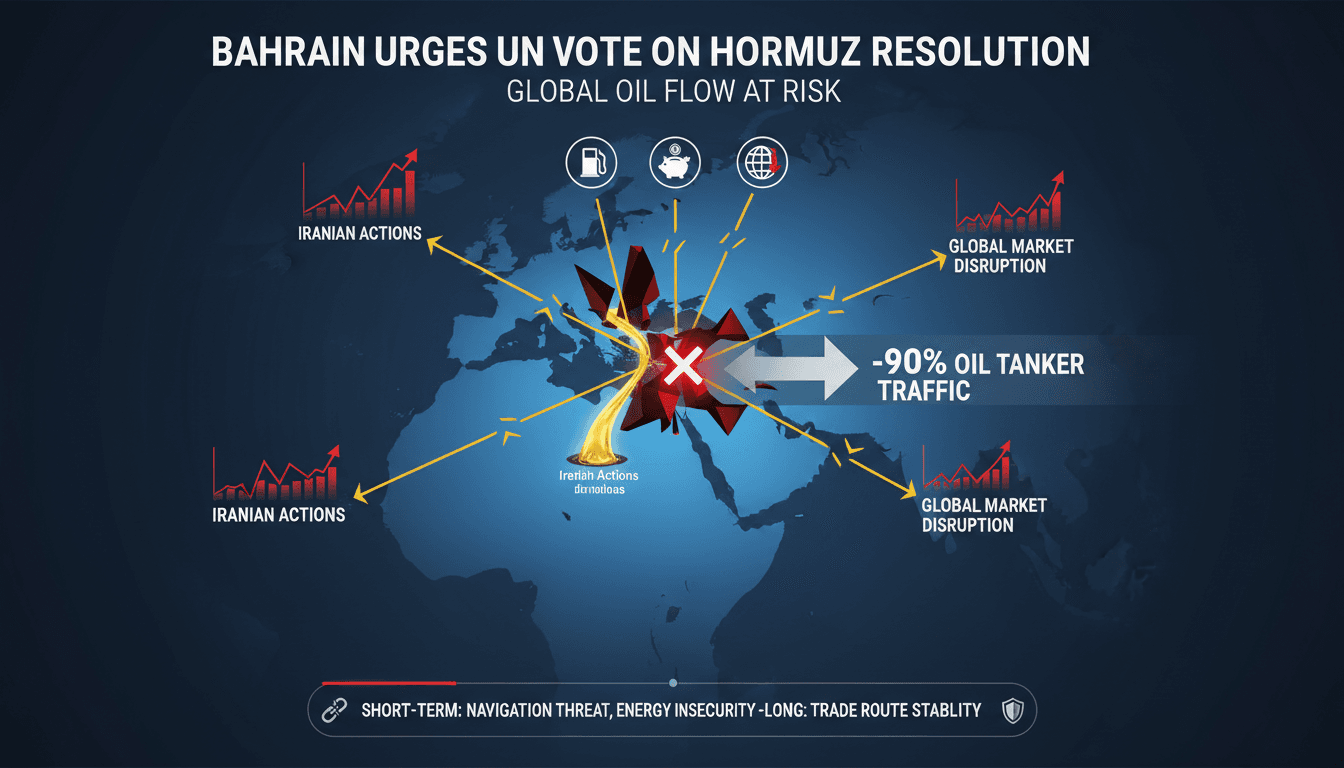
Here's what it means for you.
If you rely on global energy markets, the ongoing crisis in the Strait of Hormuz could directly impact fuel prices and supply chains.
Why it matters
The Strait of Hormuz is a critical chokepoint for global oil supply, with disruptions threatening energy security worldwide.
What happened (in 30 seconds)
- Bahrain urged the UN Security Council to vote on a resolution addressing the Strait of Hormuz crisis, citing a 90% decline in oil tanker traffic.
- Iran's actions have led to significant maritime disruptions, prompting Bahrain to seek coordinated defensive measures without authorizing force.
- The UN Security Council vote is scheduled for April 7, 2026, amid escalating tensions in the region.
The context you actually need
- The Strait of Hormuz is vital for global oil transport, with around 20 million barrels per day passing through, representing 20% of the world's oil supply.
- Iran's maritime restrictions and attacks on shipping have intensified amid a broader Middle East conflict, leading to a sharp decline in oil tanker traffic since February 28, 2026.
- Previous UN Resolution 2817, which demanded Iran halt its violations, has seen non-compliance, prompting Bahrain to coordinate with Gulf states for a new resolution.
What's really happening
The Strait of Hormuz crisis has escalated significantly since late February 2026, driven by Iranian restrictions on maritime traffic and aggressive actions against shipping and energy infrastructure. This strategic waterway is crucial for global oil transport; approximately 20 million barrels of oil transit through it daily, accounting for 20% of the world's oil supply. The crisis began when Iran imposed maritime restrictions, leading to a staggering 90% decline in oil tanker traffic, severely impacting global energy markets.
Bahrain's Foreign Minister, Abdul Latif bin Rashid Al Zayani, characterized the situation as a global emergency, emphasizing the need for immediate action from the UN Security Council. The urgency of this appeal is underscored by the broader Middle East conflict that has been ongoing for five weeks, with Iran's military actions contributing to regional instability. The initial draft resolution proposed by Bahrain aimed to authorize forceful measures against Iran but faced opposition from permanent members of the Security Council, including China, Russia, and France. This led to a softened resolution focusing on defensive coordination and condemnation of Iranian attacks.
The implications of this crisis extend beyond immediate regional tensions. The Dubai Mercantile Exchange has already felt the impact, suspending nominations for crude grades transiting the Strait of Hormuz, which has placed pressure on the Dubai oil benchmark. As a result, residents in the UAE are facing elevated fuel prices and potential supply chain disruptions for essential imports, including food and fertilizers. The economic strain is palpable, particularly for those dependent on stable energy exports and secure shipping lanes.
As the UN Security Council prepares to vote, the stakes are high. The outcome could either lead to coordinated international efforts to stabilize the situation or further exacerbate tensions in the region. The potential for military escalation remains a concern, with the US and other nations closely monitoring Iran's actions and the broader implications for global energy security.
Who feels it first (and how)
- Energy Sector Professionals: Fluctuations in oil prices directly impact their operations and profitability.
- Consumers: Increased fuel prices affect transportation costs and everyday expenses.
- Import-Dependent Businesses: Companies relying on stable supply chains for food and fertilizers face potential disruptions.
- Governments: National policies on energy security and foreign relations may shift in response to the crisis.
What to watch next
- UN Security Council Vote: The outcome will determine the international community's response to the crisis and could influence market stability.
- Iran's Military Actions: Any escalation in Iranian aggression could further disrupt oil supply and increase global tensions.
- Market Reactions: Watch for fluctuations in oil prices and trading volumes, which will indicate market confidence in the resolution of the crisis.
The Strait of Hormuz is essential for global oil transport, with significant traffic disruptions already occurring.
Continued volatility in oil prices and potential supply chain disruptions as the situation evolves.
The long-term implications of the UN resolution and Iran's potential responses to international pressure.
Frequently Asked Questions
- Why it matters?
- The Strait of Hormuz is a critical chokepoint for global oil supply, with disruptions threatening energy security worldwide.
- What happened (in 30 seconds)?
- Bahrain urged the UN Security Council to vote on a resolution addressing the Strait of Hormuz crisis, citing a 90% decline in oil tanker traffic. Iran's actions have led to significant maritime disruptions, prompting Bahrain to seek coordinated defensive measures without authorizing force. The UN Security Council vote is scheduled for April 7, 2026, amid escalating tensions in the region.
- What's really happening?
- The Strait of Hormuz crisis has escalated significantly since late February 2026, driven by Iranian restrictions on maritime traffic and aggressive actions against shipping and energy infrastructure. This strategic waterway is crucial for global oil transport; approximately 20 million barrels of oil transit through it daily, accounting for 20% of the world's oil supply. The crisis began when Iran imposed maritime restrictions, leading to a staggering 90% decline in oil tanker traffic, severely i
- Who feels it first (and how)?
- Energy Sector Professionals: Fluctuations in oil prices directly impact their operations and profitability. Consumers: Increased fuel prices affect transportation costs and everyday expenses. Import-Dependent Businesses: Companies relying on stable supply chains for food and fertilizers face potential disruptions. Governments: National policies on energy security and foreign relations may shift in response to the crisis.
- What to watch next?
- UN Security Council Vote: The outcome will determine the international community's response to the crisis and could influence market stability. Iran's Military Actions: Any escalation in Iranian aggression could further disrupt oil supply and increase global tensions. Market Reactions: Watch for fluctuations in oil prices and trading volumes, which will indicate market confidence in the resolution of the crisis.
Arabic-language UAE newspaper coverage focused on domestic affairs, public institutions, business, society, and regional developments.
"Al Khaleej coverage generally reflects a mainstream UAE editorial lens with strong attention to public affairs, institutions, and regional developments."
— A47 Editor
المنامة تدعو إلى تحرك دولي عاجل بشأن مضيق هرمز
Bahrain has called on the United Nations Security Council to urgently vote on a resolution regarding the escalating crisis in the Strait of Hormuz, warning against inaction that could affect global stability and food security. The Bahraini Foreign Mi...
Arabic-language coverage of political affairs and current events.
"Okaz political coverage typically follows mainstream Saudi framing on national and regional affairs."
— A47 Editor
الزياني: أزمة «هرمز» تهديد للعالم بأسره.. والتقاعس الدولي خطير
Bahraini Foreign Minister Dr. Abdullatif Al-Zayani warned that Iranian threats to vessels in the Strait of Hormuz could escalate into a global threat, emphasizing the urgency of addressing this rising crisis that jeopardizes global stability, food se...
Pan-Arab news coverage spanning politics, business, sports, and regional affairs.
"Asharq Al-Awsat reflects a broad Arab editorial perspective with strong attention to regional geopolitics."
— A47 Editor
وزير الخارجية البحريني: أزمة مضيق هرمز تتطلب تحركاً دولياً عاجلاً
Bahraini Foreign Minister Dr. Abdullatif Al-Zayani emphasized the urgent need for international action regarding the crisis in the Strait of Hormuz, highlighting the severe humanitarian and economic repercussions that could arise if the situation rem...