
Lebanese Army Advises Residents to Delay Return Amid Ongoing Israeli Airstrikes
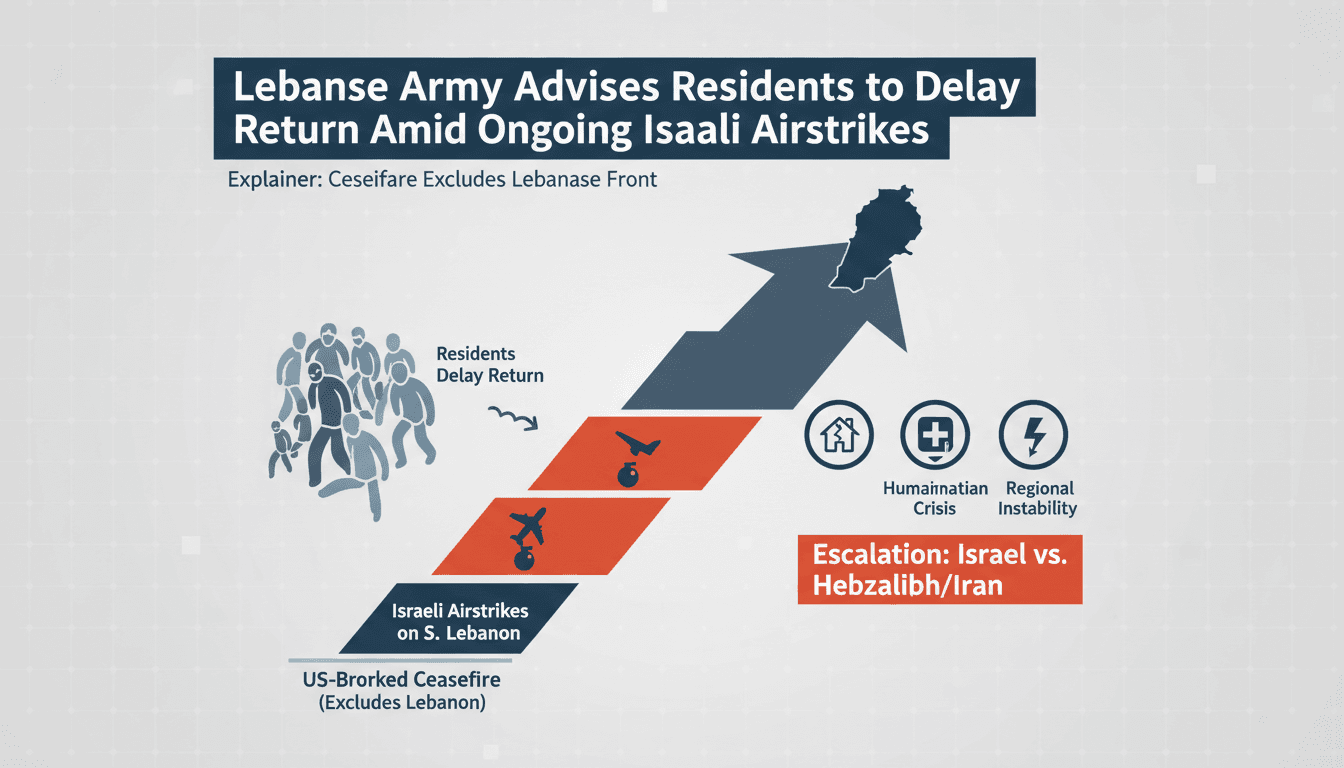
Here's what it means for you.
Ongoing conflict in Lebanon could disrupt regional stability and impact global markets.
Why it matters
The exclusion of Lebanon from the US-brokered ceasefire raises concerns over escalating violence and humanitarian crises in the region.
What happened (in 30 seconds)
- The Lebanese Army urged residents to delay returning to southern Lebanon due to ongoing Israeli airstrikes.
- Israeli officials confirmed that the newly announced US-brokered ceasefire with Iran does not apply to Lebanon.
- Hezbollah is preparing a response to the continued Israeli military operations, raising fears of further escalation.
The context you actually need
- The 2026 Lebanon war began in early March when Hezbollah launched rockets into Israel, breaking a previous ceasefire.
- Over 1,070 individuals have been killed by Israeli strikes in Lebanon since the conflict escalated, according to the Lebanon Ministry of Public Health.
- The ceasefire announced on April 8, 2026, only pauses direct hostilities between the US, Iran, and Israel, allowing continued Israeli operations against Hezbollah.
What's really happening
The recent escalation in southern Lebanon stems from a complex web of geopolitical tensions involving Israel, Hezbollah, and Iran. The situation deteriorated significantly after Hezbollah's rocket attacks on Israel in early March 2026, which were a direct response to US-Israeli strikes on Iranian targets. This marked the collapse of a fragile ceasefire established in November 2024, leading to increased military operations and airspace violations.
On April 8, 2026, a US-brokered ceasefire was announced, intended to halt direct hostilities between the US, Iran, and Israel for two weeks. However, Israeli Prime Minister Benjamin Netanyahu and the Israel Defense Forces (IDF) quickly clarified that this ceasefire does not extend to Lebanon. As a result, Israeli airstrikes continued unabated, targeting southern towns such as Tyre and Sidon, leading to civilian casualties and further displacement. The Lebanese Army's urgent appeal for residents to delay their return home highlights the immediate humanitarian risks posed by ongoing military actions.
The humanitarian implications are severe, with local markets experiencing volatility due to the conflict and oil price fluctuations. The Lebanese government, facing pressure from its citizens and international observers, is demanding clarity on the ceasefire's terms, particularly regarding Lebanon's exclusion. Meanwhile, Hezbollah's anticipated response to Israeli actions could lead to a broader conflict, potentially involving Iran, which has warned that strikes on Lebanon would void the ceasefire.
This situation not only affects the immediate region but also has far-reaching implications for global markets, especially in the oil sector. The UAE, home to a significant Lebanese expatriate community, has already seen disruptions in air travel and economic anxiety due to the conflict's spillover effects. As tensions rise, the potential for a wider conflict looms, threatening stability in the Middle East and beyond.
Who feels it first (and how)
- Lebanese civilians: Facing displacement and humanitarian crises due to ongoing airstrikes.
- Regional airlines: Experiencing flight cancellations and disruptions in travel routes to Lebanon and surrounding areas.
- Global oil markets: Volatility in oil prices as tensions escalate, impacting economies reliant on stable oil supplies.
What to watch next
- Hezbollah's response: Monitoring Hezbollah's military actions will be crucial in assessing the potential for further escalation in the region.
- International diplomatic efforts: Watch for any new negotiations or interventions aimed at including Lebanon in ceasefire discussions, which could stabilize the situation.
- Humanitarian aid developments: The effectiveness of international aid efforts in southern Lebanon will be a key indicator of the humanitarian impact of the ongoing conflict.
Israeli airstrikes are ongoing, and the Lebanese Army has issued warnings to civilians.
Hezbollah will respond militarily to Israeli actions, potentially escalating the conflict.
The long-term implications of the ceasefire's exclusion of Lebanon on regional stability and international relations.
Frequently Asked Questions
- Why it matters?
- The exclusion of Lebanon from the US-brokered ceasefire raises concerns over escalating violence and humanitarian crises in the region.
- What happened (in 30 seconds)?
- The Lebanese Army urged residents to delay returning to southern Lebanon due to ongoing Israeli airstrikes. Israeli officials confirmed that the newly announced US-brokered ceasefire with Iran does not apply to Lebanon. Hezbollah is preparing a response to the continued Israeli military operations, raising fears of further escalation.
- What's really happening?
- The recent escalation in southern Lebanon stems from a complex web of geopolitical tensions involving Israel, Hezbollah, and Iran. The situation deteriorated significantly after Hezbollah's rocket attacks on Israel in early March 2026, which were a direct response to US-Israeli strikes on Iranian targets. This marked the collapse of a fragile ceasefire established in November 2024, leading to increased military operations and airspace violations. On April 8, 2026, a US-brokered ceasefire was a
- Who feels it first (and how)?
- Lebanese civilians: Facing displacement and humanitarian crises due to ongoing airstrikes. Regional airlines: Experiencing flight cancellations and disruptions in travel routes to Lebanon and surrounding areas. Global oil markets: Volatility in oil prices as tensions escalate, impacting economies reliant on stable oil supplies.
- What to watch next?
- Hezbollah's response: Monitoring Hezbollah's military actions will be crucial in assessing the potential for further escalation in the region. International diplomatic efforts: Watch for any new negotiations or interventions aimed at including Lebanon in ceasefire discussions, which could stabilize the situation. Humanitarian aid developments: The effectiveness of international aid efforts in southern Lebanon will be a key indicator of the humanitarian impact of the ongoing conflict.
Arabic-language digital news outlet covering UAE, regional, and international developments with broad general-news coverage.
"Al Ain News coverage typically blends UAE-focused reporting with wider Arab regional and international news."
— A47 Editor
لبنان بعد هدنة إيران.. ارتباك وغارات وطلب عاجل من الجيش
The Lebanese Army has urged displaced individuals to delay their return to their homes in southern Lebanon due to ongoing Israeli airstrikes. This call comes in the wake of a ceasefire involving Iran, highlighting the precarious security situation in...
Arabic-language UAE newspaper coverage focused on domestic affairs, public institutions, business, society, and regional developments.
"Al Khaleej coverage generally reflects a mainstream UAE editorial lens with strong attention to public affairs, institutions, and regional developments."
— A47 Editor
الجيش اللبناني يحض سكان الجنوب على «التريث» في العودة إلى منازلهم
The Lebanese Army has urged displaced residents in the southern region to exercise caution and delay their return to their homes due to ongoing Israeli airstrikes. This advisory comes amid heightened tensions and military activity in the area, which ...