
Virginia Enacts Law for In-Kind Transfer of Unclaimed Digital Assets
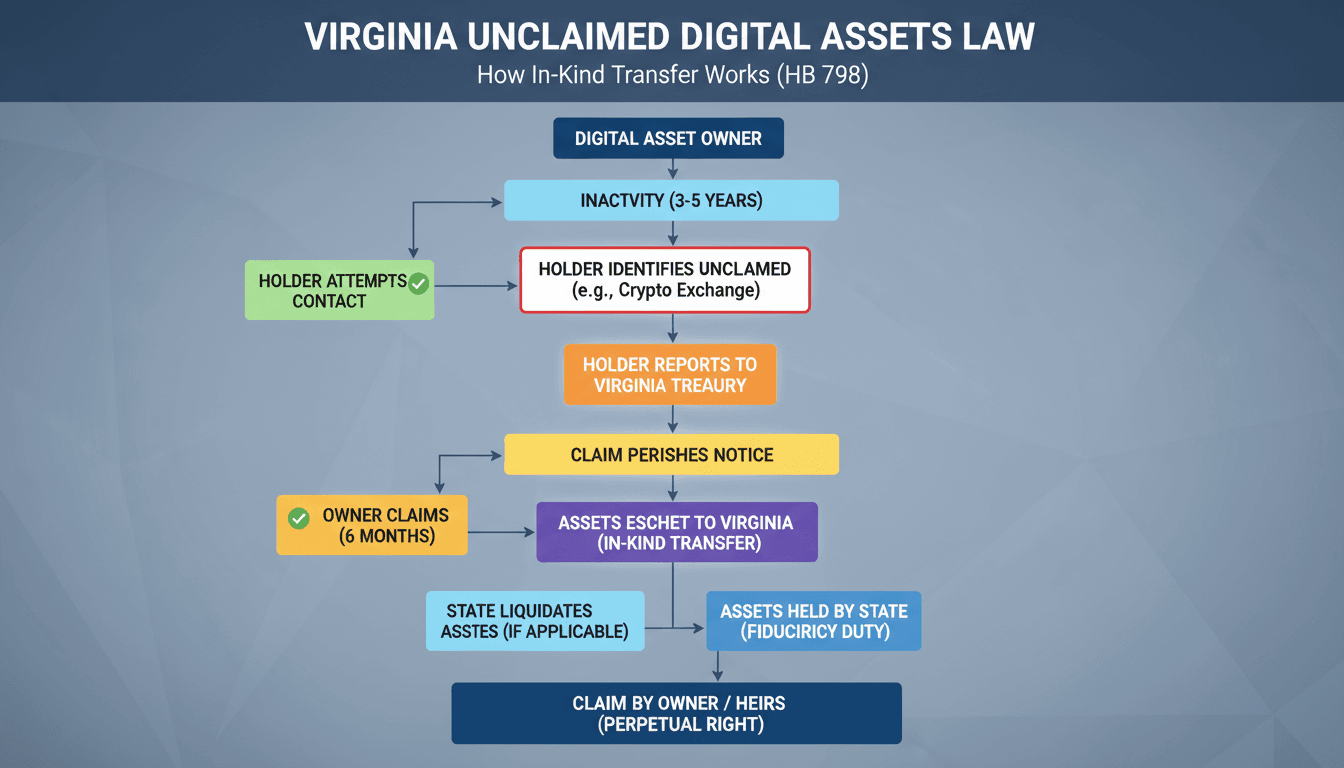
Here's what it means for you.
If you hold digital assets in Virginia, you need to be aware of new rules that could affect your ownership rights.
Why it matters
This legislation sets a precedent for how states manage unclaimed digital assets, potentially influencing similar laws across the U.S.
What happened (in 30 seconds)
- On April 13, 2026, Virginia Governor Abigail Spanberger signed House Bill 798 into law, establishing a framework for unclaimed digital assets.
- Custodians must transfer dormant digital assets to the state after five years of inactivity, preserving their native form.
- The law takes effect on July 1, 2026, requiring the state to hold these assets for at least one year before any sale.
The context you actually need
- Virginia's previous unclaimed property laws did not account for the rise of digital assets, creating uncertainty for custodians.
- States hold billions in unclaimed property, with Virginia alone managing approximately $3.8 billion, highlighting the need for updated regulations.
- Other states are exploring similar legislation, with Arizona and Ohio already implementing measures for unclaimed cryptocurrency.
What's really happening
Virginia's House Bill 798 represents a significant shift in how unclaimed digital assets, particularly cryptocurrencies, are treated under state law. Prior to this legislation, the framework for unclaimed property was largely outdated, failing to address the complexities introduced by digital assets. The law mandates that custodians—entities holding digital assets on behalf of others—must transfer any dormant assets to the state after five years of inactivity. This is a critical change, as it preserves the asset's original form, allowing potential claimants to retain market exposure rather than forcing a liquidation at potentially unfavorable prices.
The bill was introduced by Delegate C.E. Cliff Hayes Jr. and quickly gained traction, passing through various legislative committees with overwhelming support. The swift passage reflects a growing recognition of the need to adapt legal frameworks to the realities of digital finance. By requiring custodians to transfer assets in their native form, the law aims to protect the value of these assets for their rightful owners, who may not be aware of their dormant status.
This legislative move is also a response to the broader trend of states grappling with unclaimed property. With billions of dollars in unclaimed assets sitting in state coffers, the incentive to update laws is clear. Virginia's approach could serve as a model for other states, particularly as the digital asset landscape continues to evolve. The law's effective date of July 1, 2026, gives custodians time to adjust their practices and ensures that the state has a framework in place to manage these assets responsibly.
However, the legislation has not been without its critics. Some libertarian voices argue that the five-year dormancy presumption is too short, suggesting that long-term holders should not be presumed to have abandoned their assets. This debate highlights the tension between state interests in managing unclaimed property and individual rights to ownership.
Overall, Virginia's HB 798 is a landmark piece of legislation that addresses the complexities of digital asset ownership in a rapidly changing financial landscape, setting the stage for future regulatory developments.
Who feels it first (and how)
- Digital asset custodians: They must adapt to new compliance requirements regarding dormant assets.
- Virginia residents: Those with unclaimed digital assets will need to be aware of the new rules to reclaim their property.
- Investors in cryptocurrencies: They may see changes in how their assets are managed if they are held by custodians in Virginia.
What to watch next
- Implementation of the law: Monitor how custodians adjust their practices ahead of the July 1, 2026, effective date. This will indicate the law's impact on asset management.
- Legislative responses in other states: Watch for similar bills in states like Ohio and Arizona, which could signal a broader trend in digital asset regulation.
- Market reactions: Observe how the cryptocurrency market responds to this legislation, particularly regarding asset valuations and custodial practices.
The law requires custodians to transfer dormant digital assets to the state after five years.
Other states will consider similar legislation, inspired by Virginia's approach to digital assets.
The long-term effects on the cryptocurrency market and individual asset holders remain to be seen.
Frequently Asked Questions
- Why it matters?
- This legislation sets a precedent for how states manage unclaimed digital assets, potentially influencing similar laws across the U.S.
- What happened (in 30 seconds)?
- On April 13, 2026, Virginia Governor Abigail Spanberger signed House Bill 798 into law, establishing a framework for unclaimed digital assets. Custodians must transfer dormant digital assets to the state after five years of inactivity, preserving their native form. The law takes effect on July 1, 2026, requiring the state to hold these assets for at least one year before any sale.
- What's really happening?
- Virginia's House Bill 798 represents a significant shift in how unclaimed digital assets, particularly cryptocurrencies, are treated under state law. Prior to this legislation, the framework for unclaimed property was largely outdated, failing to address the complexities introduced by digital assets. The law mandates that custodians—entities holding digital assets on behalf of others—must transfer any dormant assets to the state after five years of inactivity. This is a critical change, as it pr
- Who feels it first (and how)?
- Digital asset custodians: They must adapt to new compliance requirements regarding dormant assets. Virginia residents: Those with unclaimed digital assets will need to be aware of the new rules to reclaim their property. Investors in cryptocurrencies: They may see changes in how their assets are managed if they are held by custodians in Virginia.
- What to watch next?
- Implementation of the law: Monitor how custodians adjust their practices ahead of the July 1, 2026, effective date. This will indicate the law's impact on asset management. Legislative responses in other states: Watch for similar bills in states like Ohio and Arizona, which could signal a broader trend in digital asset regulation. Market reactions: Observe how the cryptocurrency market responds to this legislation, particularly regarding asset valuations and custodial practices.
Covers Bitcoin plus altcoin news, market updates, and educational resources.
"Bitcoin.com provides news, market data, and guides focused on Bitcoin and the wider crypto industry."
— A47 Editor
Virginia Enacts Crypto Unclaimed Property Law Requiring In-Kind Transfer to State
Virginia has enacted a new law requiring the state to hold unclaimed cryptocurrency in its original form for at least one year before any sale can occur, as outlined in House Bill 798. This legislation aims to integrate digital assets into existing u...
News, analysis, and thought leadership focusing exclusively on Bitcoin.
"Bitcoin Magazine is one of the original publications devoted to Bitcoin, offering in-depth news, analysis, and commentary."
— A47 Editor
Virginia Enacts Law Requiring State to Hold ‘Unclaimed’ Crypto in Original Form for One Year
Virginia has enacted a new law that mandates the state to hold unclaimed cryptocurrency in its original form for one year before any sale can occur. This legislation aims to establish a clear framework for managing dormant digital assets, reflecting ...
Covers blockchain, cryptocurrency news, project analysis, and market insights.
"Cointelegraph is a leading crypto-focused media outlet known for timely news, analysis, and educational content related to blockchain and digital assets."
— A47 Editor
Virginia updates law to hold unclaimed crypto in-kind for at least one year
Virginia has enacted a new law that requires the state to hold unclaimed cryptocurrency in its original form for at least one year before any sale can occur. This legislation aims to integrate digital assets into existing unclaimed property regulatio...