
Lebanese President Aoun Asserts National Sovereignty Amid Israel Ceasefire
Here's what it means for you.
As tensions ease in Lebanon, global markets may stabilize, impacting your investments and travel plans.
Why it matters
The ceasefire could reshape geopolitical dynamics in the Middle East, influencing energy prices and international relations.
What happened (in 30 seconds)
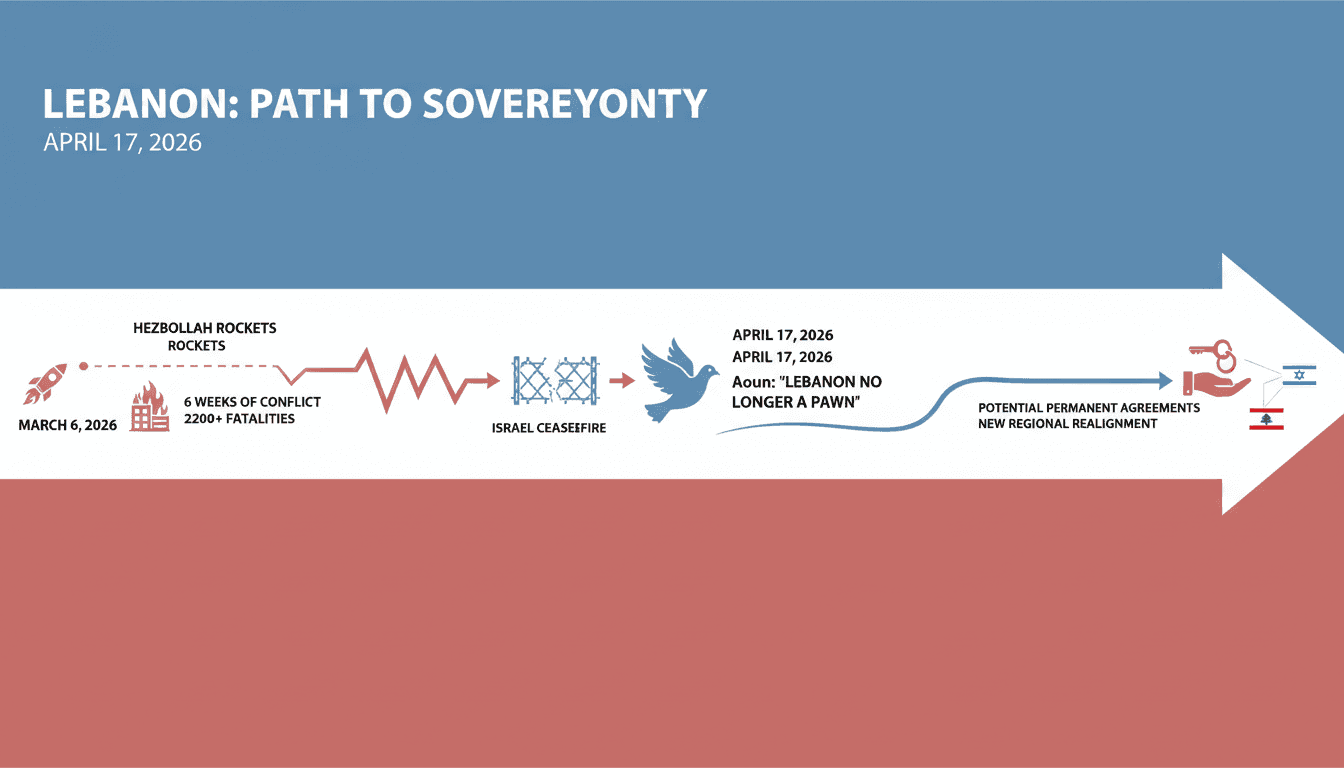
- April 17, 2026: Lebanese President Joseph Aoun declared Lebanon is no longer a "pawn" amid a 10-day ceasefire with Israel.
- Conflict Overview: The ceasefire follows six weeks of conflict initiated by Hezbollah rocket fire, resulting in over 2,200 fatalities and displacing more than one million people.
- Negotiations: U.S. President Donald Trump facilitated the ceasefire, with ongoing discussions aimed at establishing permanent agreements.
The context you actually need
- Escalation Timeline: Tensions escalated on March 2, 2026, when Hezbollah launched rockets at Israel, prompting a significant Israeli military response.
- Historical Background: This conflict marks a resumption of hostilities after a November 2024 ceasefire, which was plagued by over 10,000 violations.
- International Involvement: The U.S. brokered the first direct Lebanon-Israel talks in decades, highlighting shifting alliances and the waning influence of Hezbollah.
What's really happening
The recent ceasefire in Lebanon is a pivotal moment in a long-standing conflict that has seen the country caught in the crossfire of regional power struggles. President Joseph Aoun's declaration signals a shift in Lebanon's approach to its sovereignty and regional role. By asserting that Lebanon is no longer a "pawn," Aoun is attempting to reclaim national agency, a move that resonates with a population weary of external manipulation and internal strife.
The backdrop of this ceasefire is critical. The conflict, which erupted after Hezbollah's rocket attacks on Israel, resulted in significant casualties and displacement. The death toll of over 2,200 underscores the human cost of this escalation, while the displacement of more than one million people highlights the urgent need for stability. The ceasefire, brokered by U.S. President Donald Trump, is not merely a pause in hostilities; it represents a potential turning point in Lebanon's geopolitical landscape.
The ceasefire's terms include provisions for Israeli withdrawal, the extension of Lebanese state authority, and the safe repatriation of displaced persons. These elements are crucial for Lebanon's recovery and rebuilding efforts. However, the immediate aftermath has seen mixed reactions. While the Lebanese public has expressed skepticism about the direct talks with Washington, Israel's Prime Minister Benjamin Netanyahu has maintained a firm stance on retaining military positions in southern Lebanon, indicating that the path to lasting peace remains fraught with challenges.
The broader implications of this ceasefire extend beyond Lebanon. The UAE's Ministry of Foreign Affairs welcomed the truce, emphasizing the importance of U.S. diplomacy in fostering regional stability. This sentiment is particularly relevant for Lebanese expatriates in Dubai, who have felt the economic impacts of previous conflicts. As tensions ease, there is potential for increased investment and tourism, benefiting sectors that rely on stability in the region.
In summary, the ceasefire is a complex interplay of local and international dynamics, with Lebanon striving to assert its sovereignty while navigating the intricate web of regional politics. The outcome of ongoing negotiations will be critical in determining whether this ceasefire can transition into a lasting peace, or if Lebanon will once again find itself embroiled in conflict.
Who feels it first (and how)
- Lebanese Citizens: Directly affected by the conflict and ceasefire, facing displacement and economic instability.
- Investors: Those with stakes in Middle Eastern markets may see fluctuations based on regional stability.
- UAE Expatriates: Lebanese nationals in Dubai could benefit from improved relations and economic opportunities as tensions decrease.
What to watch next
- Negotiation Outcomes: Watch for developments in the ongoing talks between Lebanon and Israel, as successful agreements could lead to long-term stability.
- Market Reactions: Monitor global stock and oil prices, which may respond to shifts in Middle Eastern tensions and geopolitical stability.
- Humanitarian Efforts: Keep an eye on initiatives aimed at repatriating displaced persons, as successful efforts could signal a return to normalcy in Lebanon.
The ceasefire is currently in effect, with early violations reported.
Ongoing negotiations will continue to shape Lebanon's political landscape and its relations with Israel.
The long-term effectiveness of the ceasefire and the potential for lasting peace remain uncertain.
Frequently Asked Questions
- Why it matters?
- The ceasefire could reshape geopolitical dynamics in the Middle East, influencing energy prices and international relations.
- What happened (in 30 seconds)?
- April 17, 2026: Lebanese President Joseph Aoun declared Lebanon is no longer a "pawn" amid a 10-day ceasefire with Israel. Conflict Overview: The ceasefire follows six weeks of conflict initiated by Hezbollah rocket fire, resulting in over 2,200 fatalities and displacing more than one million people. Negotiations: U.S. President Donald Trump facilitated the ceasefire, with ongoing discussions aimed at establishing permanent agreements.
- What's really happening?
- The recent ceasefire in Lebanon is a pivotal moment in a long-standing conflict that has seen the country caught in the crossfire of regional power struggles. President Joseph Aoun's declaration signals a shift in Lebanon's approach to its sovereignty and regional role. By asserting that Lebanon is no longer a "pawn," Aoun is attempting to reclaim national agency, a move that resonates with a population weary of external manipulation and internal strife. The backdrop of this ceasefire is critic
- Who feels it first (and how)?
- Lebanese Citizens: Directly affected by the conflict and ceasefire, facing displacement and economic instability. Investors: Those with stakes in Middle Eastern markets may see fluctuations based on regional stability. UAE Expatriates: Lebanese nationals in Dubai could benefit from improved relations and economic opportunities as tensions decrease.
- What to watch next?
- Negotiation Outcomes: Watch for developments in the ongoing talks between Lebanon and Israel, as successful agreements could lead to long-term stability. Market Reactions: Monitor global stock and oil prices, which may respond to shifts in Middle Eastern tensions and geopolitical stability. Humanitarian Efforts: Keep an eye on initiatives aimed at repatriating displaced persons, as successful efforts could signal a return to normalcy in Lebanon.
Global news coverage with extensive reporting on Middle Eastern conflicts and geopolitics.
"Al Jazeera is a Qatar-based broadcaster known for wide regional coverage and alternative perspectives."
— A47 Editor
Lebanon president says country is no longer a pawn amid Israel ceasefire
Lebanese President Joseph Aoun announced that Lebanon is no longer a pawn in regional conflicts, emphasizing the country's sovereignty and freedom amid a newly declared ceasefire with Israel. This ceasefire, effective for ten days, follows escalating...
Comprehensive coverage of Middle Eastern and global issues.
"Al Jazeera is a prominent voice from the Global South, especially the Middle East, with an emphasis on underreported stories."
— A47 Editor
Lebanon president says country is no longer a pawn amid Israel ceasefire
Lebanese President Joseph Aoun announced that Lebanon is no longer a pawn in regional conflicts, emphasizing the country's sovereignty and freedom amid a newly declared ceasefire with Israel. This ceasefire, effective for ten days, follows escalating...
Regional and international reporting focused on Middle Eastern politics, diplomacy, and economics.
"Asharq Al-Awsat is a Saudi-owned international newspaper reflecting mainstream Gulf political perspectives."
— A47 Editor
Aoun Says Future Deal Will Not Cede Lebanese Territory, Country No Longer ‘Arena for Anyone’s Wars’
Lebanese President Joseph Aoun stated that any future agreements with Israel will not involve ceding Lebanese territory, asserting the country's sovereignty during a televised address following a U.S.-brokered ceasefire with Hezbollah.
Arabic-language UAE newspaper coverage focused on domestic affairs, public institutions, business, society, and regional developments.
"Al Khaleej coverage generally reflects a mainstream UAE editorial lens with strong attention to public affairs, institutions, and regional developments."
— A47 Editor
عون: لبنان لم يعد ساحة للحرب والتفاوض ليس تنازلاً
Lebanese President Joseph Aoun stated on Friday that Lebanon has entered a new historical phase, emphasizing that the country is no longer a battleground and that negotiations should not be viewed as concessions. This statement marks a significant sh...
Regional coverage and analysis focused on politics, diplomacy, and business across the Middle East.
"Al-Monitor is known for analytical reporting on Middle East politics and policy developments."
— A47 Editor
Aoun says Lebanon seeks 'permanent agreements' with Israel after White House invite
Lebanese President Joseph Aoun announced that Lebanon is entering a new phase of negotiations with Israel, focusing on establishing permanent agreements following a U.S.-brokered ceasefire. This development comes after an invitation from the White Ho...
Arabic-language coverage of political affairs and current events.
"Okaz political coverage typically follows mainstream Saudi framing on national and regional affairs."
— A47 Editor
الرئيس اللبناني: الانسحاب الإسرائيلي أساس لوقف «النار».. والمفاوضات سيادية
Lebanese President Joseph Aoun stated that the Israeli withdrawal is essential for establishing a ceasefire with Israel, which he believes should lead to direct negotiations between the two nations. Aoun emphasized the need for Lebanon to maintain so...