
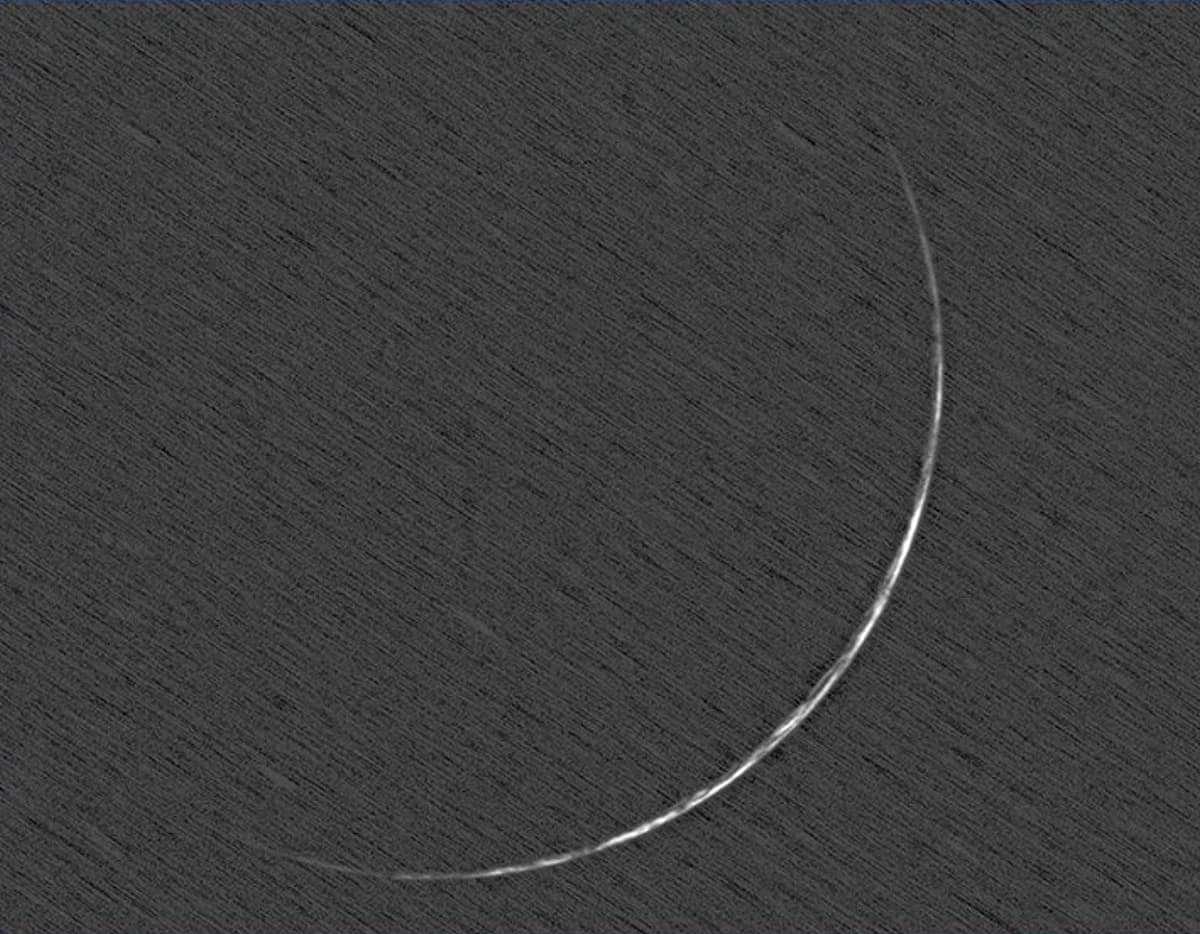
UAE Astronomers Capture Daytime Image of Dhul Qadah Crescent Moon
Here's what it means for you.
The UAE's precise lunar observations can influence your holiday planning and family gatherings.
Why it matters
Accurate lunar sightings are crucial for aligning the Islamic calendar, affecting millions of observant Muslims globally.
What happened (in 30 seconds)
- UAE astronomers at Al Khatm Astronomical Observatory captured a rare daytime image of the Dhul Qadah crescent moon on April 18, 2026.
- The crescent moon, 16.5 hours old and 11.7 degrees from the Sun, marks the start of the sacred month in the Islamic Hijri calendar.
- This observation aids in precise calendrical alignment, impacting the upcoming Hajj pilgrimage and Eid celebrations.
The context you actually need
- The Hijri calendar relies on physical crescent moon sightings to delineate lunar months, with Dhul Qadah being one of four sacred months in Islam.
- Al Khatm Observatory, operated by the UAE's International Astronomy Center, is equipped to capture challenging daytime images, enhancing regional and global calendrical accuracy.
- The lunar conjunction on April 17, 2026, set the stage for this observation, which was confirmed through media announcements and aligns with astronomical predictions.
What's really happening
On April 18, 2026, astronomers at Al Khatm Astronomical Observatory achieved a significant technical feat by capturing a daytime image of the Dhul Qadah crescent moon. This crescent, only 16.5 hours old and positioned 11.7 degrees from the Sun, was observed under optimal atmospheric conditions. The successful sighting not only confirms the start of Dhul Qadah 1447 AH but also plays a critical role in the broader context of Islamic lunar calendar observance.
The Hijri calendar is unique in its reliance on physical moon sightings, which can vary by location and atmospheric conditions. This reliance creates a complex interplay between local practices and the need for a unified observance, particularly in the UAE, where the International Astronomy Center operates the observatory. The center's capabilities allow for precise measurements and observations that can refine the timing of significant Islamic events, such as the Hajj pilgrimage and Eid celebrations.
The significance of this sighting extends beyond mere observation; it influences the spiritual and social fabric of the community. For Dubai residents, the confirmation of Dhul Qadah means a shift in focus towards spiritual practices and preparations for the upcoming Hajj, which is expected to commence around May 18, 2026. This alignment not only affects individual observances but also has implications for family gatherings and holiday planning, as Eid Al Adha is anticipated to fall between May 27 and 29, 2026.
The media coverage surrounding this event has amplified its importance, with outlets like Gulf News forecasting potential long weekends for Eid celebrations. While no immediate holidays were declared following the sighting, the refined lunar observation aids in Hajj preparations and enhances the overall accuracy of the Islamic calendar. This is particularly relevant in a region where varying international sighting practices can lead to discrepancies in observance.
As the UAE continues to lead in astronomical advancements, the implications of this sighting resonate beyond the borders of the nation, influencing how Islamic months are observed globally. The technical prowess demonstrated by the Al Khatm team not only showcases the UAE's commitment to scientific inquiry but also reinforces the importance of accurate lunar observations in maintaining the integrity of the Islamic calendar.
Who feels it first (and how)
- Muslim communities in the UAE and globally, as they rely on accurate lunar sightings for religious observances.
- Families planning holidays, particularly those looking forward to Eid Al Adha celebrations.
- Local businesses in the hospitality and retail sectors, anticipating increased activity during the holiday period.
What to watch next
- Eid Al Adha dates: Monitor announcements regarding the exact dates for Eid celebrations, as they will impact travel and family gatherings.
- Hajj preparations: Watch for updates on Hajj logistics and participation, which may influence travel and accommodation sectors.
- Lunar observation advancements: Keep an eye on further developments from the International Astronomy Center, as they may refine future lunar sightings and calendar alignments.
The sighting of the Dhul Qadah crescent moon has been confirmed, marking the start of the month.
Eid Al Adha will be celebrated around May 27, 2026, based on lunar calculations.
The potential for regional variations in lunar sightings and their impact on observance across different countries.
Frequently Asked Questions
- Why it matters?
- Accurate lunar sightings are crucial for aligning the Islamic calendar, affecting millions of observant Muslims globally.
- What happened (in 30 seconds)?
- UAE astronomers at Al Khatm Astronomical Observatory captured a rare daytime image of the Dhul Qadah crescent moon on April 18, 2026. The crescent moon, 16.5 hours old and 11.7 degrees from the Sun, marks the start of the sacred month in the Islamic Hijri calendar. This observation aids in precise calendrical alignment, impacting the upcoming Hajj pilgrimage and Eid celebrations.
- What's really happening?
- On April 18, 2026, astronomers at Al Khatm Astronomical Observatory achieved a significant technical feat by capturing a daytime image of the Dhul Qadah crescent moon. This crescent, only 16.5 hours old and positioned 11.7 degrees from the Sun, was observed under optimal atmospheric conditions. The successful sighting not only confirms the start of Dhul Qadah 1447 AH but also plays a critical role in the broader context of Islamic lunar calendar observance. The Hijri calendar is unique in its r
- Who feels it first (and how)?
- Muslim communities in the UAE and globally, as they rely on accurate lunar sightings for religious observances. Families planning holidays, particularly those looking forward to Eid Al Adha celebrations. Local businesses in the hospitality and retail sectors, anticipating increased activity during the holiday period.
- What to watch next?
- Eid Al Adha dates: Monitor announcements regarding the exact dates for Eid celebrations, as they will impact travel and family gatherings. Hajj preparations: Watch for updates on Hajj logistics and participation, which may influence travel and accommodation sectors. Lunar observation advancements: Keep an eye on further developments from the International Astronomy Center, as they may refine future lunar sightings and calendar alignments.
UAE-based newspaper covering Gulf politics, society, and international developments.
"Gulf News is one of the UAE’s most prominent English-language publications."
— A47 Editor
UAE astronomers capture Dhu Al Qadah crescent in daylight
UAE astronomers successfully captured the crescent of Dhu Al Qadah in daylight, marking a significant achievement in astronomical observation. This event highlights the advancements in the UAE's capabilities in astronomy and space science.
A curated Gulf News feed featuring major stories across news, business, opinion, and lifestyle.
"Gulf News is a major UAE newspaper whose featured stories feed reflects a broad editorial mix shaped for a Gulf audience."
— A47 Editor
UAE astronomers capture Dhu Al Qadah crescent in daylight
UAE astronomers successfully captured the crescent of Dhu Al Qadah in daylight, marking a significant achievement in astronomical observation. This event highlights the advancements in the UAE's capabilities in astronomy and space science.
Breaking news and analysis from the UAE and Gulf region.
"Khaleej Times is a long-running UAE publication with broad regional coverage."
— A47 Editor
UAE astronomers capture image of Dhul Qadah crescent in rare daytime sighting
UAE astronomers have successfully captured an image of the Dhul Qadah crescent during a rare daytime sighting, marking a significant achievement in astronomical observation. This event underscores the advancements in the UAE's capabilities in astrono...