
Chicago Fed President Goolsbee Expresses Economic Caution Amid Rising Oil Prices
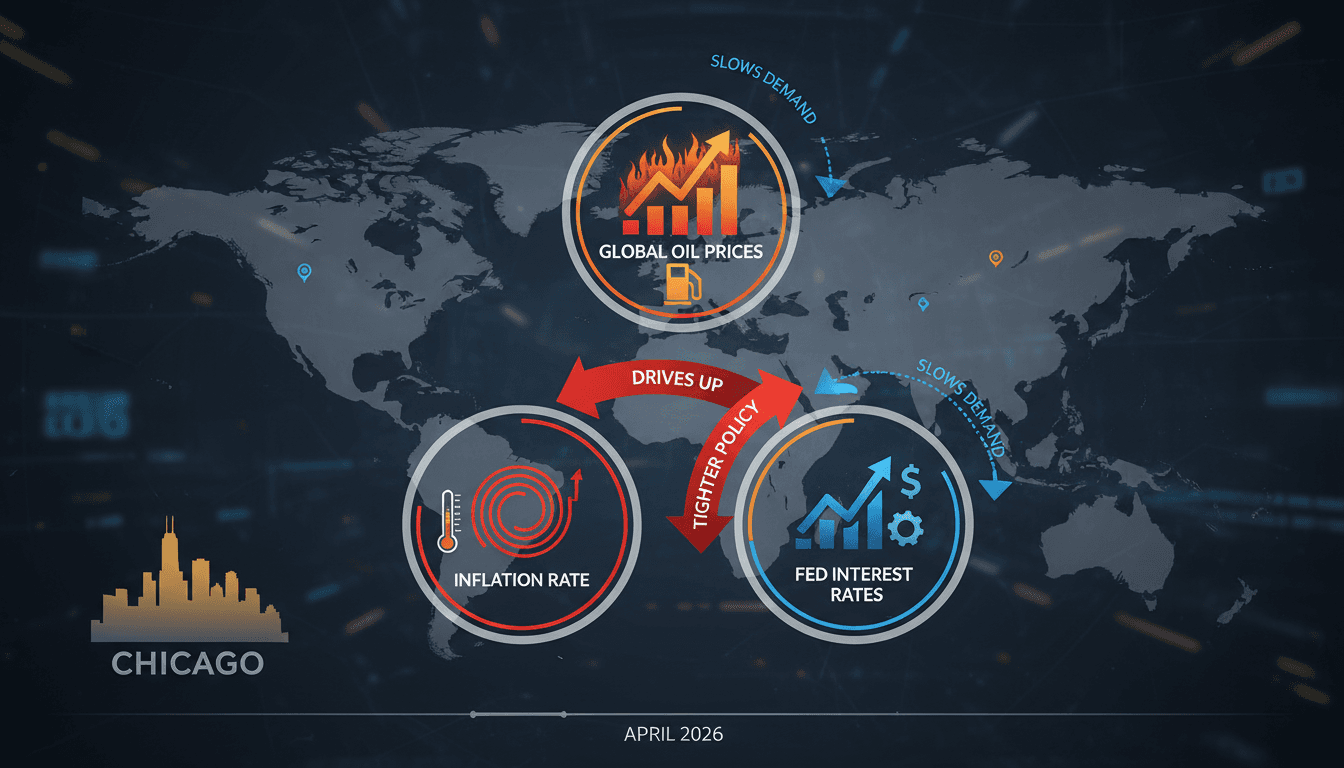
Here's what it means for you.
If you're in a sector sensitive to interest rates or inflation, Goolsbee's insights could signal a turbulent economic environment ahead.
Why it matters
Rising oil prices and inflation risks could lead to tighter monetary policy, impacting borrowing costs and economic growth.
What happened (in 30 seconds)
- Austan Goolsbee, President of the Chicago Fed, expressed caution about the U.S. economic outlook during a discussion in Detroit.
- Oil prices surged 70% year-to-date due to geopolitical tensions, particularly the Iran conflict, raising inflation concerns.
- The labor market remains stable but underwhelming, with low hiring and firing rates, complicating Federal Reserve decisions.
The context you actually need
- Geopolitical tensions from the Iran conflict have reduced global oil supply by approximately 13%, significantly impacting prices and inflation.
- Inflation has consistently remained above the Federal Reserve's 2% target, prompting officials to reconsider their rate cut expectations for 2026.
- Goolsbee's remarks highlight the uncertainty in the economic landscape, with risks of stagflation and successive inflationary shocks looming.
What's really happening
Austan Goolsbee's recent comments reflect a growing concern within the Federal Reserve regarding the U.S. economic landscape, particularly in light of rising oil prices and persistent inflation. The backdrop of these remarks is a geopolitical crisis—the Iran conflict—which has led to a significant reduction in global oil supply. According to the International Monetary Fund, this disruption has decreased supply by about 13%, driving oil prices up by 70% year-to-date. Such dramatic shifts in oil prices not only affect energy markets but also ripple through the entire economy, influencing inflation rates and consumer spending.
Goolsbee characterized the labor market as stable yet underwhelming, indicating that while job losses are not rampant, hiring is also subdued. This stagnation in employment growth creates a challenging environment for the Federal Reserve as it attempts to balance inflation control with economic growth. With inflation consistently above the 2% target, the Fed faces pressure to act, but the uncertainty surrounding the geopolitical landscape complicates its policy decisions. The potential for stagflation—where inflation rises while economic growth slows—poses a serious risk, as Goolsbee pointed out.
The current economic climate is further complicated by the upcoming deadline set by U.S. President Trump regarding the Iran conflict. Investors are closely monitoring this situation, as any escalation could exacerbate oil supply issues and inflation. In the financial markets, this caution has already manifested in declining U.S. stock indexes and rising Treasury yields, reflecting investor anxiety about future economic conditions.
As Goolsbee and other Fed officials reassess their strategies, the lack of a clear policy playbook adds to the uncertainty. The Federal Reserve's decisions will have far-reaching implications not just for the U.S. economy but also for global markets, particularly in regions heavily reliant on oil exports, such as the UAE. The interconnectedness of these economic factors underscores the delicate balance the Fed must maintain as it navigates through these turbulent waters.
Who feels it first (and how)
- Consumers: Higher oil prices lead to increased costs for goods and services, impacting household budgets.
- Businesses: Companies reliant on borrowing may face higher interest rates, affecting expansion plans and operational costs.
- Investors: Stock market volatility may lead to cautious investment strategies, particularly in sectors sensitive to interest rates.
- Tourism Sector: Areas like Dubai may see pressure on tourism as a stronger USD raises costs for foreign visitors.
What to watch next
- Inflation Data: Upcoming reports on inflation will be crucial in determining the Fed's next moves and market reactions.
- Geopolitical Developments: Any changes in the Iran conflict could further impact oil prices and economic stability.
- Federal Reserve Speeches: Insights from other Fed officials will provide clarity on potential policy adjustments and market expectations.
Oil prices have surged significantly due to geopolitical tensions, impacting inflation.
The Federal Reserve may adopt a cautious approach to interest rate adjustments in response to economic uncertainties.
The long-term effects of rising oil prices on consumer behavior and economic growth remain uncertain.
Frequently Asked Questions
- Why it matters?
- Rising oil prices and inflation risks could lead to tighter monetary policy, impacting borrowing costs and economic growth.
- What happened (in 30 seconds)?
- Austan Goolsbee, President of the Chicago Fed, expressed caution about the U.S. economic outlook during a discussion in Detroit. Oil prices surged 70% year-to-date due to geopolitical tensions, particularly the Iran conflict, raising inflation concerns. The labor market remains stable but underwhelming, with low hiring and firing rates, complicating Federal Reserve decisions.
- What's really happening?
- Austan Goolsbee's recent comments reflect a growing concern within the Federal Reserve regarding the U.S. economic landscape, particularly in light of rising oil prices and persistent inflation. The backdrop of these remarks is a geopolitical crisis—the Iran conflict—which has led to a significant reduction in global oil supply. According to the International Monetary Fund, this disruption has decreased supply by about 13%, driving oil prices up by 70% year-to-date. Such dramatic shifts in oil p
- Who feels it first (and how)?
- Consumers: Higher oil prices lead to increased costs for goods and services, impacting household budgets. Businesses: Companies reliant on borrowing may face higher interest rates, affecting expansion plans and operational costs. Investors: Stock market volatility may lead to cautious investment strategies, particularly in sectors sensitive to interest rates. Tourism Sector: Areas like Dubai may see pressure on tourism as a stronger USD raises costs for foreign visitors.
- What to watch next?
- Inflation Data: Upcoming reports on inflation will be crucial in determining the Fed's next moves and market reactions. Geopolitical Developments: Any changes in the Iran conflict could further impact oil prices and economic stability. Federal Reserve Speeches: Insights from other Fed officials will provide clarity on potential policy adjustments and market expectations.
Global markets, investing, and macroeconomics from a premier financial newsroom.
"Bloomberg is respected for in-depth financial reporting and data-driven analysis."
— A47 Editor
Fed's Goolsbee Cautious, Nervous About Economic Outlook
Federal Reserve Bank of Chicago President Austan Goolsbee expressed caution regarding the economic outlook during his remarks at the Detroit Economic Club, noting that while the job market remains stable, it is not performing strongly. He highlighted...
Macro commentary, policy analysis, growth/inflation themes, and global outlooks.
"Contextual macro coverage that complements day-to-day market headlines."
— A47 Editor
Fed’s Goolsbee warns of stagflation risk from Iran war, oil shock
Federal Reserve official Austan Goolsbee has raised concerns about the risk of stagflation due to the ongoing conflict in Iran and its impact on oil prices. He highlighted that the geopolitical tensions could lead to a significant economic downturn c...