
European Banks Form Partnerships for Stablecoin Implementation Under MiCA Regulation
Here's what it means for you.
If you engage in cross-border transactions or corporate finance, the upcoming stablecoin initiatives could streamline your operations and reduce costs.
Why it matters
This shift represents a significant move towards a unified European crypto market, enhancing liquidity and efficiency in financial transactions.
What happened (in 30 seconds)
- On April 12, 2026, major European banks including ING, UniCredit, CaixaBank, and BBVA selected stablecoin partners to comply with the EU's MiCA regulation.
- The Qivalis consortium is launching a euro stablecoin project, with plans for issuance in the second half of 2026.
- ClearBank Europe became the first Dutch credit institution to receive MiCA approval for stablecoin services, paving the way for broader adoption.
The context you actually need
- MiCA regulation aims to create a comprehensive framework for crypto-assets, fully effective from June 30, 2024, addressing previous regulatory fragmentation.
- Corporate demand for efficient, 24/7 financial operations has surged, particularly in light of geopolitical concerns over U.S. dollar stablecoin dominance.
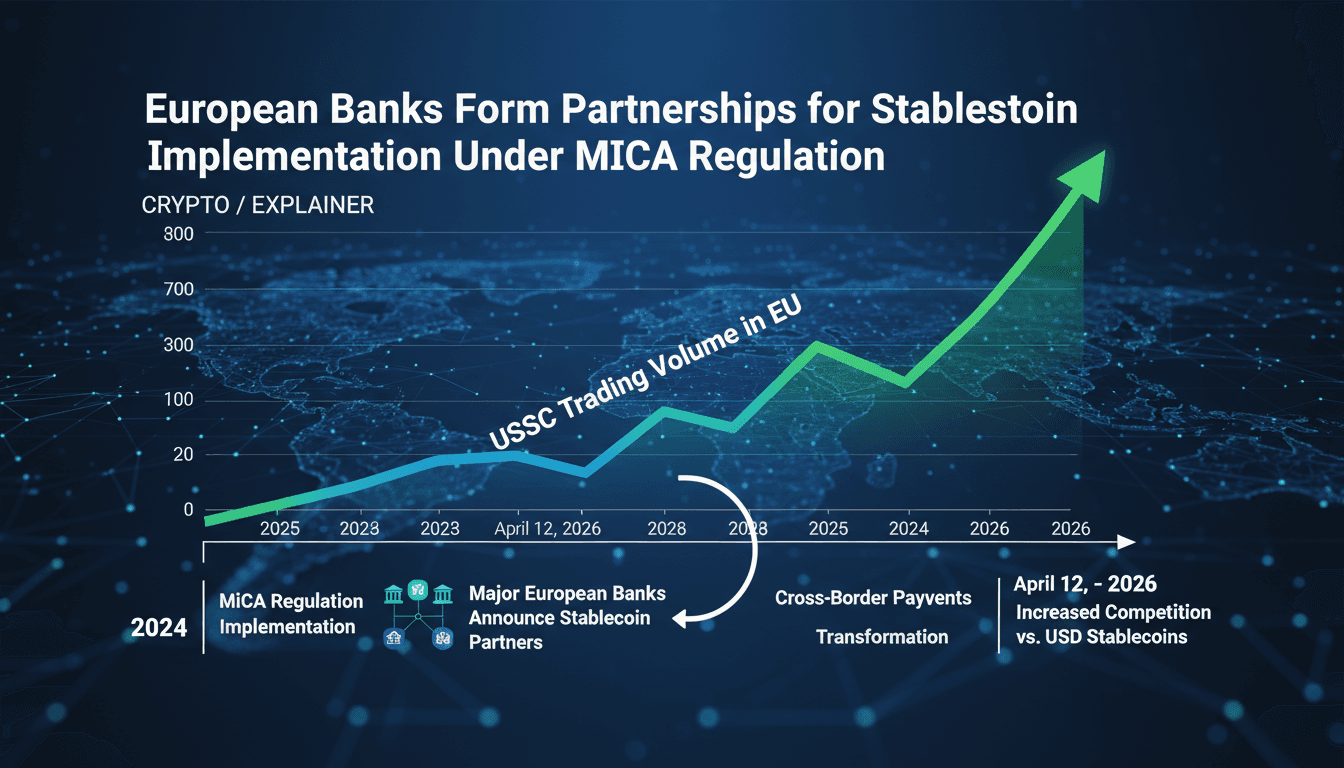
- USDC trading volume in the EU increased by 109% between October 2025 and March 2026, reflecting growing institutional interest in stablecoins for working capital and settlements.
What's really happening
The European banking landscape is undergoing a transformative shift as major institutions embrace stablecoins, driven by the EU's Markets in Crypto-Assets (MiCA) regulation. This regulatory framework is designed to replace fragmented national rules, allowing for a more cohesive approach to crypto-assets across member states. The MiCA regulation, which will be fully effective by mid-2024, has accelerated the transition from theoretical discussions about stablecoins to practical implementations.
In September 2025, a consortium of nine banks, including ING and UniCredit, formed the Qivalis consortium in the Netherlands, aiming to issue a MiCA-compliant euro stablecoin. This initiative is a direct response to the increasing demand for efficient payment solutions that can operate around the clock. By December 2025, the consortium expanded to include BNP Paribas and other banks, demonstrating a growing consensus on the need for a stablecoin solution.
The rise of USDC trading volume in the EU, which surged by 109% during the latter half of 2025, underscores the urgency behind these developments. As institutions seek to leverage stablecoins for cross-border transactions, the Qivalis consortium's euro stablecoin is positioned to meet this demand. The approval of ClearBank Europe as the first Dutch credit institution to offer crypto services further legitimizes the stablecoin initiative, allowing banks to access both USDC and the forthcoming euro stablecoin.
The implications of this shift are profound. By adopting stablecoins, banks can facilitate faster and cheaper transactions, reduce reliance on traditional banking hours, and enhance liquidity in the market. This is particularly relevant in the context of increasing geopolitical tensions and the desire for financial sovereignty, as highlighted by the Bank of France's call for stricter regulations on dollar-linked stablecoins.
As these developments unfold, the focus will likely shift towards establishing partnerships with exchanges and liquidity providers to ensure the stablecoin's successful rollout. The sustained buy pressure on USDC, coupled with larger average transaction sizes, indicates a growing institutional reliance on stablecoins for operational needs.
Who feels it first (and how)
- Corporate finance teams in multinational companies will benefit from reduced transaction times and costs.
- Banks and financial institutions involved in cross-border transactions will see enhanced liquidity and operational efficiency.
- Regulatory bodies will need to adapt to the new landscape, ensuring compliance and oversight of stablecoin activities.
What to watch next
- Partnership developments: Watch for announcements regarding partnerships with exchanges and liquidity providers, as these will be crucial for the stablecoin's market entry.
- Regulatory updates: Keep an eye on any changes or additional guidance from EU regulators regarding MiCA implementation and its impact on stablecoins.
- Market adoption rates: Monitor the adoption rates of the euro stablecoin and its usage in corporate transactions, as this will indicate the success of the initiative.
Major European banks are actively selecting stablecoin partners and preparing for launches under MiCA.
The euro stablecoin will facilitate more efficient cross-border transactions and increase liquidity in the European market.
The long-term impact on traditional banking operations and the competitive landscape remains to be seen.
Frequently Asked Questions
- Why it matters?
- This shift represents a significant move towards a unified European crypto market, enhancing liquidity and efficiency in financial transactions.
- What happened (in 30 seconds)?
- On April 12, 2026, major European banks including ING, UniCredit, CaixaBank, and BBVA selected stablecoin partners to comply with the EU's MiCA regulation. The Qivalis consortium is launching a euro stablecoin project, with plans for issuance in the second half of 2026. ClearBank Europe became the first Dutch credit institution to receive MiCA approval for stablecoin services, paving the way for broader adoption.
- What's really happening?
- The European banking landscape is undergoing a transformative shift as major institutions embrace stablecoins, driven by the EU's Markets in Crypto-Assets (MiCA) regulation. This regulatory framework is designed to replace fragmented national rules, allowing for a more cohesive approach to crypto-assets across member states. The MiCA regulation, which will be fully effective by mid-2024, has accelerated the transition from theoretical discussions about stablecoins to practical implementations.
- Who feels it first (and how)?
- Corporate finance teams in multinational companies will benefit from reduced transaction times and costs. Banks and financial institutions involved in cross-border transactions will see enhanced liquidity and operational efficiency. Regulatory bodies will need to adapt to the new landscape, ensuring compliance and oversight of stablecoin activities.
- What to watch next?
- Partnership developments: Watch for announcements regarding partnerships with exchanges and liquidity providers, as these will be crucial for the stablecoin's market entry. Regulatory updates: Keep an eye on any changes or additional guidance from EU regulators regarding MiCA implementation and its impact on stablecoins. Market adoption rates: Monitor the adoption rates of the euro stablecoin and its usage in corporate transactions, as this will indicate the success of the initiative.
Real-time updates, analysis, and reports on the blockchain and cryptocurrency sectors.
"Crypto News delivers real-time updates, analysis, and reports on the blockchain and cryptocurrency sectors."
— A47 Editor
Europe banks pick stablecoin partners as MiCA srives shift
European banks and corporations are increasingly selecting stablecoin partners as the implementation of the Markets in Crypto-Assets (MiCA) regulation drives a shift in the cryptocurrency landscape. This trend reflects a growing demand for stablecoin...
Covers blockchain, cryptocurrency news, project analysis, and market insights.
"Cointelegraph is a leading crypto-focused media outlet known for timely news, analysis, and educational content related to blockchain and digital assets."
— A47 Editor
Banks, corporates in Europe ‘actively selecting partners’ for stablecoin push
Stablecoin adoption in Europe is transitioning from strategy to execution, with banks and corporates actively selecting partners to facilitate this shift. The growing demand for stablecoins is increasingly driven by real-world applications, indicatin...