
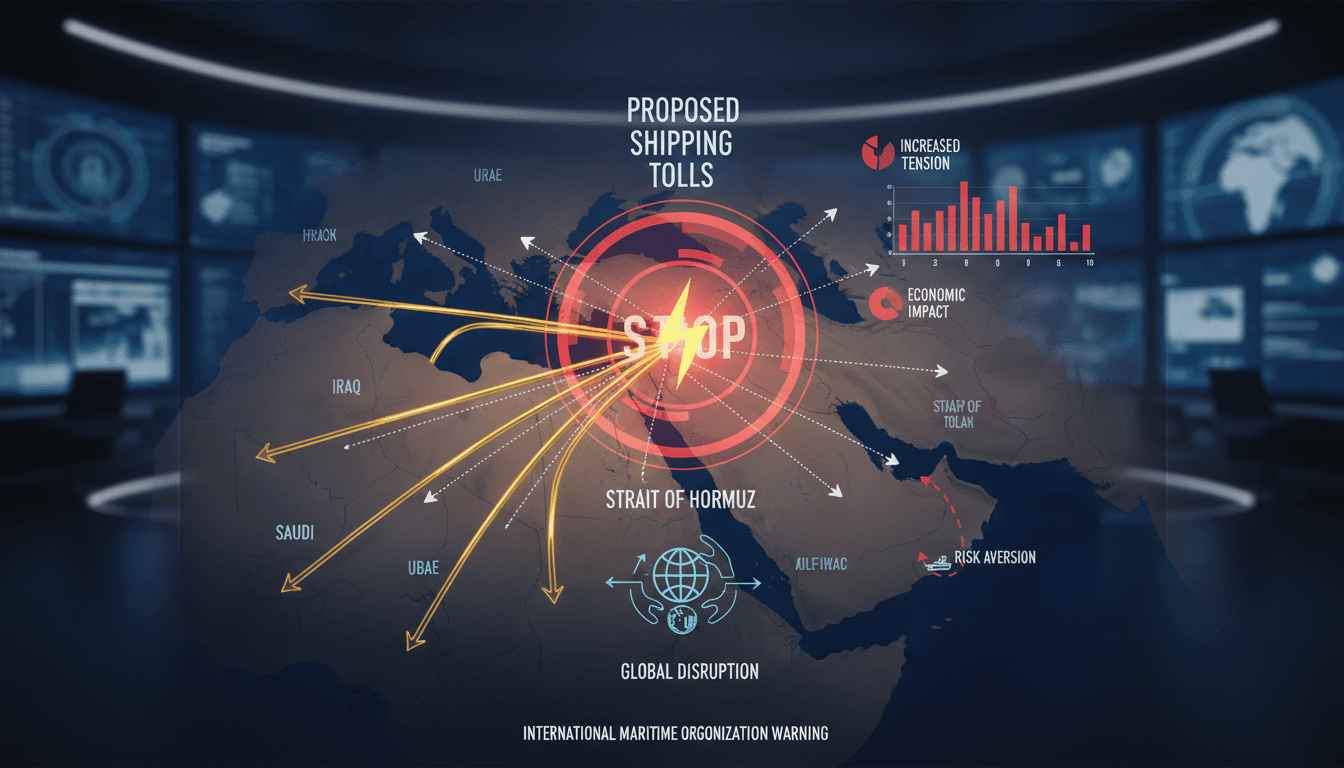
International Maritime Organization Issues Warning Against Proposed Shipping Tolls in Strait of Hormuz
Here's what it means for you.
If shipping costs rise due to tolls, expect higher prices on goods and fuel globally.
Why it matters
The Strait of Hormuz is a critical chokepoint for global energy supplies, making any tolls a potential disruptor of international trade.
What happened (in 30 seconds)
- April 9, 2026: The International Maritime Organization warns that proposed tolls for ships in the Strait of Hormuz set a "dangerous precedent."
- April 8, 2026: U.S. President Donald Trump suggests a joint toll system with Iran following a ceasefire after military conflicts.
- April 7, 2026: A ceasefire is brokered, but shipping traffic remains under 10% of normal levels due to ongoing tensions.
The context you actually need
- The Strait of Hormuz is vital: It facilitates the transit of approximately 20 million barrels of oil daily, accounting for one-fifth of global liquefied natural gas.
- International law prohibits tolls: The United Nations Convention on the Law of the Sea (UNCLOS) forbids passage tolls in straits, allowing only service fees.
- Iran's demands are escalating: Following military conflicts, Iran is pushing for tolls potentially amounting to $2 million per vessel, payable in cryptocurrency or yuan.
What's really happening
The Strait of Hormuz has become a focal point of geopolitical tension, particularly following the U.S.-Israeli military operations against Iran in March 2026. This conflict led to Iranian restrictions on shipping, including mine deployments and traffic halts, significantly disrupting maritime operations. The ceasefire on April 7, 2026, brokered by Pakistan, was a temporary solution to escalating tensions, but it also opened the door for contentious discussions about tolls on vessels transiting the strait.
President Trump's proposal for a joint U.S.-Iranian toll system on April 8 was met with immediate backlash from the International Maritime Organization (IMO), which warned that such a move would violate international norms and set a dangerous precedent for maritime law. The IMO's stance is rooted in UNCLOS, which prohibits tolls in straits, emphasizing that only service fees can be charged for navigational aids and other services.
Iran's insistence on tolls, which could reach $2 million per vessel or $1 per oil barrel, is seen as a means to exert control over a critical maritime route while also seeking reparations for damages incurred during the conflict. This demand raises significant concerns among neighboring countries and global stakeholders, as it threatens to disrupt the free passage of ships and could lead to retaliatory measures from other nations.
The economic implications of these tolls are profound. With oil prices already surging past $100 per barrel and shipping insurance rates collapsing, the potential for increased shipping costs could ripple through global markets. This would not only affect oil prices but also the costs of goods and services worldwide, as shipping expenses are a significant factor in pricing.
Moreover, the rejection of toll-sharing by Oman and the backing of a UN resolution by the UAE, Saudi Arabia, and Qatar highlight the regional pushback against Iran's demands. The geopolitical landscape is further complicated by the involvement of major powers like Russia and China, who vetoed the resolution, indicating a divided international response to the crisis.
As tensions continue to simmer, the situation in the Strait of Hormuz remains precarious, with the potential for further escalation if Iran's toll demands are not met with international consensus.
Who feels it first (and how)
- Shipping companies: Increased costs due to tolls will directly impact operational expenses.
- Oil producers: Higher shipping fees could lead to increased oil prices, affecting profit margins.
- Consumers: Rising costs of fuel and goods will be felt globally, particularly in regions dependent on oil imports.
- UAE residents: Increased prices on groceries and imports due to disrupted supply chains and potential tolls.
What to watch next
- International negotiations: Watch for developments in diplomatic discussions regarding the Strait of Hormuz and potential toll agreements. This matters because successful negotiations could stabilize shipping routes.
- Oil price fluctuations: Monitor oil prices as they respond to the ongoing situation. Rising prices could indicate market panic or supply chain disruptions.
- Shipping traffic levels: Keep an eye on shipping traffic through the strait. A significant increase or decrease could signal changing geopolitical dynamics.
The Strait of Hormuz is crucial for global oil and gas supply chains.
Shipping costs will rise if tolls are implemented, impacting global markets.
How other nations will respond to Iran's toll demands and whether international law will be upheld.
Frequently Asked Questions
- Why it matters?
- The Strait of Hormuz is a critical chokepoint for global energy supplies, making any tolls a potential disruptor of international trade.
- What happened (in 30 seconds)?
- April 9, 2026: The International Maritime Organization warns that proposed tolls for ships in the Strait of Hormuz set a "dangerous precedent." April 8, 2026: U.S. President Donald Trump suggests a joint toll system with Iran following a ceasefire after military conflicts. April 7, 2026: A ceasefire is brokered, but shipping traffic remains under 10% of normal levels due to ongoing tensions.
- What's really happening?
- The Strait of Hormuz has become a focal point of geopolitical tension, particularly following the U.S.-Israeli military operations against Iran in March 2026. This conflict led to Iranian restrictions on shipping, including mine deployments and traffic halts, significantly disrupting maritime operations. The ceasefire on April 7, 2026, brokered by Pakistan, was a temporary solution to escalating tensions, but it also opened the door for contentious discussions about tolls on vessels transiting t
- Who feels it first (and how)?
- Shipping companies: Increased costs due to tolls will directly impact operational expenses. Oil producers: Higher shipping fees could lead to increased oil prices, affecting profit margins. Consumers: Rising costs of fuel and goods will be felt globally, particularly in regions dependent on oil imports. UAE residents: Increased prices on groceries and imports due to disrupted supply chains and potential tolls.
- What to watch next?
- International negotiations: Watch for developments in diplomatic discussions regarding the Strait of Hormuz and potential toll agreements. This matters because successful negotiations could stabilize shipping routes. Oil price fluctuations: Monitor oil prices as they respond to the ongoing situation. Rising prices could indicate market panic or supply chain disruptions. Shipping traffic levels: Keep an eye on shipping traffic through the strait. A significant increase or decrease could signa
Conservative-leaning coverage of current events.
"Fox News is a highly influential conservative news outlet known for right-leaning political commentary and coverage."
— A47 Editor
Strait of Hormuz toll would set 'dangerous precedent,' UN shipping agency warns
The U.N. shipping agency has issued a warning regarding the potential imposition of tolls on vessels passing through the Strait of Hormuz, stating that such a move would establish a 'dangerous precedent.' This warning comes amid rising tensions in th...
Regional coverage and analysis focused on politics, diplomacy, and business across the Middle East.
"Al-Monitor is known for analytical reporting on Middle East politics and policy developments."
— A47 Editor
A toll for using Hormuz would be a 'dangerous precedent', UN's ship agency says
The UN's shipping agency has warned that imposing a toll on vessels passing through the Strait of Hormuz would set a dangerous precedent for international maritime law, emphasizing the importance of maintaining freedom of navigation. This statement f...
Global markets, investing, and macroeconomics from a premier financial newsroom.
"Bloomberg is respected for in-depth financial reporting and data-driven analysis."
— A47 Editor
Iran’s Hormuz Tolls Would Set a Dangerous Precedent, IMO Says
The head of the International Maritime Organization (IMO) has warned that allowing Iran to impose tolls for transit through the Strait of Hormuz would set a dangerous precedent for global shipping. This comes amid ongoing geopolitical tensions and a ...