
LVMH Achieves 1% Organic Revenue Growth Amid Middle East Conflict Impacting Sales
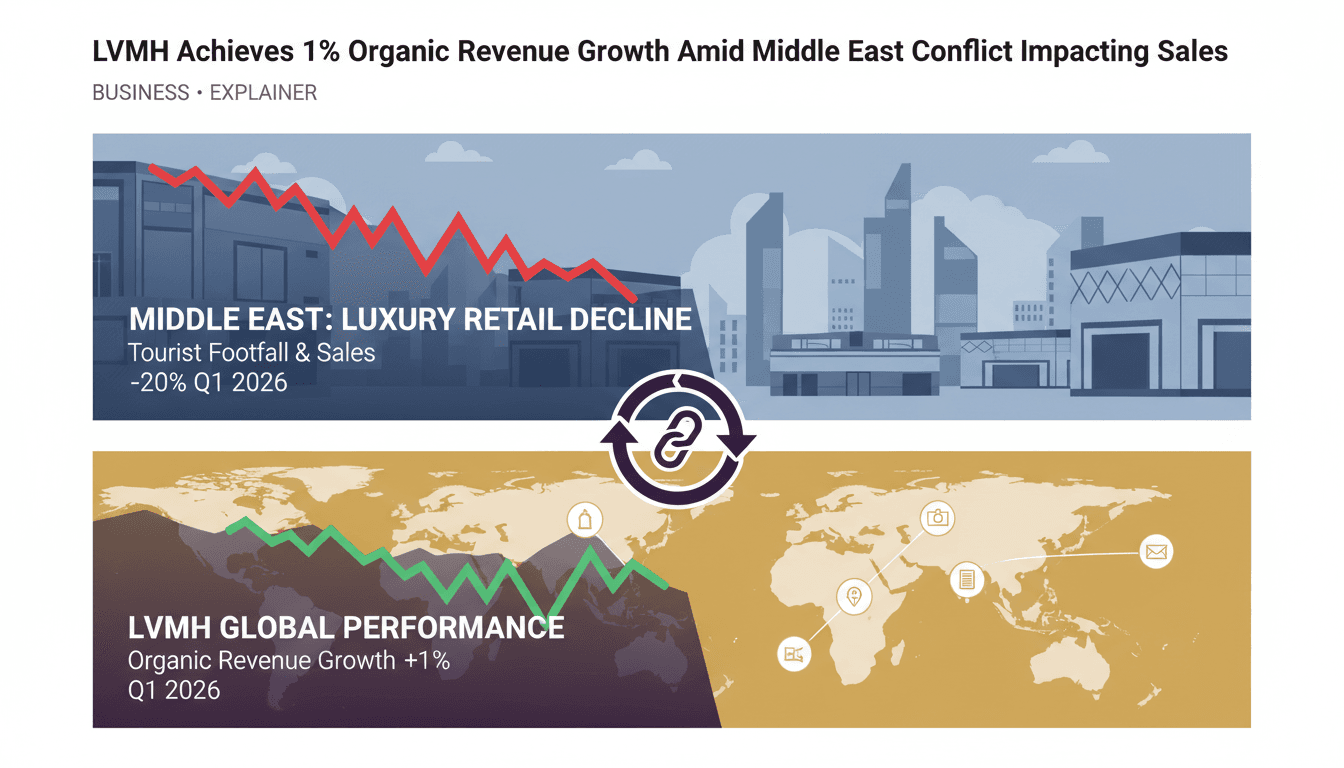
Here's what it means for you.
If you're in the luxury retail sector, the resilience of LVMH could signal both challenges and opportunities in navigating a turbulent market.
Why it matters
The luxury market's performance is a bellwether for global consumer confidence, especially in volatile regions.
What happened (in 30 seconds)
- LVMH reported a 1% organic revenue growth in Q1 2026, totaling €19.1 billion, despite a 6% decline in reported revenue due to currency fluctuations.
- The Fashion & Leather Goods division saw a 2% organic decline to €9.25 billion, primarily impacted by reduced tourist spending in the Middle East.
- The ongoing conflict in the Middle East contributed to a 1 percentage point reduction in overall organic growth, highlighting regional vulnerabilities.
The context you actually need
- The luxury sector faced a 5% contraction in 2025, leading to expectations for a rebound in 2026, particularly from the Middle East and Asia.
- The onset of conflict with Iran in late February 2026 disrupted travel and shopping patterns, significantly affecting sales in Gulf states like Dubai and Abu Dhabi.
- Mall traffic in the Middle East dropped by an average of 50%, with luxury retailers experiencing severe declines in footfall and sales due to the conflict's uncertainties.
What's really happening
LVMH's Q1 2026 earnings reveal a complex interplay of resilience and vulnerability in the luxury market. The reported 1% organic revenue growth, while modest, underscores the conglomerate's ability to navigate significant headwinds, particularly from the Middle East conflict. The luxury sector had been poised for recovery after a challenging 2025, which saw a 5% contraction due to demand slowdowns. Analysts had anticipated a rebound driven by increased spending in Asia and a resurgence in Middle Eastern tourism, which historically contributes mid-single digits to luxury sales.
However, the escalation of conflict with Iran in late February 2026 disrupted this trajectory. The immediate aftermath saw a sharp decline in tourist arrivals and consumer spending in key Gulf markets, particularly Dubai and Abu Dhabi. Reports indicate that mall traffic plummeted by 30–70%, with luxury retailers experiencing an average sales drop of 50%. This decline was exacerbated by travel restrictions and heightened economic apprehension among consumers, leading to a significant contraction in discretionary spending.
Despite these challenges, LVMH's performance in other regions, particularly the US and Asia, demonstrated resilience. The US market saw a 3% growth, while Asia ex-Japan reported a 7% increase, indicating that consumer demand remains robust outside the conflict-affected areas. Additionally, the Watches & Jewelry and Wines & Spirits divisions performed strongly, helping to offset losses in the Fashion & Leather Goods segment.
The company's finance chief, Cecile Cabanis, acknowledged the downturn in demand, suggesting that 2026 may be a transition year for LVMH and its peers. Analysts are closely monitoring the situation, particularly as LVMH's shares fell by up to 3% following the earnings release, reflecting waning recovery hopes. The luxury sector's reliance on high-spending Middle Eastern clientele, especially in European markets, raises concerns about future growth prospects if the conflict escalates further.
LVMH's strategy moving forward will likely focus on brand investments and maintaining market presence, even as it navigates the complexities of a volatile geopolitical landscape. The absence of targeted governmental interventions in the UAE's luxury sector indicates a broader focus on stability amid ongoing energy disruptions, which could further impact consumer behavior and spending patterns.
Who feels it first (and how)
- Luxury Retailers: Facing immediate sales declines and foot traffic reductions in affected regions.
- Tourism Sector: Significant impacts on jobs and revenue due to reduced tourist arrivals in the Gulf states.
- Local Consumers: Economic apprehension leading to decreased discretionary spending and altered shopping habits.
- Investors: Increased scrutiny on luxury brands' performance and stock valuations amid geopolitical uncertainties.
What to watch next
- Tourism Recovery: Monitor travel trends and consumer sentiment in the Middle East, as a rebound could signal improved sales for luxury brands.
- Geopolitical Developments: Keep an eye on the Iran conflict's escalation, as further disruptions could impact luxury retail dynamics in the Gulf.
- Brand Investment Strategies: Watch how LVMH and competitors adjust their marketing and investment strategies in response to changing consumer behavior.
LVMH's organic growth was impacted by the Middle East conflict, with significant declines in mall traffic and sales.
Continued scrutiny of luxury brands' performance as analysts assess the long-term impacts of geopolitical tensions.
The potential for a swift recovery in tourism and consumer spending in the Gulf states amid ongoing uncertainties.
Frequently Asked Questions
- Why it matters?
- The luxury market's performance is a bellwether for global consumer confidence, especially in volatile regions.
- What happened (in 30 seconds)?
- LVMH reported a 1% organic revenue growth in Q1 2026, totaling €19.1 billion, despite a 6% decline in reported revenue due to currency fluctuations. The Fashion & Leather Goods division saw a 2% organic decline to €9.25 billion, primarily impacted by reduced tourist spending in the Middle East. The ongoing conflict in the Middle East contributed to a 1 percentage point reduction in overall organic growth, highlighting regional vulnerabilities.
- What's really happening?
- LVMH's Q1 2026 earnings reveal a complex interplay of resilience and vulnerability in the luxury market. The reported 1% organic revenue growth, while modest, underscores the conglomerate's ability to navigate significant headwinds, particularly from the Middle East conflict. The luxury sector had been poised for recovery after a challenging 2025, which saw a 5% contraction due to demand slowdowns. Analysts had anticipated a rebound driven by increased spending in Asia and a resurgence in Middle
- Who feels it first (and how)?
- Luxury Retailers: Facing immediate sales declines and foot traffic reductions in affected regions. Tourism Sector: Significant impacts on jobs and revenue due to reduced tourist arrivals in the Gulf states. Local Consumers: Economic apprehension leading to decreased discretionary spending and altered shopping habits. Investors: Increased scrutiny on luxury brands' performance and stock valuations amid geopolitical uncertainties.
- What to watch next?
- Tourism Recovery: Monitor travel trends and consumer sentiment in the Middle East, as a rebound could signal improved sales for luxury brands. Geopolitical Developments: Keep an eye on the Iran conflict's escalation, as further disruptions could impact luxury retail dynamics in the Gulf. Brand Investment Strategies: Watch how LVMH and competitors adjust their marketing and investment strategies in response to changing consumer behavior.
Business, investment, entrepreneurship, leadership, and innovation.
"Forbes is known for its coverage of business leaders, market trends, and entrepreneurial ventures with a pro-business editorial stance."
— A47 Editor
Fashion Unit Takes Middle East Hit, But LVMH Proves Resilient In Q1
LVMH reported a 1% organic revenue rise in the first quarter of 2026, despite facing challenges from geopolitical turmoil in the Middle East and currency fluctuations that masked underlying growth. This slight increase comes amid a backdrop of weaker...
Market-moving headlines impacting equities, bonds, and related risk assets.
"Real-time catalysts and volatility drivers across indices and sectors."
— A47 Editor
LVMH shares slide as Middle East war hit drags Q1 sales below targets
LVMH reported a decline in first-quarter sales, falling short of market expectations, primarily due to the adverse effects of the ongoing conflict in the Middle East. This situation has raised concerns about the luxury goods conglomerate's performanc...
Global markets, investing, and macroeconomics from a premier financial newsroom.
"Bloomberg is respected for in-depth financial reporting and data-driven analysis."
— A47 Editor
LVMH Misses Estimates; Kering, Hermes Set to Report
LVMH reported first-quarter organic revenue that fell short of consensus estimates, primarily due to underperformance in its fashion and leather goods division. This disappointing performance raises concerns about the luxury goods conglomerate's abil...