
Iran Allows Non-Hostile Vessels to Transit Strait of Hormuz Amid Ongoing Conflict
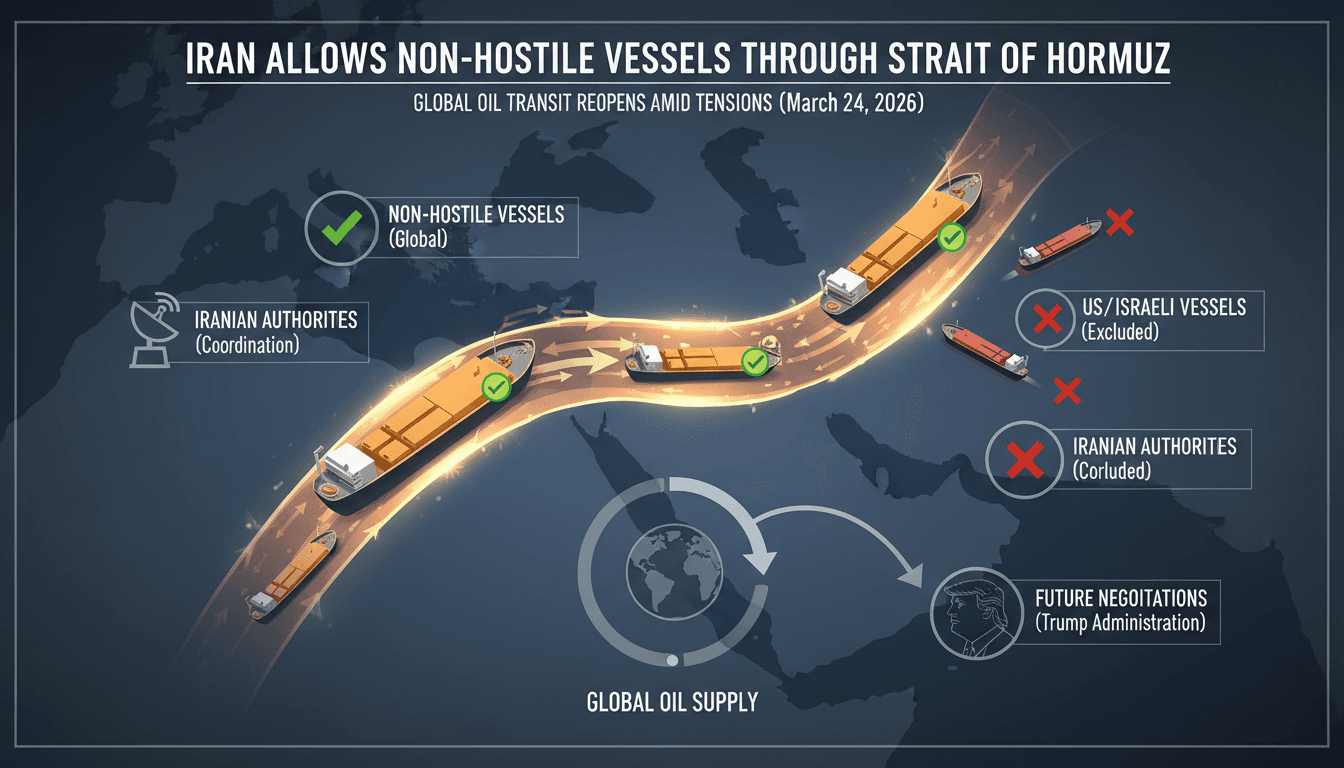
Here's what it means for you.
The ongoing developments in the Strait of Hormuz could significantly affect global oil prices and supply chains, impacting your business operations.
What happened
On March 24, 2026, Iran announced that non-hostile vessels may pass through the Strait of Hormuz in coordination with its authorities.
The Context
- Ongoing conflict: The US-Israel military campaign against Iran began on February 28, 2026, leading to a blockade of the Strait of Hormuz, a crucial passage for global oil trade.
- Economic implications: The strait typically handles 20% of global oil supplies, and disruptions have already caused significant increases in oil prices and shipping delays.
- Negotiation signals: President Trump hinted at a potential deal with Iran, describing a "very significant prize" related to oil and gas, indicating a possible de-escalation of tensions.
The Number
— This is the proportion of global oil supply that transits the Strait of Hormuz daily under normal conditions, underscoring the strait's critical role in the global energy market.
Takeaway
As negotiations unfold, keep an eye on oil market fluctuations and regional stability, which could shape your business landscape.
Breaking news, politics, business, and entertainment from the U.S. and around the world.
"The New York Post is a tabloid-format newspaper known for its sensationalist headlines and conservative-leaning editorial tone."
— A47 Editor
Iran says ‘non-hostile’ ships can pass through Strait of Hormuz — as Trump teases major ‘prize’
Iran has announced that it will permit 'non-hostile' ships to transit through the Strait of Hormuz, while explicitly excluding vessels from the United States and Israel. This declaration comes amid ongoing tensions and negotiations involving Presiden...
UAE-based English-language newspaper covering regional politics, economics, and global affairs.
"The National reflects Emirati policy perspectives while maintaining international editorial standards."
— A47 Editor
Iran tells UN 'non-hostile vessels' may cross Hormuz but shipping firms wary
Iran has informed the United Nations that 'non-hostile vessels' are permitted to transit the Strait of Hormuz, a crucial maritime corridor for global oil transport, amid ongoing geopolitical tensions and military actions in the region. This announcem...
Regional coverage and analysis focused on politics, diplomacy, and business across the Middle East.
"Al-Monitor is known for analytical reporting on Middle East politics and policy developments."
— A47 Editor
Iran says 'non-hostile' ships can transit Strait of Hormuz, FT reports
Iran has announced that 'non-hostile vessels' can transit the Strait of Hormuz if they coordinate with Iranian authorities, as reported by the Financial Times. This decision comes amid ongoing geopolitical tensions and military actions in the region,...
Oil, metals, and agriculture: supply/demand headlines, OPEC chatter, inventories, and price action.
"Solid tape for energy and metals traders tracking macro and micro catalysts."
— A47 Editor
Iran says ’non-hostile’ ships can transit Strait of Hormuz, FT reports
Iran has announced that 'non-hostile' ships can transit the Strait of Hormuz, emphasizing the need for vessels to coordinate with Tehran for safe passage through this vital waterway. This statement was made to member nations of the International Mari...