
Ericsson Reports Q1 2026 Earnings with Focus on Networks Growth Amid Component Cost Challenges
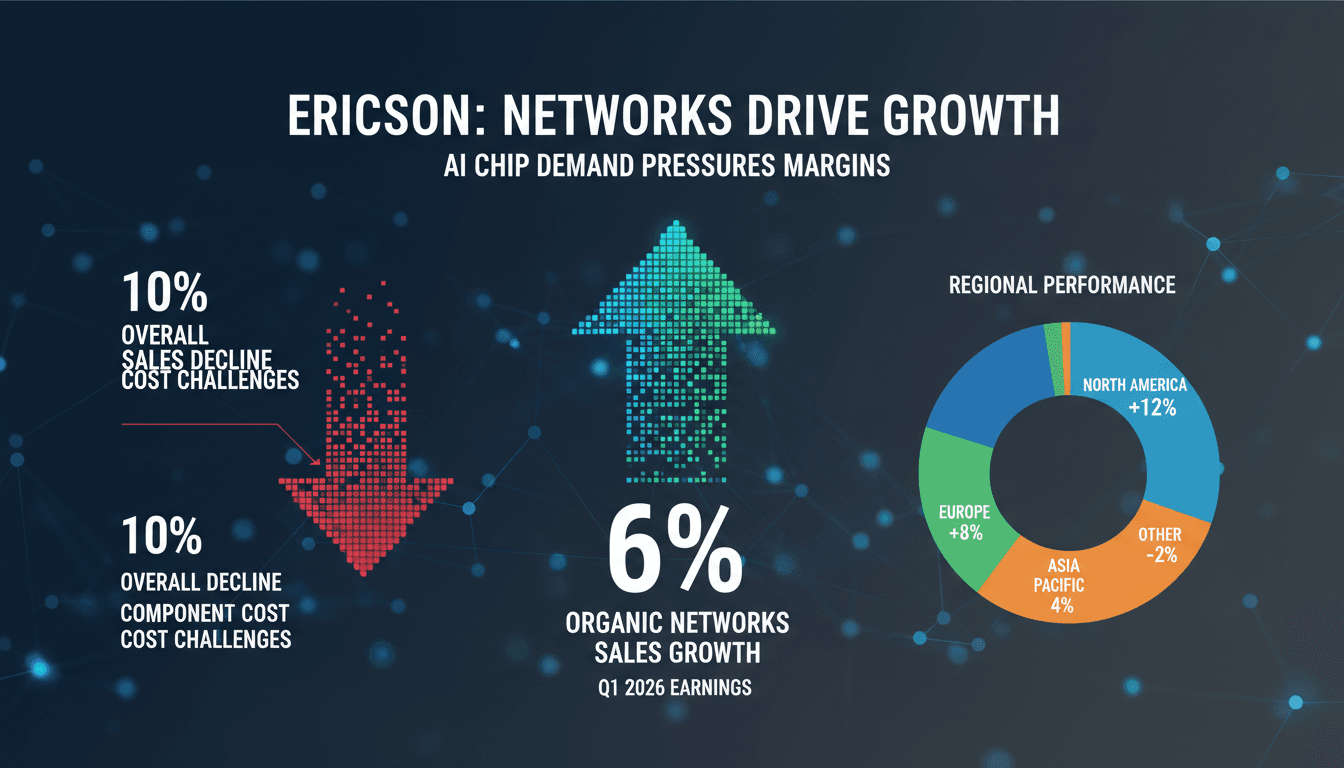
Here's what it means for you.
As component costs rise, understanding Ericsson's strategic focus on its Networks segment could inform your tech investment decisions.
What happened
On April 17, 2026, Ericsson reported a 6% organic sales growth in its Networks segment, despite a 10% decline in overall net sales year-over-year.
The Context
- Competitive Landscape: Ericsson operates in a challenging telecommunications market, with 5G deployments and fluctuating operator investments impacting growth.
- Cost Pressures: Rising semiconductor costs, driven by AI demand, are squeezing margins across the industry, affecting companies like Ericsson and Nokia.
- Regional Variations: While North American sales declined, growth in Europe, the Middle East, Africa, and Asia remains robust, highlighting regional disparities in telecom spending.
The Number
— This figure represents the organic sales growth in Ericsson's Networks segment for Q1 2026, underscoring the company's resilience amid broader market challenges.
Takeaway
Ericsson's focus on mitigating rising costs while expanding its Networks segment suggests potential for mid-term growth, making it a key player to watch.
U.S. business news, corporate developments, and economy.
"The Wall Street Journal is respected for deep financial and economic reporting with a center-right editorial perspective."
— A47 Editor
Ericsson Targets Networks Growth Despite Caution Over Rising Costs
Ericsson's Chief Executive Borje Ekholm announced that the company is targeting growth in its networks division despite facing rising input costs, particularly in semiconductors driven by increased demand for artificial intelligence (AI).
Market-moving headlines impacting equities, bonds, and related risk assets.
"Real-time catalysts and volatility drivers across indices and sectors."
— A47 Editor
Ericsson slightly lags profit expectations as AI demand drives up chip costs
Ericsson has reported a slight lag in profit expectations, with rising demand for AI contributing to increased chip costs. This situation reflects ongoing challenges in the telecommunications sector, where operational expenses are climbing.