
HSBC Reports Customer Shift to Risk-Off Mode Amid Iran Conflict
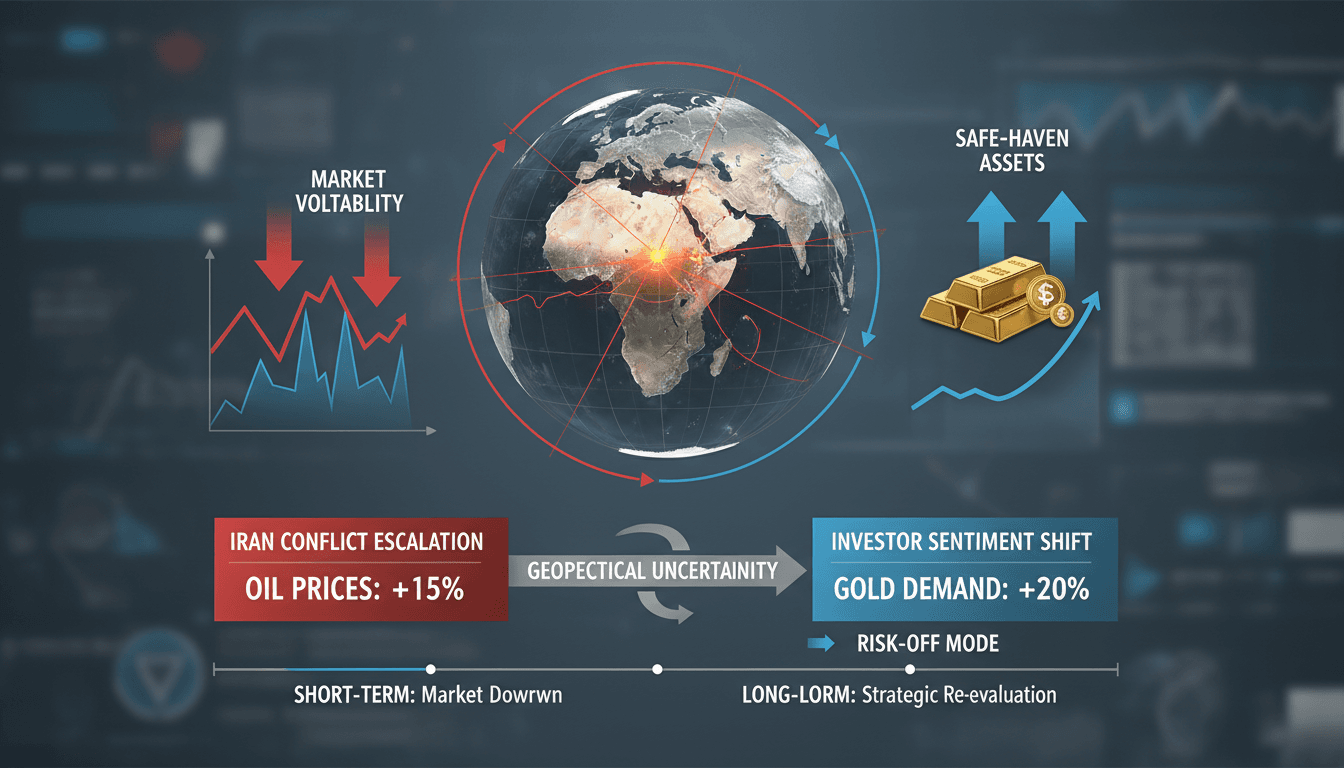
Here's what it means for you.
If you're in finance or investment, expect a cautious market environment as clients shift to safer assets amid geopolitical tensions.
Why it matters
The shift to a risk-off mode among customers signals broader market instability, impacting investment strategies and economic forecasts.
What happened (in 30 seconds)
- David Liao, HSBC Asia and Middle East Co-CEO, reported a customer shift to risk-off positioning due to the Iran conflict.
- Stable balance sheets were noted across HSBC's wholesale and retail businesses despite geopolitical uncertainties.
- Financial markets reacted with volatility, particularly in oil prices and stock valuations, following Liao's statements.
The context you actually need
- Ongoing geopolitical tensions: The 2026 US-Iran conflict has led to a US naval blockade of the Strait of Hormuz, affecting global oil supplies.
- Market volatility: Oil prices peaked at $119.43 per barrel amid the conflict, causing fluctuations in financial markets.
- HSBC's position: Despite the cautious client behavior, HSBC maintains confidence in the resilience of the Gulf Cooperation Council (GCC) economies.
What's really happening
The recent statement by David Liao at the HSBC Global Investment Summit highlights a significant behavioral shift among clients in response to escalating geopolitical tensions, particularly the ongoing conflict between the US and Iran. This conflict has not only disrupted oil supplies but has also created a ripple effect across global markets, prompting investors to adopt a more cautious stance. The term "risk-off mode" refers to a strategy where investors prioritize safety over potential returns, often leading to a preference for stable assets such as government bonds or gold.
As geopolitical uncertainties rise, clients are increasingly wary of market volatility, which has been exacerbated by the conflict's impact on oil prices. The peak price of West Texas Intermediate oil at $119.43 per barrel illustrates the direct correlation between geopolitical events and market reactions. This volatility affects not only energy markets but also broader economic indicators, leading to concerns about inflation and supply chain disruptions.
HSBC's stable balance sheets across its wholesale and retail operations suggest that the bank is currently weathering the storm better than some of its competitors. However, the cautious behavior of clients indicates a potential slowdown in investment activity, which could have long-term implications for economic growth in the region. The bank's leadership, including CEO Georges Elhedery, has acknowledged the need for a Middle East peace deal to restore energy flows and stabilize markets.
Moreover, the UAE's banking sector, including HSBC's operations, faces heightened risks related to real estate exposure due to the conflict. While Fitch Ratings noted minimal direct impacts from air traffic and tourism disruptions, the overall economic landscape remains fragile. The ongoing situation necessitates close monitoring of client confidence and investment patterns, as shifts to safe havens could lead to reduced liquidity in riskier assets.
Who feels it first (and how)
- Investors: Shift to safer assets, impacting portfolio allocations.
- Financial institutions: Adjust risk assessments and lending practices.
- Real estate sectors: Increased exposure risks due to geopolitical instability.
- Consumers: Potential inflationary pressures affecting purchasing power.
What to watch next
- Oil price fluctuations: Continued volatility in oil prices will indicate market sentiment and geopolitical stability.
- Client investment behavior: Monitoring shifts in asset allocations will provide insights into market confidence.
- Geopolitical developments: Any signs of de-escalation or peace negotiations in the Iran conflict could influence market recovery.
Clients are currently in a risk-off mode due to geopolitical tensions.
Continued volatility in financial markets as investors react to ongoing developments.
The long-term impact on economic growth in the GCC region and global markets.
Frequently Asked Questions
- Why it matters?
- The shift to a risk-off mode among customers signals broader market instability, impacting investment strategies and economic forecasts.
- What happened (in 30 seconds)?
- David Liao, HSBC Asia and Middle East Co-CEO, reported a customer shift to risk-off positioning due to the Iran conflict. Stable balance sheets were noted across HSBC's wholesale and retail businesses despite geopolitical uncertainties. Financial markets reacted with volatility, particularly in oil prices and stock valuations, following Liao's statements.
- What's really happening?
- The recent statement by David Liao at the HSBC Global Investment Summit highlights a significant behavioral shift among clients in response to escalating geopolitical tensions, particularly the ongoing conflict between the US and Iran. This conflict has not only disrupted oil supplies but has also created a ripple effect across global markets, prompting investors to adopt a more cautious stance. The term "risk-off mode" refers to a strategy where investors prioritize safety over potential return
- Who feels it first (and how)?
- Investors: Shift to safer assets, impacting portfolio allocations. Financial institutions: Adjust risk assessments and lending practices. Real estate sectors: Increased exposure risks due to geopolitical instability. Consumers: Potential inflationary pressures affecting purchasing power.
- What to watch next?
- Oil price fluctuations: Continued volatility in oil prices will indicate market sentiment and geopolitical stability. Client investment behavior: Monitoring shifts in asset allocations will provide insights into market confidence. Geopolitical developments: Any signs of de-escalation or peace negotiations in the Iran conflict could influence market recovery.
Global markets, investing, and macroeconomics from a premier financial newsroom.
"Bloomberg is respected for in-depth financial reporting and data-driven analysis."
— A47 Editor
HSBC's Liao: Customers in Risk‑Off Mode as Tensions Rise
HSBC Asia and Middle East Co-CEO David Liao indicated that the bank's customers have entered a 'risk-off mode' due to rising tensions from the ongoing conflict in Iran, although he noted that balance sheets remain stable across wholesale and retail s...
Global markets, investing, and macroeconomics from a premier financial newsroom.
"Bloomberg is respected for in-depth financial reporting and data-driven analysis."
— A47 Editor
HSBC Private Bank Cuts India Stocks, Adds Gold on Iran War Risks
HSBC Private Bank and Premier Wealth have downgraded their exposure to Indian equities, citing increased risks from the ongoing conflict in Iran, while reallocating investments towards gold, cash, and hedge funds. This strategic shift reflects concer...
UK and international business news, economics, and corporate coverage.
"The Guardian’s business section covers finance and markets with a progressive editorial tone."
— A47 Editor
HSBC says Iran war is hitting confidence as businesses warn over economic risks
HSBC has reported that the ongoing war in Iran is negatively impacting global economic confidence, with business leaders expressing concerns over the conflict's economic repercussions. The bank's CEO, Georges Elhedery, highlighted the uncertainty sur...
International coverage from The Guardian's global desks.
"The Guardian is known for its progressive editorial stance and in-depth analysis."
— A47 Editor
HSBC says Iran war is hitting confidence as businesses warn over economic risks
HSBC has reported that the ongoing war in Iran is negatively impacting global economic confidence, with business leaders expressing concerns over the conflict's economic repercussions. The bank's CEO, Georges Elhedery, highlighted the uncertainty sur...