
Trump's Truth Social Post Bans Israeli Airstrikes on Lebanon Amid Ceasefire Confusion
Here's what it means for you.
The evolving dynamics in the Middle East could impact global markets and diplomatic relations, affecting your business strategies.
Why it matters
The U.S. stance on Israeli military actions directly influences regional stability and international diplomatic negotiations.
What happened (in 30 seconds)
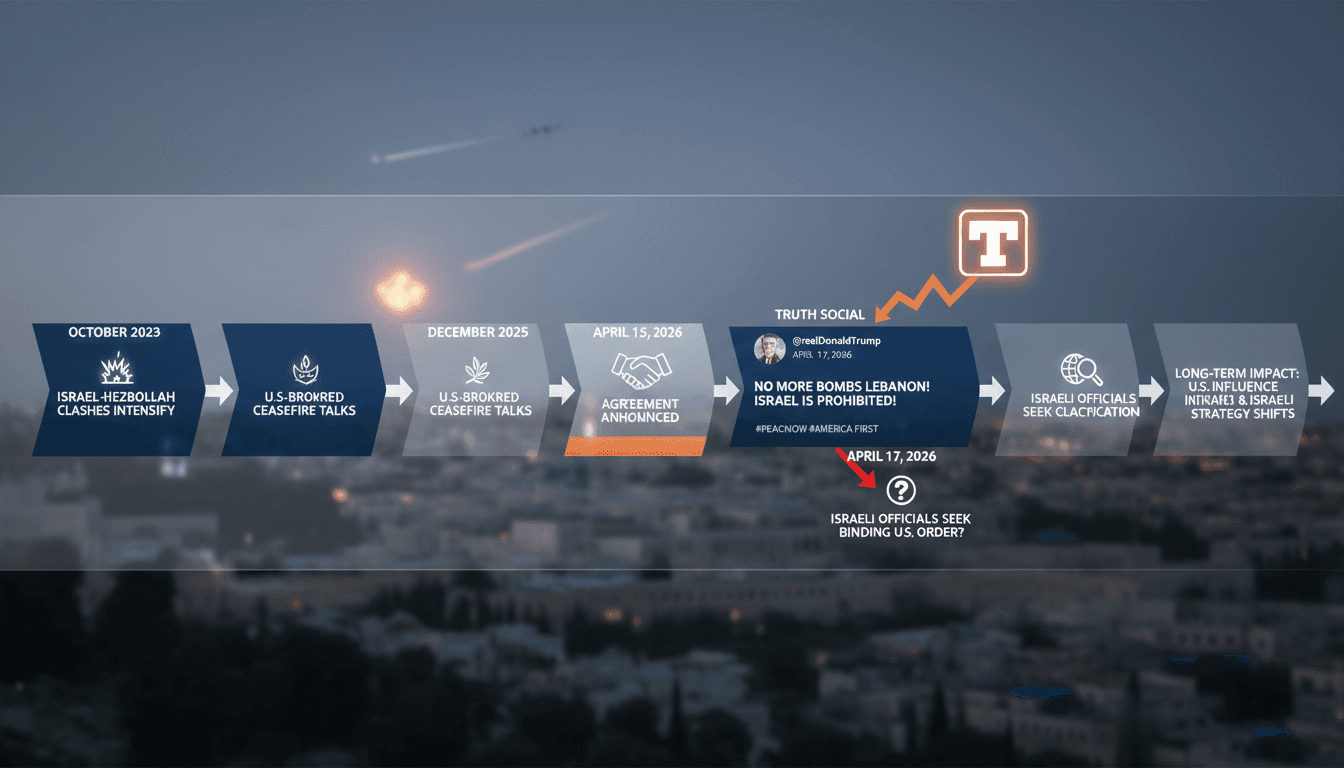
- Trump declared on Truth Social that Israel is prohibited from bombing Lebanon, contradicting a U.S.-brokered ceasefire.
- Netanyahu reacted with urgency, seeking clarification from the White House amid rising tensions with Hezbollah.
- Israel conducted a drone strike in southern Lebanon, justified as self-defense, following the clarification of ceasefire terms.
The context you actually need
- The declaration came after a significant escalation in violence, with 357 individuals killed in Israeli airstrikes on April 8, 2026.
- The ceasefire agreement, effective April 16, 2026, aimed to halt offensive operations while allowing Israel to defend itself against threats.
- Regional reactions included support from the UAE and Gulf states, emphasizing the importance of stability for broader economic interests.
What's really happening
On April 16, 2026, President Trump announced a U.S.-brokered 10-day ceasefire between Israel and Lebanon, which was intended to de-escalate the ongoing conflict that had intensified due to recent Israeli airstrikes. The ceasefire agreement, published by the State Department, explicitly prohibited offensive operations against Lebanese targets while preserving Israel's right to self-defense. This nuanced position was crucial for maintaining a balance in U.S. foreign policy, especially amid ongoing negotiations with Iran.
However, the situation took a dramatic turn when Trump posted on Truth Social the following day, stating that Israel was "PROHIBITED" from bombing Lebanon. This declaration shocked Israeli Prime Minister Benjamin Netanyahu and his advisers, who interpreted it as a binding U.S. order that contradicted the terms of the ceasefire. The urgency of the situation prompted Israeli officials to seek immediate clarification from the White House, fearing that Trump's statement could undermine their military operations against Hezbollah.
In response, a U.S. official reaffirmed the terms of the ceasefire, clarifying that Israel retained its right to self-defense. This clarification allowed Israel to justify a subsequent drone strike in southern Lebanon, which was framed as a defensive action against a Hezbollah violation. The incident highlights the complexities of U.S.-Israeli relations and the delicate balance the U.S. must maintain in the region.
The broader implications of this incident extend beyond immediate military actions. The U.S. is attempting to stabilize the region while navigating its relationships with both Israel and Lebanon, as well as Iran. The ceasefire and Trump's declaration reflect a strategic effort to reduce tensions and foster dialogue, which is essential for long-term peace and stability. However, the mixed signals sent by Trump's social media post could complicate these diplomatic efforts, potentially leading to further escalations if not managed carefully.
Who feels it first (and how)
- Israeli Government Officials: They must navigate the implications of U.S. statements on military strategy.
- Lebanese Civilians: They face the immediate consequences of military actions and ceasefire violations.
- U.S. Diplomats: They are tasked with clarifying U.S. positions to maintain regional stability.
- Business Leaders in the UAE: They benefit from reduced tensions, which can stabilize energy markets and trade routes.
What to watch next
- U.S.-Iran negotiations: Progress or setbacks could influence regional stability and military actions.
- Israeli military operations: Any further strikes could escalate tensions and provoke responses from Hezbollah.
- Reactions from Gulf states: Their support or criticism of U.S. policies will impact diplomatic relations and economic stability in the region.
The ceasefire is currently in effect, and Israel has received clarification on self-defense rights.
Continued military operations by Israel under the guise of self-defense, especially against Hezbollah.
The long-term impact of Trump's declaration on U.S.-Israeli relations and regional stability.
Frequently Asked Questions
- Why it matters?
- The U.S. stance on Israeli military actions directly influences regional stability and international diplomatic negotiations.
- What happened (in 30 seconds)?
- Trump declared on Truth Social that Israel is prohibited from bombing Lebanon, contradicting a U.S.-brokered ceasefire. Netanyahu reacted with urgency, seeking clarification from the White House amid rising tensions with Hezbollah. Israel conducted a drone strike in southern Lebanon, justified as self-defense, following the clarification of ceasefire terms.
- What's really happening?
- On April 16, 2026, President Trump announced a U.S.-brokered 10-day ceasefire between Israel and Lebanon, which was intended to de-escalate the ongoing conflict that had intensified due to recent Israeli airstrikes. The ceasefire agreement, published by the State Department, explicitly prohibited offensive operations against Lebanese targets while preserving Israel's right to self-defense. This nuanced position was crucial for maintaining a balance in U.S. foreign policy, especially amid ongoing
- Who feels it first (and how)?
- Israeli Government Officials: They must navigate the implications of U.S. statements on military strategy. Lebanese Civilians: They face the immediate consequences of military actions and ceasefire violations. U.S. Diplomats: They are tasked with clarifying U.S. positions to maintain regional stability. Business Leaders in the UAE: They benefit from reduced tensions, which can stabilize energy markets and trade routes.
- What to watch next?
- U.S.-Iran negotiations: Progress or setbacks could influence regional stability and military actions. Israeli military operations: Any further strikes could escalate tensions and provoke responses from Hezbollah. Reactions from Gulf states: Their support or criticism of U.S. policies will impact diplomatic relations and economic stability in the region.
Arabic-language coverage of international news and geopolitics.
"RT Arabic is a Russian state-funded outlet often criticized for promoting Kremlin-aligned narratives."
— A47 Editor
"أكسيوس": ترامب صدم نتنياهو بمنشور حظر الغارات الجوية على لبنان
Axios reported that Israel has sought clarifications from the White House regarding a post by President Donald Trump, which announced a ban on any further airstrikes on Lebanon. This unexpected declaration has raised concerns within the Israeli gover...
Jordanian news and regional updates.
"Roya News is a Jordanian outlet focused on breaking news and local affairs."
— A47 Editor
أكسيوس: ذهول وصدمة في مكتب نتنياهو بعد منشور ترمب بشأن منع الغارات على لبنان
Axios reported that there was shock and dismay in Prime Minister Netanyahu's office following a statement from former President Trump regarding the prevention of airstrikes on Lebanon. This unexpected announcement has raised concerns among Israeli of...
Jordanian news and regional updates.
"Roya News is a Jordanian outlet focused on breaking news and local affairs."
— A47 Editor
أكسيوس: ترمب هو من دفع بوقف إطلاق النار في لبنان
Axios reports that former President Trump played a significant role in pushing for a ceasefire in Lebanon, as the U.S. administration exerted intense diplomatic pressure to persuade the involved parties to halt hostilities. This development highlight...