
Release of French Nationals Cécile Kohler and Jacques Paris from Iranian Detention
Here's what it means for you.
As global tensions fluctuate, the release of Cécile Kohler and Jacques Paris signals potential shifts in diplomatic relations that could impact international business and security dynamics.
Why it matters
This event underscores the ongoing geopolitical tensions between Iran and Western nations, which can influence market stability and diplomatic strategies in the region.
What happened (in 30 seconds)
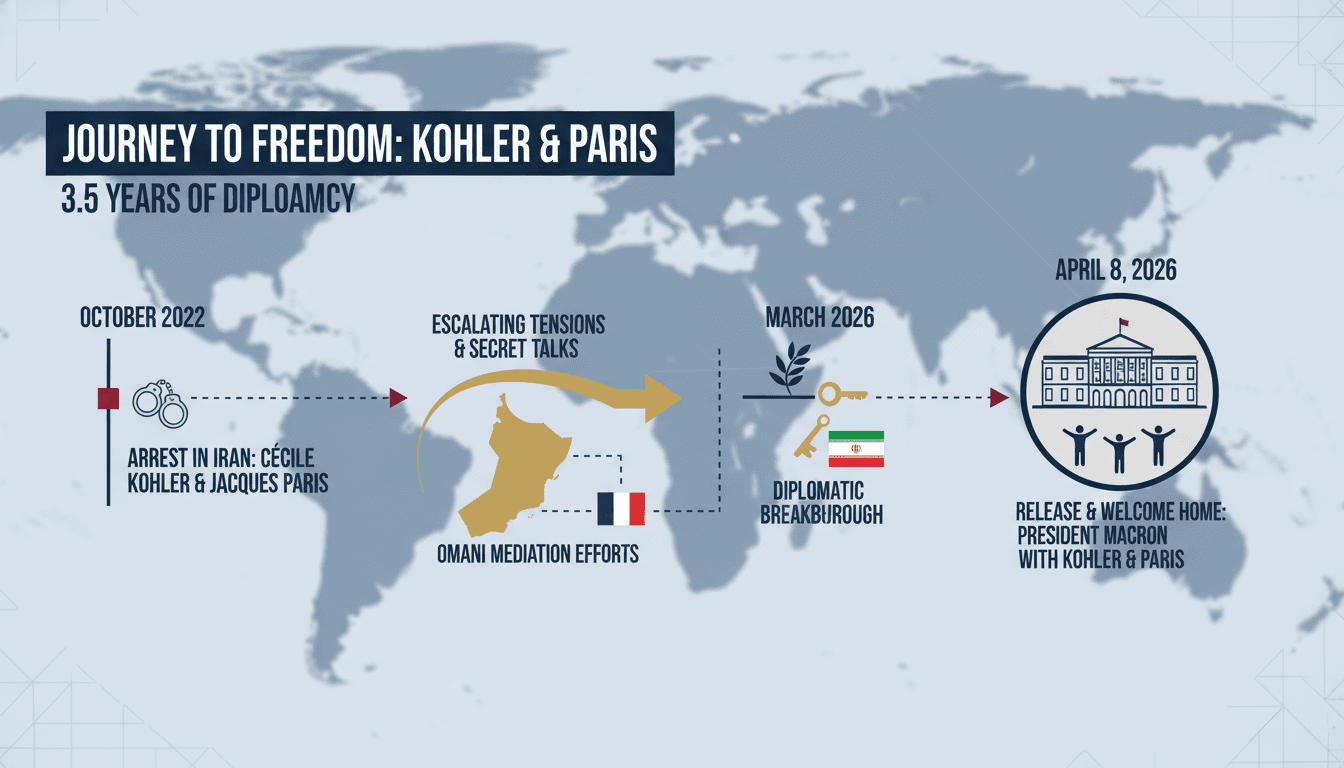
- Cécile Kohler and Jacques Paris were released from Iranian detention after 3.5 years, following their arrest on espionage charges in 2022.
- French President Emmanuel Macron welcomed them back in Paris on April 8, 2026, thanking Oman for its mediation efforts.
- Iran's approval for their departure on April 7, 2026, came amid intensified diplomatic negotiations and appeals from France.
The context you actually need
- Iran's history of detaining foreign nationals often revolves around espionage allegations, which many Western governments view as politically motivated.
- Kohler and Paris's case reflects broader diplomatic tensions, with France striving to navigate its position in Middle Eastern conflicts while advocating for its citizens.
- Oman's role as a mediator highlights its unique position in the region, potentially influencing future diplomatic engagements and negotiations.
What's really happening
The release of Cécile Kohler and Jacques Paris from Iranian detention marks a significant moment in the complex web of Iran-Western relations. Their imprisonment in Evin Prison for 3.5 years on espionage charges—allegations that France has consistently contested—illustrates the precarious nature of diplomatic ties in the region. As Iran has detained numerous foreign nationals, often leveraging their release as bargaining chips, this case is emblematic of the broader geopolitical strategy at play.
The diplomatic efforts that led to their release intensified in late 2025. Macron's direct appeals to Iranian authorities, coupled with family concerns about deteriorating health conditions, created a sense of urgency. The involvement of Oman as a mediator is particularly noteworthy; Oman has historically maintained a neutral stance in regional conflicts, positioning itself as a facilitator for dialogue between Iran and Western nations. This mediation could signal a shift in how such negotiations are conducted moving forward.
The implications of this release extend beyond the immediate relief for the individuals and their families. It reflects a potential thawing of relations between Iran and France, which could influence broader diplomatic strategies in the Gulf region. As tensions persist, the dynamics of international diplomacy may shift, with countries like Oman playing a more prominent role in facilitating negotiations.
Moreover, the release aligns with France's efforts to distance itself from Middle Eastern conflicts while advocating for its citizens abroad. This balancing act is crucial, as it seeks to uphold national interests without exacerbating existing tensions. The psychological and emotional toll on Kohler and Paris, as described by Paris himself, underscores the human cost of such geopolitical maneuvers.
As the world watches how this situation unfolds, the ramifications could extend to various sectors, including international business, security, and diplomatic relations. The release serves as a reminder of the intricate connections between individual lives and the broader geopolitical landscape.
Who feels it first (and how)
- Diplomats and government officials: They will need to navigate the evolving diplomatic landscape and its implications for international relations.
- International businesses: Companies operating in or with ties to the Middle East may reassess their strategies based on shifting diplomatic relations.
- Human rights organizations: They will monitor the implications of this case for the treatment of detainees and the broader context of human rights in Iran.
What to watch next
- Future diplomatic negotiations: Watch for any upcoming talks between Iran and Western nations, as these could signal shifts in policy or strategy.
- Oman's mediation role: Monitor how Oman positions itself in future diplomatic efforts, potentially influencing regional stability.
- Public sentiment in France: Observe how the French public and government respond to this incident, which may shape future foreign policy decisions.
Cécile Kohler and Jacques Paris were released after 3.5 years of detention.
Diplomatic relations between Iran and France may experience a temporary thaw, influenced by Oman’s mediation.
The long-term impact on Iran-Western relations and how it may affect regional security dynamics remains uncertain.
Frequently Asked Questions
- Why it matters?
- This event underscores the ongoing geopolitical tensions between Iran and Western nations, which can influence market stability and diplomatic strategies in the region.
- What happened (in 30 seconds)?
- Cécile Kohler and Jacques Paris were released from Iranian detention after 3.5 years, following their arrest on espionage charges in 2022. French President Emmanuel Macron welcomed them back in Paris on April 8, 2026, thanking Oman for its mediation efforts. Iran's approval for their departure on April 7, 2026, came amid intensified diplomatic negotiations and appeals from France.
- What's really happening?
- The release of Cécile Kohler and Jacques Paris from Iranian detention marks a significant moment in the complex web of Iran-Western relations. Their imprisonment in Evin Prison for 3.5 years on espionage charges—allegations that France has consistently contested—illustrates the precarious nature of diplomatic ties in the region. As Iran has detained numerous foreign nationals, often leveraging their release as bargaining chips, this case is emblematic of the broader geopolitical strategy at play
- Who feels it first (and how)?
- Diplomats and government officials: They will need to navigate the evolving diplomatic landscape and its implications for international relations. International businesses: Companies operating in or with ties to the Middle East may reassess their strategies based on shifting diplomatic relations. Human rights organizations: They will monitor the implications of this case for the treatment of detainees and the broader context of human rights in Iran.
- What to watch next?
- Future diplomatic negotiations: Watch for any upcoming talks between Iran and Western nations, as these could signal shifts in policy or strategy. Oman's mediation role: Monitor how Oman positions itself in future diplomatic efforts, potentially influencing regional stability. Public sentiment in France: Observe how the French public and government respond to this incident, which may shape future foreign policy decisions.
Regional coverage and analysis focused on politics, diplomacy, and business across the Middle East.
"Al-Monitor is known for analytical reporting on Middle East politics and policy developments."
— A47 Editor
Macron welcomes home two French nationals freed after years in Iran jail
French President Emmanuel Macron announced the return of two French nationals, Cecile Kohler and Jacques Paris, who were released after three and a half years of detention in Iran. They had been held on espionage charges, which France deemed unfounde...
24/7 international news from a French perspective in multiple languages.
"France 24 is viewed as a globally focused outlet with balanced coverage and a European perspective."
— A47 Editor
Ex-Iran detainees back in France: 'The culmination of years of hard work'
French nationals Cécile Kohler and Jacques Paris have returned to Paris after being detained in Iran for nearly four years on espionage charges, with President Emmanuel Macron confirming their release as the culmination of extensive diplomatic effort...