
Calls for Comprehensive Peace Settlement Following US-Iran Ceasefire
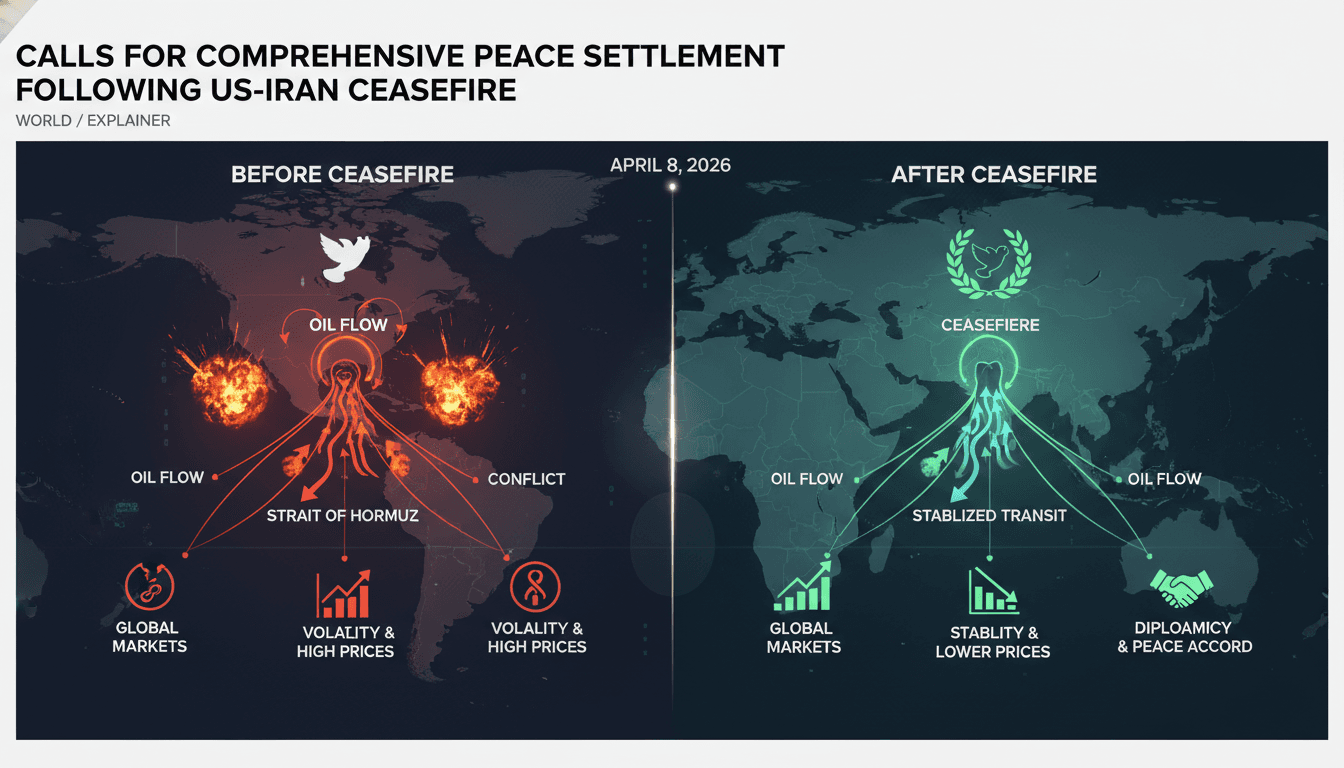
Here's what it means for you.
The recent ceasefire between the US and Iran could stabilize oil prices and enhance economic conditions in the Gulf, directly impacting your cost of living and investment opportunities.
Why it matters
This ceasefire represents a critical juncture in Middle Eastern geopolitics that could influence global oil markets and economic stability.
What happened (in 30 seconds)
- On April 8, 2026, a two-week ceasefire was announced between the US and Iran, mediated by Pakistan.
- Regional powers including Saudi Arabia and Egypt called for this ceasefire to evolve into a comprehensive peace agreement.
- Global markets reacted positively, with crude oil prices dropping by 15% following the announcement.
The context you actually need
- The Strait of Hormuz, a vital shipping lane, was temporarily closed during a 40-day conflict, disrupting 20% of global oil transit.
- Diplomatic efforts from multiple nations emphasized the need for de-escalation and adherence to international law to ensure long-term stability.
- The economic impact of the conflict included rising oil prices and increased inflation across the Gulf region, affecting everyday consumers.
What's really happening
The recent ceasefire between the US and Iran is a pivotal moment in a long-standing conflict that has significant implications for both regional and global stability. The ceasefire was brokered by Pakistan, highlighting its growing diplomatic role in the Middle East. The immediate trigger for the ceasefire was the US's ultimatum to Iran regarding the reopening of the Strait of Hormuz, which had been closed due to escalating tensions. This closure had a profound impact on global oil markets, as the Strait is a critical conduit for oil shipments, accounting for approximately 20% of the world's oil supply.
The ceasefire is not merely a pause in hostilities but a potential turning point that could lead to a more comprehensive peace agreement. Countries like Saudi Arabia, Egypt, and Oman have expressed strong support for this transition, emphasizing the importance of diplomacy and adherence to international law. The UN Secretary-General has also urged compliance with international norms, indicating a broad consensus on the need for a sustainable resolution.
The economic ramifications of this ceasefire are already being felt. Following the announcement, crude oil prices plummeted by 15%, providing immediate relief to consumers and businesses dependent on stable fuel prices. For Dubai, which relies heavily on oil imports and shipping routes, this stabilization is crucial. A drop in oil prices can lead to lower fuel costs, reduced inflation, and an overall boost in economic confidence. Additionally, the stock market has responded positively, with rallies in financial sectors that could lead to increased employment opportunities.
However, the situation remains fragile. Both the US and Iran have claimed victory, but the underlying tensions are far from resolved. The Israeli conflict, which remains a significant factor in regional dynamics, has not been addressed in the current ceasefire discussions, leaving open the possibility of renewed hostilities. The international community's focus on a comprehensive settlement will be critical in determining whether this ceasefire can lead to lasting peace.
Who feels it first (and how)
- Consumers in the Gulf: Benefit from lower fuel prices and reduced inflation.
- Investors in Dubai: Experience increased market confidence and potential job growth in the financial sector.
- Shipping and logistics companies: Gain from stabilized oil prices and improved shipping routes.
What to watch next
- Diplomatic negotiations: Monitor the progress towards a comprehensive peace agreement, as this will determine the stability of the region.
- Oil price fluctuations: Keep an eye on how global oil prices respond to further developments in the US-Iran relationship, as this will affect economic conditions.
- Regional military movements: Watch for any signs of renewed conflict, particularly involving Israel, which could destabilize the ceasefire.
The ceasefire is currently active, and diplomatic efforts are ongoing.
There will be continued pressure for a comprehensive peace agreement from regional and international players.
The long-term sustainability of the ceasefire and its impact on regional conflicts remains uncertain.
Frequently Asked Questions
- Why it matters?
- This ceasefire represents a critical juncture in Middle Eastern geopolitics that could influence global oil markets and economic stability.
- What happened (in 30 seconds)?
- On April 8, 2026, a two-week ceasefire was announced between the US and Iran, mediated by Pakistan. Regional powers including Saudi Arabia and Egypt called for this ceasefire to evolve into a comprehensive peace agreement. Global markets reacted positively, with crude oil prices dropping by 15% following the announcement.
- What's really happening?
- The recent ceasefire between the US and Iran is a pivotal moment in a long-standing conflict that has significant implications for both regional and global stability. The ceasefire was brokered by Pakistan, highlighting its growing diplomatic role in the Middle East. The immediate trigger for the ceasefire was the US's ultimatum to Iran regarding the reopening of the Strait of Hormuz, which had been closed due to escalating tensions. This closure had a profound impact on global oil markets, as t
- Who feels it first (and how)?
- Consumers in the Gulf: Benefit from lower fuel prices and reduced inflation. Investors in Dubai: Experience increased market confidence and potential job growth in the financial sector. Shipping and logistics companies: Gain from stabilized oil prices and improved shipping routes.
- What to watch next?
- Diplomatic negotiations: Monitor the progress towards a comprehensive peace agreement, as this will determine the stability of the region. Oil price fluctuations: Keep an eye on how global oil prices respond to further developments in the US-Iran relationship, as this will affect economic conditions. Regional military movements: Watch for any signs of renewed conflict, particularly involving Israel, which could destabilize the ceasefire.
Arabic-language coverage of political affairs and current events.
"Okaz political coverage typically follows mainstream Saudi framing on national and regional affairs."
— A47 Editor
دعوات عربية ودولية لتحويل هدنة أمريكا وإيران إلى تسوية شاملة
A significant political shift in the Middle East has occurred with the announcement of a two-week ceasefire between Washington and Tehran, welcomed by various Western and Islamic nations, as well as international organizations. Pakistan's role in med...
English-language reporting on Saudi politics, policy, and society.
"Saudi Gazette reflects mainstream Saudi institutional perspectives."
— A47 Editor
Saudi Arabia welcomes US-Iran ceasefire, urges free navigation in Hormuz
Saudi Arabia has welcomed the recent ceasefire agreement between the United States and Iran, emphasizing the importance of keeping the Strait of Hormuz open for unrestricted navigation. The Saudi Ministry of Foreign Affairs praised Pakistan's role in...
English-language reporting focused on Saudi Arabia and regional affairs.
"Saudi Gazette provides English-language coverage that often aligns with mainstream Saudi news priorities."
— A47 Editor
Saudi Arabia welcomes US-Iran ceasefire, urges free navigation in Hormuz
Saudi Arabia has welcomed the recent ceasefire agreement between the United States and Iran, emphasizing the importance of keeping the Strait of Hormuz open for unrestricted navigation. The Saudi Ministry of Foreign Affairs praised Pakistan's role in...