
2026 IMF-World Bank Spring Meetings Address Global Economic Challenges Amid Middle East Conflict
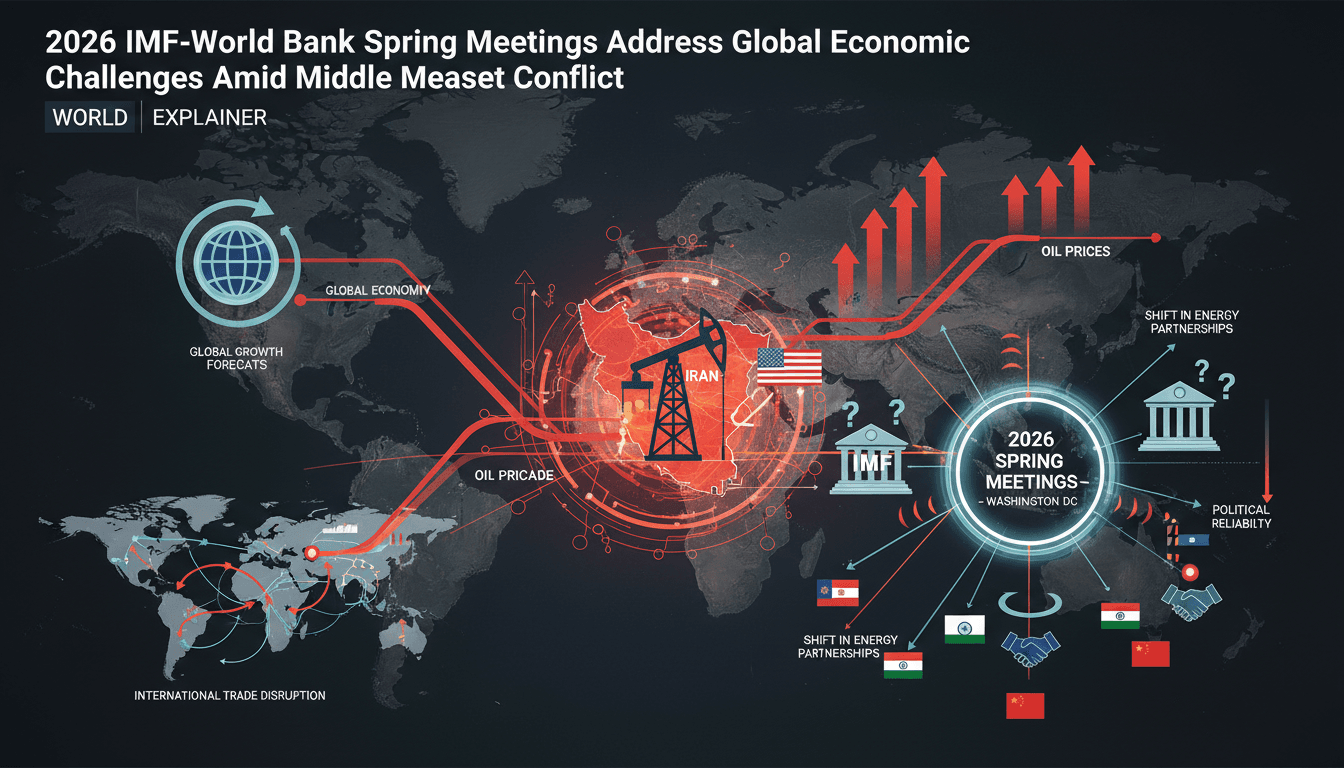
Here's what it means for you.
As global economic stability wavers, your business decisions may need to adapt to rising energy costs and shifting trade dynamics.
Why it matters
The ongoing geopolitical tensions are reshaping global economic landscapes, impacting inflation and trade patterns that affect consumers and businesses alike.
What happened (in 30 seconds)
- IMF and World Bank leaders convened in Washington, DC, from April 13–18, 2026, amid escalating Middle East tensions.
- World Bank President Ajay Banga warned of potential global growth reductions of 0.3–1 percentage points due to rising energy prices and conflict escalation.
- Discussions focused on energy market chaos, with experts highlighting the unpredictability of supply chains and the need for political reliability in energy partnerships.
The context you actually need
- Fragile global recovery: The meetings occurred against a backdrop of modest growth forecasts and persistent vulnerabilities in emerging markets.
- Energy security threats: The Strait of Hormuz is under significant threat, with potential US blockades on Iranian oil exports valued at $9 billion annually.
- Shift in economic priorities: Traditional monetary tools are becoming inadequate as geopolitical factors increasingly dictate economic stability.
What's really happening
The 2026 Spring Meetings of the IMF and World Bank are taking place during a critical juncture for the global economy, marked by escalating tensions in the Middle East. The conflict, particularly concerning Iran and the Strait of Hormuz, has raised alarms about energy security, with the International Energy Agency (IEA) labeling it the greatest threat in history. This situation is compounded by the potential for the United States to enforce a blockade on Iranian oil exports, which could disrupt a significant flow of oil worth $9 billion annually.
World Bank President Ajay Banga has highlighted the risks posed to global growth, projecting reductions of 0.3–0.4 percentage points in a contained conflict scenario, and up to one percentage point if tensions escalate further. This underscores the fragility of the current economic recovery, which is already facing headwinds from inflation and supply chain disruptions. The meetings have attracted a diverse group of participants, including finance ministers, central bankers, and private sector leaders, all of whom are grappling with the implications of these geopolitical shifts.
The discussions have revealed a consensus on the need for a reconfiguration of energy partnerships, emphasizing political reliability over economic efficiency. Experts have noted that the chaos in energy markets is not just a temporary issue but a structural shift that could redefine how countries engage in trade and energy procurement. The unpredictability of supply chains has become a central theme, with analysts like Mohammed Soliman stating that "uncertainty is now certain," indicating a new normal for businesses and governments alike.
As the meetings progress, the focus has shifted toward finding solutions that can mitigate the impacts of these geopolitical tensions. The IEA's Fatih Birol has called for a reevaluation of energy strategies, urging countries to prioritize stability and cooperation over competition. This shift is crucial for low-income and energy-importing nations, which are likely to bear the brunt of these changes, facing asymmetric impacts that could exacerbate existing vulnerabilities.
Who feels it first (and how)
- Energy-importing countries: These nations will experience immediate inflationary pressures due to rising energy prices.
- Low-income households: Vulnerable populations may struggle with increased living costs as energy prices surge.
- Businesses reliant on stable supply chains: Companies across various sectors will face disruptions, impacting production and pricing strategies.
- Investors in emerging markets: Increased volatility may lead to cautious investment strategies, affecting capital flows.
What to watch next
- Energy price fluctuations: Monitoring oil prices will be crucial, as they directly impact inflation and economic stability.
- Geopolitical developments in the Middle East: Any escalation in conflict could lead to further disruptions in global energy supplies.
- Policy responses from major economies: Watch for fiscal and monetary policy adjustments aimed at stabilizing markets and supporting vulnerable economies.
The IMF and World Bank meetings are addressing significant geopolitical tensions affecting global economic stability.
Energy prices will continue to rise, impacting inflation and economic growth forecasts.
The long-term effects of these geopolitical tensions on global trade relationships and supply chains remain uncertain.
Frequently Asked Questions
- Why it matters?
- The ongoing geopolitical tensions are reshaping global economic landscapes, impacting inflation and trade patterns that affect consumers and businesses alike.
- What happened (in 30 seconds)?
- IMF and World Bank leaders convened in Washington, DC, from April 13–18, 2026, amid escalating Middle East tensions. World Bank President Ajay Banga warned of potential global growth reductions of 0.3–1 percentage points due to rising energy prices and conflict escalation. Discussions focused on energy market chaos, with experts highlighting the unpredictability of supply chains and the need for political reliability in energy partnerships.
- What's really happening?
- The 2026 Spring Meetings of the IMF and World Bank are taking place during a critical juncture for the global economy, marked by escalating tensions in the Middle East. The conflict, particularly concerning Iran and the Strait of Hormuz, has raised alarms about energy security, with the International Energy Agency (IEA) labeling it the greatest threat in history. This situation is compounded by the potential for the United States to enforce a blockade on Iranian oil exports, which could disrupt
- Who feels it first (and how)?
- Energy-importing countries: These nations will experience immediate inflationary pressures due to rising energy prices. Low-income households: Vulnerable populations may struggle with increased living costs as energy prices surge. Businesses reliant on stable supply chains: Companies across various sectors will face disruptions, impacting production and pricing strategies. Investors in emerging markets: Increased volatility may lead to cautious investment strategies, affecting capital flows.
- What to watch next?
- Energy price fluctuations: Monitoring oil prices will be crucial, as they directly impact inflation and economic stability. Geopolitical developments in the Middle East: Any escalation in conflict could lead to further disruptions in global energy supplies. Policy responses from major economies: Watch for fiscal and monetary policy adjustments aimed at stabilizing markets and supporting vulnerable economies.
UAE-based English-language newspaper covering regional politics, economics, and global affairs.
"The National reflects Emirati policy perspectives while maintaining international editorial standards."
— A47 Editor
IMF-World Bank meeting overshadowed by war, volatility and fragmentation
The upcoming meetings of the International Monetary Fund (IMF) and World Bank are overshadowed by the ongoing war in the Middle East, particularly the conflict in Iran, which is expected to significantly influence economic discussions and strategies.
Arabic-language UAE newspaper coverage focused on domestic affairs, public institutions, business, society, and regional developments.
"Al Khaleej coverage generally reflects a mainstream UAE editorial lens with strong attention to public affairs, institutions, and regional developments."
— A47 Editor
التعافي من تداعيات الحرب هدف اجتماع «الدوليين» الأسبوع الجاري
Senior financial officials from around the world are convening in Washington this week amid ongoing conflict in the Middle East, which has triggered a significant economic shock globally. The meeting aims to address the recovery from the war's reperc...
Macro commentary, policy analysis, growth/inflation themes, and global outlooks.
"Contextual macro coverage that complements day-to-day market headlines."
— A47 Editor
Economic shock of Middle East war to cast shadow over IMF, World Bank meetings
The ongoing conflict in the Middle East is expected to significantly impact the upcoming meetings of the International Monetary Fund (IMF) and the World Bank, as economic shocks from the war are anticipated to lead to rising prices and slower global ...
Regional and international reporting focused on Middle Eastern politics, diplomacy, and economics.
"Asharq Al-Awsat is a Saudi-owned international newspaper reflecting mainstream Gulf political perspectives."
— A47 Editor
World Bank Chief: Middle East War to Cut Growth, Deliver Cascading Impact
The World Bank Chief has warned that the ongoing war in the Middle East, particularly the conflict in Iran, is expected to significantly reduce economic growth in the region, projecting a decline to 1.8% by 2026. This situation is anticipated to have...