
HSBC Reports Shift to Risk-Off Mode Among Customers Due to Iran Conflict
Here's what it means for you.
As global tensions rise, your investment strategies may need to adapt to shifting market sentiments.
Why it matters
Investor caution can lead to market volatility, impacting your financial decisions and opportunities.
What happened (in 30 seconds)
- David Liao, HSBC Asia and Middle East Co-CEO, reported a shift to a 'risk-off mode' among customers due to the Iran conflict.
- U.S. naval blockade of the Strait of Hormuz has disrupted trade, causing uncertainty in global energy supplies.
- HSBC's balance sheets remain stable, but executives warn of potential long-term impacts on client confidence and market dynamics.
The context you actually need
- Escalating geopolitical tensions in the Middle East have led to significant disruptions in trade and energy supplies.
- HSBC's strategic position in the Middle East contributes 5% to its annual profits, highlighting the region's economic importance.
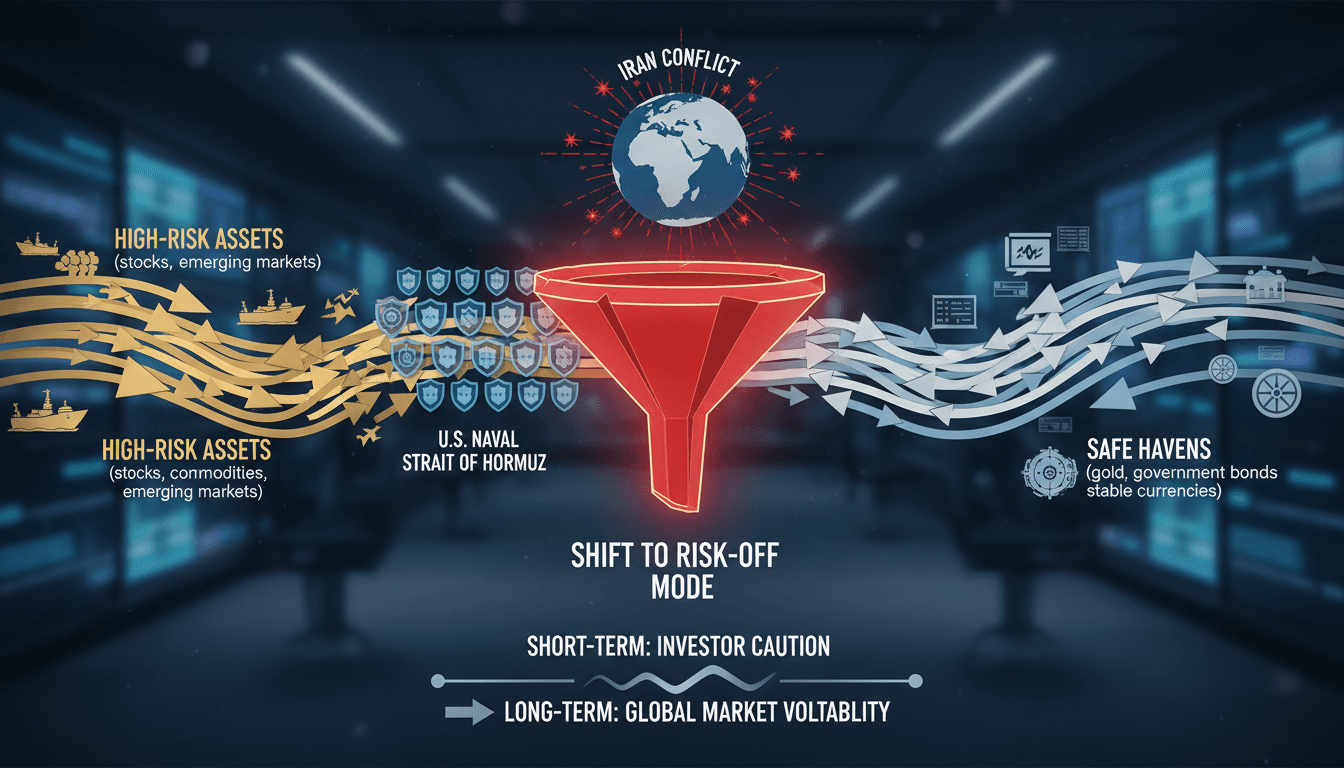
- Investor behavior is shifting towards safer assets, reflecting broader concerns about economic stability amid ongoing conflicts.
What's really happening
The recent escalation of tensions in the Middle East, particularly the Iran conflict, has triggered a notable shift in investor behavior, as highlighted by HSBC's Co-CEO David Liao. The U.S. naval blockade of the Strait of Hormuz, implemented around April 14, 2026, has severely disrupted Iranian sea trade, leading to a significant increase in oil prices and heightened uncertainty in global markets. This situation has prompted HSBC's customer base to adopt a 'risk-off mode,' where investors prioritize safety over potential returns.
In this context, the term 'risk-off' refers to a strategy where investors move their assets into safer investments, such as government bonds or gold, rather than equities or commodities that may be more volatile. This behavior is a direct response to the perceived risks associated with geopolitical instability, particularly in regions critical to global energy supplies. As oil prices surge, the cost of energy rises, which can lead to inflationary pressures and impact economic growth worldwide.
Despite the cautious stance of its customers, HSBC has reported stable balance sheets across both wholesale and retail segments. This stability suggests that while investor sentiment may be shifting, the bank's underlying financial health remains robust. However, HSBC executives, including CEO Georges Elhedery, have expressed concerns about the potential long-term effects of this risk-off behavior on client confidence and overall market dynamics.
The implications of this shift extend beyond just HSBC. As investors flock to safe havens, other financial institutions may also experience similar trends, leading to broader market volatility. Additionally, sectors heavily reliant on energy, such as transportation and manufacturing, may face increased costs and operational challenges due to rising oil prices. This could ultimately affect consumers through higher prices for goods and services.
Moreover, the ongoing conflict and its repercussions may lead to a reevaluation of investment strategies across various sectors, particularly in regions like Dubai, where HSBC has recently signed a strategic deal to attract global investors. The bank's commitment to long-term investment in the UAE, despite regional tensions, underscores the importance of maintaining economic stability in the face of geopolitical challenges.
Who feels it first (and how)
- Investors: Shift to safer assets impacts portfolio performance and investment strategies.
- Energy Sector: Increased oil prices affect operational costs and profitability.
- Consumers: Rising costs of goods and services due to inflationary pressures from energy price surges.
- Financial Institutions: Banks may face reduced client confidence and altered investment flows.
What to watch next
- Oil Price Trends: Monitoring fluctuations in oil prices will indicate the ongoing impact of geopolitical tensions on global markets.
- Investor Sentiment Reports: Changes in investor confidence can signal shifts in market dynamics and potential economic recovery or downturn.
- HSBC's Financial Performance: Observing HSBC's quarterly results will provide insights into how the bank navigates the current climate and its implications for the broader market.
The U.S. naval blockade has disrupted Iranian trade and increased oil prices.
Continued investor caution will lead to sustained risk-off strategies across markets.
The long-term effects of the Iran conflict on global economic growth and energy markets remain uncertain.
Frequently Asked Questions
- Why it matters?
- Investor caution can lead to market volatility, impacting your financial decisions and opportunities.
- What happened (in 30 seconds)?
- David Liao, HSBC Asia and Middle East Co-CEO, reported a shift to a 'risk-off mode' among customers due to the Iran conflict. U.S. naval blockade of the Strait of Hormuz has disrupted trade, causing uncertainty in global energy supplies. HSBC's balance sheets remain stable, but executives warn of potential long-term impacts on client confidence and market dynamics.
- What's really happening?
- The recent escalation of tensions in the Middle East, particularly the Iran conflict, has triggered a notable shift in investor behavior, as highlighted by HSBC's Co-CEO David Liao. The U.S. naval blockade of the Strait of Hormuz, implemented around April 14, 2026, has severely disrupted Iranian sea trade, leading to a significant increase in oil prices and heightened uncertainty in global markets. This situation has prompted HSBC's customer base to adopt a 'risk-off mode,' where investors prior
- Who feels it first (and how)?
- Investors: Shift to safer assets impacts portfolio performance and investment strategies. Energy Sector: Increased oil prices affect operational costs and profitability. Consumers: Rising costs of goods and services due to inflationary pressures from energy price surges. Financial Institutions: Banks may face reduced client confidence and altered investment flows.
- What to watch next?
- Oil Price Trends: Monitoring fluctuations in oil prices will indicate the ongoing impact of geopolitical tensions on global markets. Investor Sentiment Reports: Changes in investor confidence can signal shifts in market dynamics and potential economic recovery or downturn. HSBC's Financial Performance: Observing HSBC's quarterly results will provide insights into how the bank navigates the current climate and its implications for the broader market.
Global markets, investing, and macroeconomics from a premier financial newsroom.
"Bloomberg is respected for in-depth financial reporting and data-driven analysis."
— A47 Editor
HSBC's Liao: Customers in Risk‑Off Mode as Tensions Rise
HSBC Asia and Middle East Co-CEO David Liao indicated that the bank's customers have entered a 'risk-off mode' due to rising tensions from the ongoing conflict in Iran, although he noted that balance sheets remain stable across wholesale and retail s...
Global markets, investing, and macroeconomics from a premier financial newsroom.
"Bloomberg is respected for in-depth financial reporting and data-driven analysis."
— A47 Editor
HSBC Private Bank Cuts India Stocks, Adds Gold on Iran War Risks
HSBC Private Bank and Premier Wealth have downgraded their exposure to Indian equities, citing increased risks from the ongoing conflict in Iran, while reallocating investments towards gold, cash, and hedge funds. This strategic shift reflects concer...
UK and international business news, economics, and corporate coverage.
"The Guardian’s business section covers finance and markets with a progressive editorial tone."
— A47 Editor
HSBC says Iran war is hitting confidence as businesses warn over economic risks
HSBC has reported that the ongoing war in Iran is negatively impacting global economic confidence, with business leaders expressing concerns over the conflict's economic repercussions. The bank's CEO, Georges Elhedery, highlighted the uncertainty sur...
International coverage from The Guardian's global desks.
"The Guardian is known for its progressive editorial stance and in-depth analysis."
— A47 Editor
HSBC says Iran war is hitting confidence as businesses warn over economic risks
HSBC has reported that the ongoing war in Iran is negatively impacting global economic confidence, with business leaders expressing concerns over the conflict's economic repercussions. The bank's CEO, Georges Elhedery, highlighted the uncertainty sur...
Global markets, investing, and macroeconomics from a premier financial newsroom.
"Bloomberg is respected for in-depth financial reporting and data-driven analysis."
— A47 Editor
HSBC CEO on Impact of Middle East Conflict
HSBC CEO Georges Elhedery expressed deep concern regarding the ongoing conflict in the Middle East during an interview with Bloomberg Television in Hong Kong, highlighting the uncertainty surrounding the duration of the crisis.
Global markets, investing, and macroeconomics from a premier financial newsroom.
"Bloomberg is respected for in-depth financial reporting and data-driven analysis."
— A47 Editor
HSBC CEO Warns Mideast Conflict Is Denting Global Confidence
HSBC Holdings Plc CEO Georges Elhedery has warned that the ongoing conflict in the Middle East is beginning to erode client confidence as investors face an increasingly volatile global market. This sentiment reflects growing concerns about geopolitic...