
WHO Warns of Critical Trauma Supply Shortages in Lebanese Hospitals After Israeli Airstrikes
Here's what it means for you.
If you or your loved ones are connected to Lebanon, the depletion of medical supplies could impact your ability to receive timely care in emergencies.
Why it matters
The ongoing conflict and subsequent medical supply shortages threaten the health and safety of civilians, potentially affecting global humanitarian responses.
What happened (in 30 seconds)
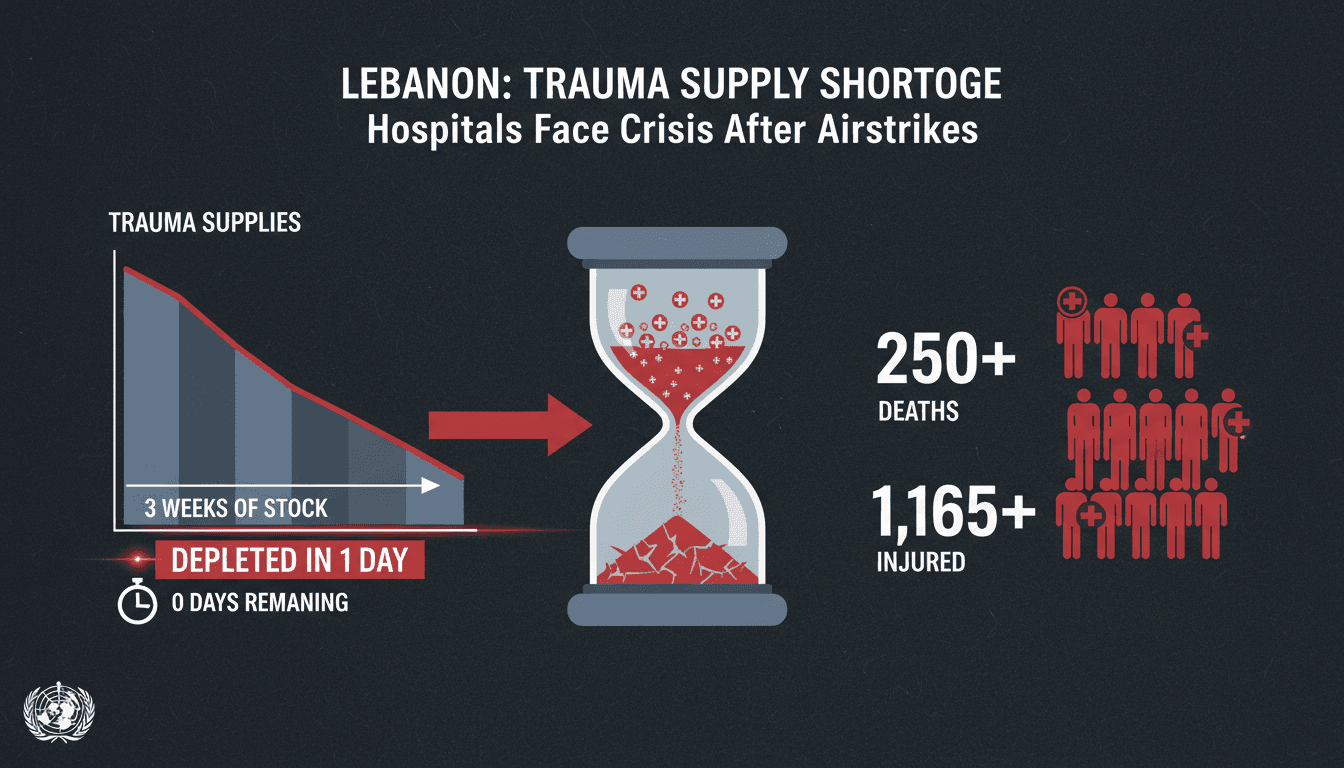
- On April 8, 2026, Israeli airstrikes resulted in over 250 fatalities and 1,165 injuries, primarily among civilians.
- By April 9, 2026, the World Health Organization warned that trauma supplies in Lebanese hospitals could run out within days due to the overwhelming number of casualties.
- The crisis is exacerbated by ongoing geopolitical tensions and disrupted supply chains, leading to critical shortages of essential medical supplies.
The context you actually need
- The 2026 Lebanon War escalated following U.S.-Israeli strikes on Iran, leading to Hezbollah's retaliation and further Israeli counterstrikes.
- Over 1 million Lebanese have been displaced due to the conflict, straining the already fragile healthcare system.
- Supply chain disruptions from the Gulf conflict and rising delivery costs have severely impacted the availability of medical supplies in Lebanon.
What's really happening
The recent Israeli airstrikes on April 8, 2026, have triggered a humanitarian crisis in Lebanon, primarily affecting civilian populations. The airstrikes resulted in a staggering loss of life and injuries, overwhelming local hospitals that were already struggling due to the ongoing conflict. The World Health Organization (WHO) reported that the trauma management supplies, which typically last for three weeks, were depleted in just one day. This rapid consumption of resources highlights the dire state of healthcare in Lebanon, where hospitals are now facing critical shortages of essential medical supplies such as bandages, antibiotics, and anesthetics.
The situation is compounded by the broader context of the 2026 Lebanon War, which began escalating in early March after joint U.S.-Israeli military actions against Iran. The conflict has led to significant displacement, with over 1 million people forced to flee their homes, further straining the healthcare system. The Lebanese Ministry of Public Health is now collaborating with the WHO to redistribute supplies between hospitals, but the urgency of the situation means that any further mass casualties could lead to catastrophic outcomes. Dr. Abdinasir Abubakar of the WHO has warned that another incident similar to the April 8 strikes could result in a disaster for the healthcare system, which is already on the brink of collapse.
Additionally, the geopolitical landscape is affecting supply chains. The Gulf conflict has led to increased delivery costs and logistical challenges, with many supplies stuck in ports due to regional shipping bottlenecks. This has made it increasingly difficult for humanitarian organizations to deliver aid to those in need. The WHO's funding constraints further exacerbate the situation, leaving hospitals in Lebanon vulnerable and unable to cope with the influx of casualties from ongoing hostilities.
As the conflict continues, the implications for healthcare in Lebanon are severe. The lack of medical supplies not only endangers the lives of those injured in the strikes but also affects the overall health of the population, as routine medical care becomes increasingly difficult to access. The international community is being called upon to respond, but the immediate needs are pressing, and the window for effective intervention is rapidly closing.
Who feels it first (and how)
- Healthcare Workers: Strained by the influx of casualties and lack of supplies, leading to burnout and inability to provide care.
- Civilians: Particularly those in conflict zones, facing increased risk of injury without access to medical treatment.
- Lebanese Expatriates: Over 100,000 Lebanese living abroad, particularly in Dubai, are concerned about family and friends affected by the conflict.
What to watch next
- International Aid Responses: Monitor how quickly and effectively humanitarian organizations can mobilize resources to Lebanon.
- Geopolitical Developments: Watch for shifts in U.S.-Iran relations that could impact the conflict and humanitarian access.
- Public Health Outcomes: Track the health impacts on civilians as medical supplies dwindle and the potential for disease outbreaks increases.
The depletion of medical supplies in Lebanese hospitals is imminent, with critical shortages already reported.
Further escalations in conflict will lead to additional casualties, exacerbating the healthcare crisis.
The extent of international intervention and support in response to the humanitarian crisis remains uncertain.
Frequently Asked Questions
- Why it matters?
- The ongoing conflict and subsequent medical supply shortages threaten the health and safety of civilians, potentially affecting global humanitarian responses.
- What happened (in 30 seconds)?
- On April 8, 2026, Israeli airstrikes resulted in over 250 fatalities and 1,165 injuries, primarily among civilians. By April 9, 2026, the World Health Organization warned that trauma supplies in Lebanese hospitals could run out within days due to the overwhelming number of casualties. The crisis is exacerbated by ongoing geopolitical tensions and disrupted supply chains, leading to critical shortages of essential medical supplies.
- What's really happening?
- The recent Israeli airstrikes on April 8, 2026, have triggered a humanitarian crisis in Lebanon, primarily affecting civilian populations. The airstrikes resulted in a staggering loss of life and injuries, overwhelming local hospitals that were already struggling due to the ongoing conflict. The World Health Organization (WHO) reported that the trauma management supplies, which typically last for three weeks, were depleted in just one day. This rapid consumption of resources highlights the dire
- Who feels it first (and how)?
- Healthcare Workers: Strained by the influx of casualties and lack of supplies, leading to burnout and inability to provide care. Civilians: Particularly those in conflict zones, facing increased risk of injury without access to medical treatment. Lebanese Expatriates: Over 100,000 Lebanese living abroad, particularly in Dubai, are concerned about family and friends affected by the conflict.
- What to watch next?
- International Aid Responses: Monitor how quickly and effectively humanitarian organizations can mobilize resources to Lebanon. Geopolitical Developments: Watch for shifts in U.S.-Iran relations that could impact the conflict and humanitarian access. Public Health Outcomes: Track the health impacts on civilians as medical supplies dwindle and the potential for disease outbreaks increases.
Pan-Arab news coverage spanning politics, business, sports, and regional affairs.
"Asharq Al-Awsat reflects a broad Arab editorial perspective with strong attention to regional geopolitics."
— A47 Editor
«منظمة الصحة»: المستلزمات الطبية ستنفد في بعض مستشفيات لبنان خلال أيام
The World Health Organization announced that some hospitals in Lebanon may run out of life-saving medical supplies within days, highlighting a critical situation in the healthcare sector. This warning underscores the urgent need for support and resou...
Arabic-language UAE newspaper coverage focused on domestic affairs, public institutions, business, society, and regional developments.
"Al Khaleej coverage generally reflects a mainstream UAE editorial lens with strong attention to public affairs, institutions, and regional developments."
— A47 Editor
«الصحة العالمية» تحذر: نفاد مستلزمات طبية بمستشفيات في لبنان خلال أيام
The World Health Organization (WHO) has warned that some hospitals in Lebanon may run out of life-saving medical supplies within days due to supply shortages following significant casualties from extensive Israeli airstrikes. WHO representative Abdel...
Regional coverage and analysis focused on politics, diplomacy, and business across the Middle East.
"Al-Monitor is known for analytical reporting on Middle East politics and policy developments."
— A47 Editor
Lebanon's hospitals may run out of vital medical supplies within days, says WHO
The World Health Organization (WHO) has warned that some hospitals in Lebanon may run out of essential trauma medical supplies within days due to the depletion of resources following extensive Israeli airstrikes. These supplies, which include critica...
International coverage of politics, security, and social issues.
"Global News is a mainstream Canadian outlet with a centrist editorial stance, focusing on factual reporting."
— A47 Editor
Lebanon hospitals may run out of vital supplies within days, WHO says
The World Health Organization (WHO) has warned that hospitals in Lebanon may exhaust their vital supplies, including essential trauma kits, within days due to the ongoing humanitarian crisis exacerbated by recent conflicts. These kits are crucial for...