
BBC Executive Complaints Unit Rules BAFTA Racial Slur Breached Editorial Standards
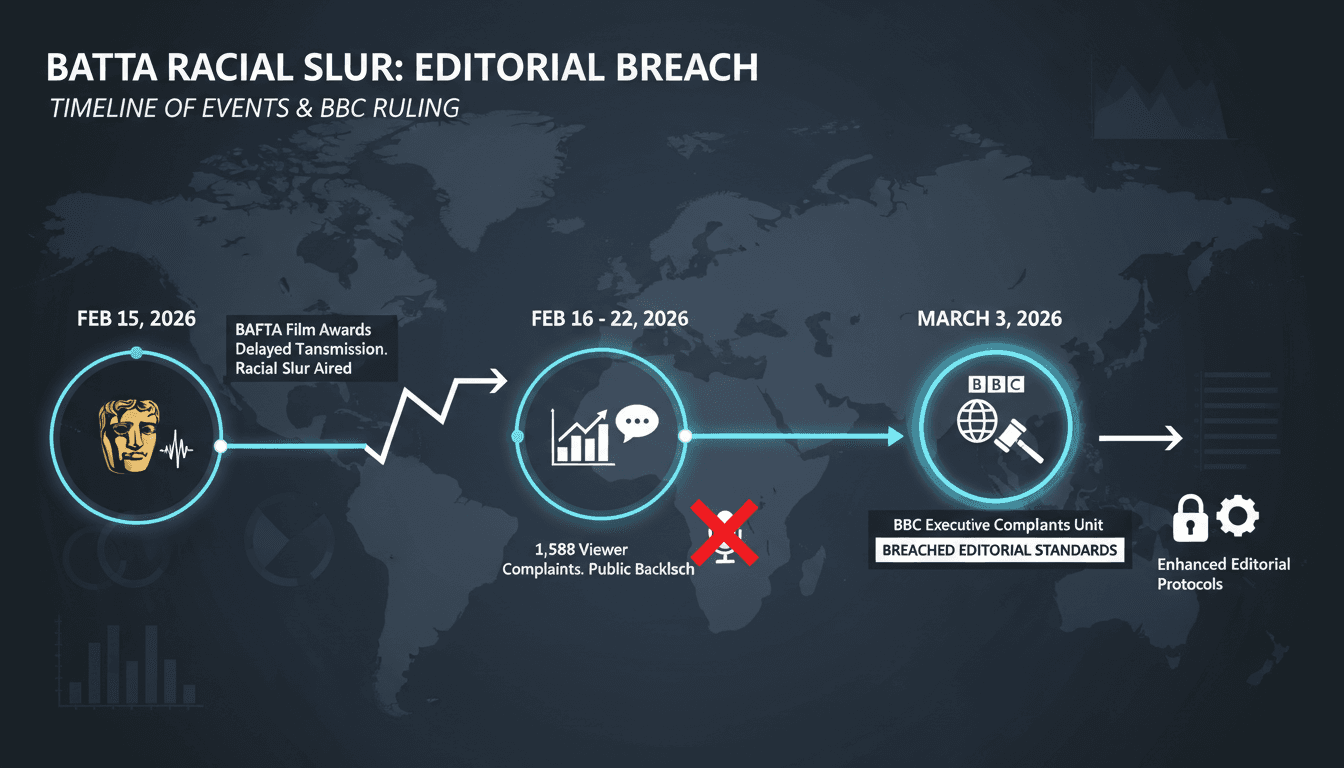
Here's what it means for you.
As a media consumer, understanding the implications of editorial standards can influence your trust in broadcasting organizations.
Why it matters
This incident highlights the ongoing challenges media organizations face in balancing editorial integrity with the complexities of live broadcasting.
What happened (in 30 seconds)
- The BBC's Executive Complaints Unit ruled that a racial slur aired during the 2026 BAFTA Film Awards breached its editorial standards.
- John Davidson, a Tourette syndrome campaigner, involuntarily shouted the N-word while presenting an award, which was not edited out of the delayed broadcast.
- 1,588 viewer complaints were filed, leading to an internal investigation and subsequent apologies from the BBC and BAFTA.
The context you actually need
- John Davidson's involvement: He was featured in the BAFTA-nominated film 'I Swear' and was invited to the ceremony, where attendees were warned about potential strong language due to his condition.
- Pre-event agreements: The BBC and BAFTA had protocols in place to edit offensive language from the broadcast, underscoring the heightened sensitivity around racial language in media.
- Public and governmental reactions: The incident drew widespread condemnation, with officials labeling the broadcast as harmful and unacceptable, prompting discussions on media accountability.
What's really happening
The incident at the 2026 BAFTA Film Awards serves as a critical case study in the complexities of live broadcasting, particularly when it intersects with issues of race and disability. The BBC's failure to edit out the racial slur, despite having protocols in place, raises questions about the efficacy of these measures and the potential for systemic oversights in live event coverage.
John Davidson, who shouted the N-word involuntarily due to his Tourette syndrome, was a guest at the awards, which had already established a framework for managing sensitive content. This framework was designed to prevent offensive language from reaching the audience, especially given the heightened awareness of racial sensitivities in media. The fact that the slur aired unedited during a two-hour delayed broadcast indicates a breakdown in the editorial process, which was supposed to safeguard against such occurrences.
The BBC's internal investigation revealed that the slur was not caught during the editing process, leading to a significant backlash from viewers. The 1,588 complaints filed reflect a broader societal expectation for media organizations to uphold certain standards, particularly regarding language that can perpetuate racial harm. The BBC's Director-General, Tim Davie, labeled the incident a "genuine mistake," but the ruling by the Executive Complaints Unit (ECU) emphasized that the inclusion of the slur was "highly offensive" and lacked any editorial justification.
In response, the BBC has committed to improving its pre-event planning and live production protocols. This includes enhancing the processes for content review and establishing clearer guidelines for handling sensitive language in real-time broadcasts. The incident has also prompted BAFTA to reaffirm its commitment to inclusion and to review its procedures for future events.
The implications of this incident extend beyond the immediate fallout. It highlights the ongoing tension between live broadcasting and editorial responsibility, particularly in an era where audiences are increasingly vocal about the content they consume. Media organizations must navigate these challenges carefully, balancing the need for authentic representation with the responsibility to avoid perpetuating harm through language.
Who feels it first (and how)
- Media organizations: Facing scrutiny over editorial standards and live event coverage.
- Content creators and presenters: Navigating the complexities of live broadcasting and audience expectations.
- Viewers and audiences: Increasingly demanding accountability from media outlets regarding language and representation.
What to watch next
- Changes in editorial policies: Monitor how the BBC and other broadcasters revise their protocols for live events in response to this incident.
- Public sentiment: Watch for shifts in viewer trust and expectations regarding media accountability and sensitivity to racial language.
- Legislative discussions: Keep an eye on potential governmental actions or discussions surrounding media standards and accountability in the UK.
The BBC breached its editorial standards by airing the racial slur.
The incident will lead to stricter editorial guidelines and protocols for live broadcasts across media organizations.
The long-term impact on viewer trust in the BBC and similar organizations remains to be seen.
Frequently Asked Questions
- Why it matters?
- This incident highlights the ongoing challenges media organizations face in balancing editorial integrity with the complexities of live broadcasting. ---
- What happened (in 30 seconds)?
- The BBC's Executive Complaints Unit ruled that a racial slur aired during the 2026 BAFTA Film Awards breached its editorial standards. John Davidson, a Tourette syndrome campaigner, involuntarily shouted the N-word while presenting an award, which was not edited out of the delayed broadcast. 1,588 viewer complaints were filed, leading to an internal investigation and subsequent apologies from the BBC and BAFTA. ---
- What's really happening?
- The incident at the 2026 BAFTA Film Awards serves as a critical case study in the complexities of live broadcasting, particularly when it intersects with issues of race and disability. The BBC's failure to edit out the racial slur, despite having protocols in place, raises questions about the efficacy of these measures and the potential for systemic oversights in live event coverage. John Davidson, who shouted the N-word involuntarily due to his Tourette syndrome, was a guest at the awards, wh
- Who feels it first (and how)?
- Media organizations: Facing scrutiny over editorial standards and live event coverage. Content creators and presenters: Navigating the complexities of live broadcasting and audience expectations. Viewers and audiences: Increasingly demanding accountability from media outlets regarding language and representation. ---
- What to watch next?
- Changes in editorial policies: Monitor how the BBC and other broadcasters revise their protocols for live events in response to this incident. Public sentiment: Watch for shifts in viewer trust and expectations regarding media accountability and sensitivity to racial language. Legislative discussions: Keep an eye on potential governmental actions or discussions surrounding media standards and accountability in the UK. ---
Top international stories selected by The Guardian editors.
"The Guardian is known for its progressive editorial stance and in-depth analysis."
— A47 Editor
Airing of Bafta racial slur breached BBC standards, corporation finds
The BBC has been found to have breached its editorial standards by broadcasting a racial slur during the BAFTAs, specifically the N-word, which was shouted by activist John Davidson while Delroy Lindo and Michael B Jordan were presenting an award. Th...
United Kingdom-focused news including local politics, business, and social issues.
"BBC News is widely regarded as a reputable international news organization, known for its impartial tone and public service mandate."
— A47 Editor
BBC upholds complaints over racial slur in Baftas broadcast
The BBC's executive complaints unit has upheld complaints regarding the broadcast of a racial slur during the BAFTAs ceremony, confirming that the incident breached the corporation's editorial standards. The slur was shouted by activist John Davidson...