
OIC, Arab League, and African Union Condemn Israeli Actions at Al-Aqsa Mosque
Here's what it means for you.
As diplomatic tensions rise over religious sites, global markets and regional stability may be impacted, affecting international business operations.
Why it matters
The ongoing closure of Al-Aqsa Mosque has implications for geopolitical stability and could influence energy markets and trade routes.
What happened (in 30 seconds)
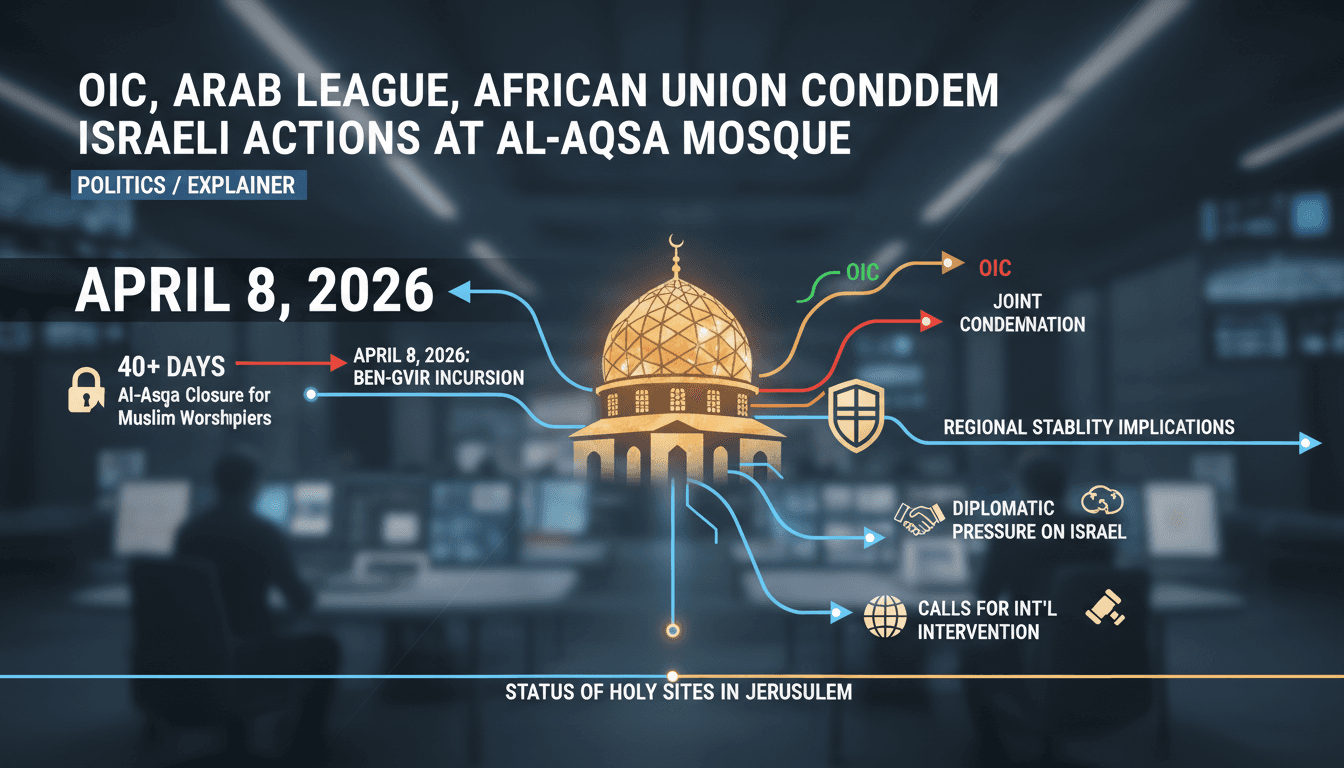
- On April 8, 2026, the OIC, Arab League, and African Union condemned Israeli actions at Al-Aqsa Mosque, marking 40 days of closure for Muslim worshippers.
- Israeli National Security Minister Itamar Ben-Gvir entered the mosque compound under police protection, escalating tensions and prompting international backlash.
- The joint statement called for immediate reopening of the mosque and respect for worship freedoms, highlighting violations of international law.
The context you actually need
- Historical significance: The Al-Aqsa Mosque is a pivotal religious site, and its management has been a contentious issue since the 1967 Six-Day War, which saw Israel occupy East Jerusalem.
- Regional conflicts: The closure coincides with heightened regional tensions, including the ongoing Israel-Iran war, which has exacerbated security measures and restrictions.
- International response: The joint condemnation from major regional organizations reflects a growing concern over Israel's actions and their potential to destabilize the region further.
What's really happening
The closure of Al-Aqsa Mosque to Muslim worshippers began on February 28, 2026, as Israeli authorities cited security concerns amid escalating regional tensions. This closure, initially framed as a precautionary measure during the holy month of Ramadan, has since extended for over 40 consecutive days, raising alarms among Muslim communities and international observers. The situation intensified when Itamar Ben-Gvir, the Israeli National Security Minister, entered the mosque compound on April 6, 2026, under heavy police protection. This act was widely perceived as a provocation, further inflaming tensions.
The joint statement issued by the OIC, Arab League, and African Union on April 8 condemned not only the closure but also the broader Israeli actions in occupied Jerusalem. The organizations emphasized that these actions violate international law and threaten the historical status quo established post-1967, which has allowed for Muslim administration of the site under Jordanian oversight while permitting non-Muslim visitation. By rejecting Israeli sovereignty claims over East Jerusalem, the statement calls for immediate international intervention to restore access to the mosque.
The closure and the incursion by Ben-Gvir are seen as part of a broader strategy to alter the demographic and legal character of the site, which has been a flashpoint for conflict. The international community, particularly Muslim-majority nations, views these actions as attempts to undermine Muslim rights and provoke unrest. The diplomatic fallout is significant, with countries like Saudi Arabia and the UAE expressing strong condemnation, reflecting the heightened sensitivities surrounding religious freedoms in the region.
As the situation unfolds, the potential for increased violence and unrest remains high, particularly if the closure continues or if further provocations occur. The implications extend beyond the immediate region, as global markets and diplomatic relations could be affected by the ongoing tensions surrounding Al-Aqsa Mosque.
Who feels it first (and how)
- Muslim communities: Increased religious tensions and potential for unrest in response to the closure.
- Regional governments: Heightened diplomatic pressure to respond to Israeli actions, affecting foreign relations.
- Businesses in the Middle East: Potential disruptions in trade and investment due to escalating tensions and security concerns.
- International organizations: Increased scrutiny and calls for intervention may lead to shifts in policy and support for affected communities.
What to watch next
- International diplomatic responses: Watch for statements from global leaders and organizations, which could signal shifts in foreign policy or aid.
- Regional security developments: Monitor any escalations in violence or unrest in Jerusalem and surrounding areas, as these could impact broader regional stability.
- Market reactions: Keep an eye on energy prices and trade routes, as geopolitical tensions often lead to fluctuations in these areas.
The Al-Aqsa Mosque remains closed to Muslim worshippers for over 40 days as of April 8, 2026.
Continued international diplomatic pressure on Israel to reopen the mosque and respect worship rights.
The potential for escalation in violence or unrest in the region and its impact on global markets.
Frequently Asked Questions
- Why it matters?
- The ongoing closure of Al-Aqsa Mosque has implications for geopolitical stability and could influence energy markets and trade routes.
- What happened (in 30 seconds)?
- On April 8, 2026, the OIC, Arab League, and African Union condemned Israeli actions at Al-Aqsa Mosque, marking 40 days of closure for Muslim worshippers. Israeli National Security Minister Itamar Ben-Gvir entered the mosque compound under police protection, escalating tensions and prompting international backlash. The joint statement called for immediate reopening of the mosque and respect for worship freedoms, highlighting violations of international law.
- What's really happening?
- The closure of Al-Aqsa Mosque to Muslim worshippers began on February 28, 2026, as Israeli authorities cited security concerns amid escalating regional tensions. This closure, initially framed as a precautionary measure during the holy month of Ramadan, has since extended for over 40 consecutive days, raising alarms among Muslim communities and international observers. The situation intensified when Itamar Ben-Gvir, the Israeli National Security Minister, entered the mosque compound on April 6,
- Who feels it first (and how)?
- Muslim communities: Increased religious tensions and potential for unrest in response to the closure. Regional governments: Heightened diplomatic pressure to respond to Israeli actions, affecting foreign relations. Businesses in the Middle East: Potential disruptions in trade and investment due to escalating tensions and security concerns. International organizations: Increased scrutiny and calls for intervention may lead to shifts in policy and support for affected communities.
- What to watch next?
- International diplomatic responses: Watch for statements from global leaders and organizations, which could signal shifts in foreign policy or aid. Regional security developments: Monitor any escalations in violence or unrest in Jerusalem and surrounding areas, as these could impact broader regional stability. Market reactions: Keep an eye on energy prices and trade routes, as geopolitical tensions often lead to fluctuations in these areas.
Pan-Arab news coverage spanning politics, business, sports, and regional affairs.
"Asharq Al-Awsat reflects a broad Arab editorial perspective with strong attention to regional geopolitics."
— A47 Editor
تحذير إسلامي - عربي - أفريقي من تصاعد اعتداءات إسرائيل في القدس
The Organization of Islamic Cooperation, the Arab League, and the African Union issued a joint statement on Wednesday warning about the increasing frequency of Israeli assaults in occupied Jerusalem. This warning highlights the escalating tensions in...
Arabic-language coverage of Saudi, regional, and international affairs.
"Al Bilad offers mainstream Saudi newspaper coverage across domestic and broader Arab topics."
— A47 Editor
“التعاون الإسلامي وجامعة الدول العربية والاتحاد الأفريقي” يُحذِّرون من تصاعد الاعتداءات الإسرائيلية في القدس المحتلة
The General Secretariat of the Organization of Islamic Cooperation, the Arab League, and the African Union issued a joint statement condemning the recent incursion of an Israeli minister into the Al-Aqsa Mosque compound, which occurred under heavy pr...