
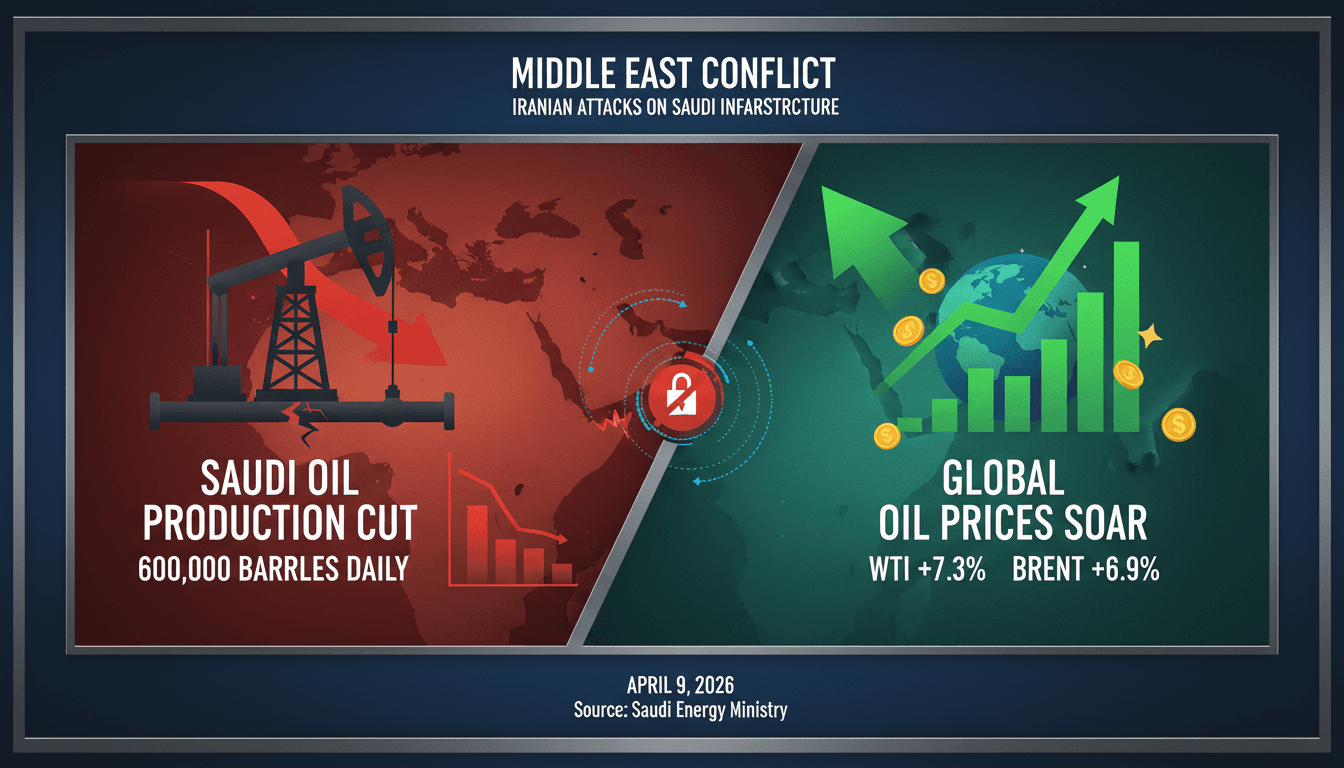
Iranian Attacks on Saudi Oil Infrastructure Cut Production by 600,000 Barrels Daily
Here's what it means for you.
Rising oil prices and supply chain disruptions could impact your fuel costs and economic stability.
Why it matters
The reduction in Saudi oil production capacity exacerbates global supply vulnerabilities, influencing energy prices worldwide.
What happened (in 30 seconds)
- Iranian drone and missile attacks on Saudi oil facilities cut production capacity by 600,000 barrels per day.
- Key targets included major fields and refineries, prompting operational halts for safety and repairs.
- Oil prices surged, with WTI crude rising 4.9% to $99.04 per barrel following the attacks.
The context you actually need
- The attacks occurred amid the ongoing 2026 Iran war, which has heightened tensions in the Middle East and disrupted oil export routes.
- Saudi Arabia's reliance on the East-West pipeline to bypass the Strait of Hormuz has made its energy infrastructure vulnerable to Iranian retaliation.
- Global oil markets are already strained, with reduced inventories and rising prices affecting consumers and economies worldwide.
What's really happening
The recent Iranian attacks on Saudi Arabian energy infrastructure represent a significant escalation in the ongoing conflict in the Middle East, particularly amid the 2026 Iran war. This conflict has seen Iran impose a near-complete blockade on the Strait of Hormuz, a critical chokepoint for global oil shipments. As a result, Saudi Arabia has been forced to reroute its oil exports through the East-West pipeline, which connects its eastern oil fields to the Red Sea port of Yanbu. This shift has made Saudi energy assets more susceptible to Iranian strikes aimed at disrupting this alternative supply chain.
The attacks began with a strike on the Khurais oil field, followed by assaults on the Manifa offshore field, which alone accounted for a 300,000 bpd reduction in capacity. Additional strikes targeted major refineries, including SATORP, Ras Tanura, and SAMREF, leading to a cumulative production cut of 600,000 bpd as confirmed by the Saudi Energy Ministry on April 9, 2026. The operational halts at these facilities were necessitated by safety concerns and the need for repairs, following one fatality and several injuries among workers.
The implications of these attacks extend beyond immediate production losses. They highlight the fragility of global oil supply chains, particularly in a geopolitical landscape marked by conflict and instability. As oil prices react to these disruptions—evidenced by the 4.9% increase in WTI crude prices—consumers worldwide will likely feel the financial strain. The situation is compounded by the fact that global inventories are already low, raising concerns about economic repercussions in oil-dependent nations.
The Saudi government has responded by ramping up security measures at its energy facilities, including the downing of incoming drones and issuing warnings about supply security. However, the long-term effects of these attacks could lead to sustained volatility in oil markets, impacting everything from fuel prices at the pump to broader economic growth in consuming nations.
Who feels it first (and how)
- Consumers: Higher fuel prices due to increased oil costs.
- Transportation sector: Increased operational costs affecting logistics and shipping.
- Energy-dependent industries: Higher production costs leading to potential price increases for goods.
- Investors: Volatility in oil markets may impact stock prices and investment strategies.
What to watch next
- Oil price trends: Monitor fluctuations in WTI and Brent crude prices as they reflect market reactions to ongoing geopolitical tensions.
- Saudi production assessments: Keep an eye on updates from the Saudi Energy Ministry regarding production capacity and operational status of affected facilities.
- Geopolitical developments: Watch for shifts in the Iran war and any potential diplomatic efforts that could stabilize the region and oil supply chains.
Iranian attacks have reduced Saudi oil production capacity by 600,000 bpd.
Continued volatility in global oil markets and rising fuel prices.
The long-term impact on global economic stability and potential retaliatory actions from Saudi Arabia.
Frequently Asked Questions
- Why it matters?
- The reduction in Saudi oil production capacity exacerbates global supply vulnerabilities, influencing energy prices worldwide.
- What happened (in 30 seconds)?
- Iranian drone and missile attacks on Saudi oil facilities cut production capacity by 600,000 barrels per day. Key targets included major fields and refineries, prompting operational halts for safety and repairs. Oil prices surged, with WTI crude rising 4.9% to $99.04 per barrel following the attacks.
- What's really happening?
- The recent Iranian attacks on Saudi Arabian energy infrastructure represent a significant escalation in the ongoing conflict in the Middle East, particularly amid the 2026 Iran war. This conflict has seen Iran impose a near-complete blockade on the Strait of Hormuz, a critical chokepoint for global oil shipments. As a result, Saudi Arabia has been forced to reroute its oil exports through the East-West pipeline, which connects its eastern oil fields to the Red Sea port of Yanbu. This shift has m
- Who feels it first (and how)?
- Consumers: Higher fuel prices due to increased oil costs. Transportation sector: Increased operational costs affecting logistics and shipping. Energy-dependent industries: Higher production costs leading to potential price increases for goods. Investors: Volatility in oil markets may impact stock prices and investment strategies.
- What to watch next?
- Oil price trends: Monitor fluctuations in WTI and Brent crude prices as they reflect market reactions to ongoing geopolitical tensions. Saudi production assessments: Keep an eye on updates from the Saudi Energy Ministry regarding production capacity and operational status of affected facilities. Geopolitical developments: Watch for shifts in the Iran war and any potential diplomatic efforts that could stabilize the region and oil supply chains.
Editor-curated FT homepage stories spanning markets, business, world, and opinion.
"The Financial Times is a globally respected business publication with a centrist/center-left tone and strong markets focus."
— A47 Editor
S&P 500 posts longest winning streak since October on ceasefire optimism
The S&P 500 index has achieved its longest winning streak since October, closing higher as investors expressed optimism regarding a ceasefire agreement between Iran and the U.S., following talks between Israel and Lebanon.
Macro commentary, policy analysis, growth/inflation themes, and global outlooks.
"Contextual macro coverage that complements day-to-day market headlines."
— A47 Editor
Saudi Arabia loses 600,000 barrels daily in attacks on oil sites
Saudi Arabia has reported a significant reduction in oil production capacity, losing approximately 600,000 barrels per day due to recent attacks on its energy infrastructure, including a key East-West oil pipeline. These incidents have raised concern...
Global markets, investing, and macroeconomics from a premier financial newsroom.
"Bloomberg is respected for in-depth financial reporting and data-driven analysis."
— A47 Editor
Saudi Oil Output Capacity, Pipeline Flows Cut in Supply Risk
Saudi Arabia has experienced a significant reduction in oil output capacity, losing over 600,000 barrels per day due to Iranian attacks on its energy infrastructure, including a key pipeline that bypasses the Strait of Hormuz. This escalation in host...