
UNDP Warns of 32.5 Million People Falling into Poverty Due to US-Israeli Military Actions Against Iran
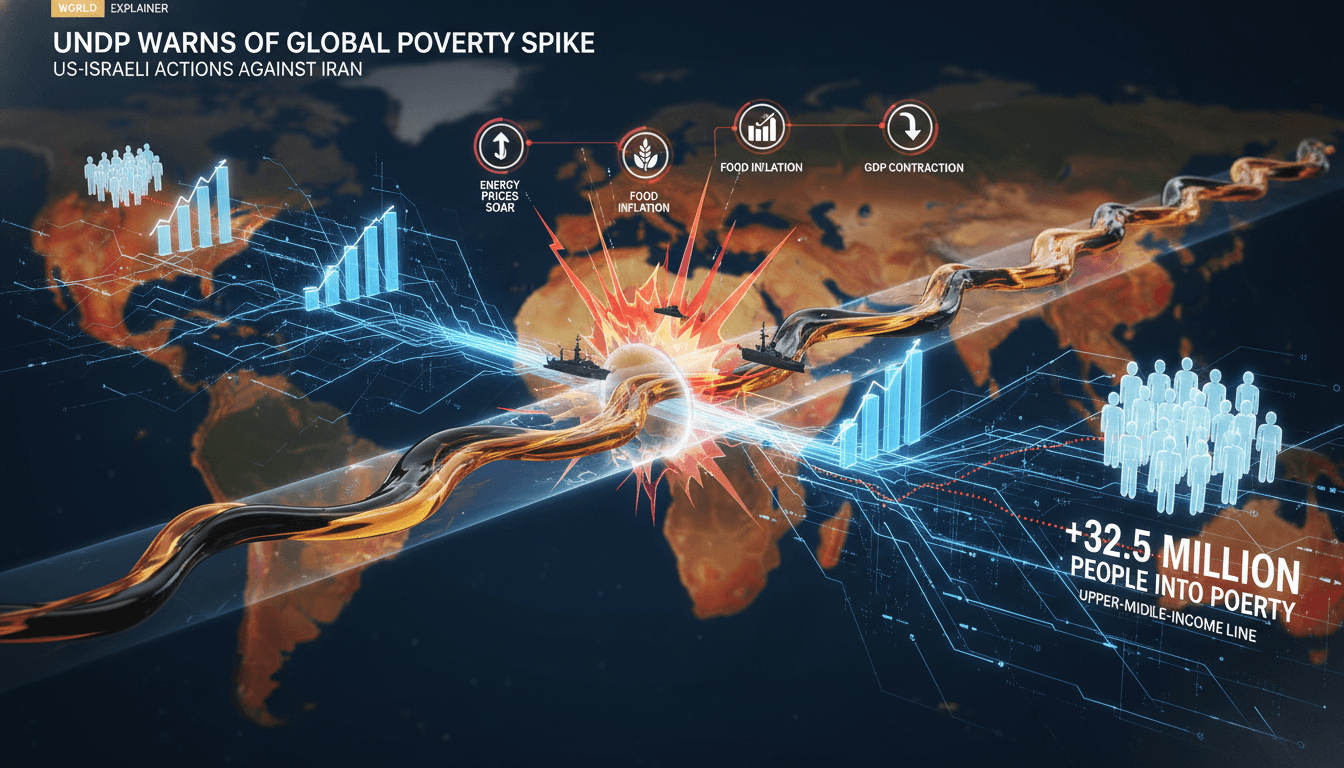
Here's what it means for you.
Rising energy and food prices could impact your cost of living, especially if you rely on global supply chains.
Why it matters
The ongoing military conflict is projected to push 32.5 million people into poverty, affecting global economic stability and consumer prices.
What happened (in 30 seconds)
- Military escalation: The US and Israel launched a coordinated military campaign against Iran on February 28, 2026, targeting nuclear facilities and leadership.
- Economic fallout: The conflict has led to oil prices surging above $110 per barrel and significant disruptions in global trade, particularly through the Strait of Hormuz.
- Humanitarian crisis: Over 4 million people have been displaced in Iran and Lebanon, exacerbating vulnerabilities in low-income regions worldwide.
The context you actually need
- Escalating tensions: The conflict escalated from Israeli strikes on Iranian facilities in June 2025 amid stalled nuclear talks, leading to a full-scale military response.
- Global oil dependency: The Strait of Hormuz is a critical chokepoint for global oil transport, with 20% of the world's oil passing through it, making disruptions highly impactful.
- UNDP's warning: The UNDP's report highlights the potential for widespread poverty increases, particularly in regions already vulnerable to economic shocks.
What's really happening
The US-Israeli military campaign against Iran, initiated on February 28, 2026, has created a complex web of economic and humanitarian crises. The conflict began with nearly 900 airstrikes targeting Iranian nuclear sites and military infrastructure, which Iran responded to with missile attacks. This escalation has not only resulted in significant military casualties but has also led to a humanitarian crisis, with over 4 million people displaced in Iran and Lebanon.
The economic implications are severe. The conflict has caused a near-total halt in traffic through the Strait of Hormuz, leading to oil prices skyrocketing from $71 to over $110 per barrel. This surge in energy prices has a cascading effect on global markets, driving food inflation and GDP contractions across 162 countries. The UNDP's report estimates that 32.5 million additional people could fall below the upper-middle-income poverty line due to these disruptions, highlighting the far-reaching consequences of the conflict.
As oil prices remain elevated, the costs of fuel, electricity, and food are rising globally. For instance, in Dubai, residents are already feeling the pinch from increased costs, as the UAE's logistics hub, Jebel Ali port, faces shipping delays due to the Strait of Hormuz disruptions. While UAE oil exporters may benefit from higher revenues, the broader Gulf region is experiencing economic strains, with projected GDP losses of 3.7-6.0% across Arab states.
The UNDP has recommended targeted cash transfers of $6 billion across affected countries to mitigate the impacts of this crisis. However, the situation remains precarious, with Iran rejecting a full ceasefire and regional governments prioritizing fiscal buffers to address health and social spending amid rising inflation.
Who feels it first (and how)
- Low-income households: Families in vulnerable regions will face immediate increases in food and energy costs.
- Logistics and shipping sectors: Companies reliant on the Strait of Hormuz for oil transport will experience delays and increased operational costs.
- Global consumers: Rising prices for goods and services will affect consumers worldwide, particularly in regions dependent on imports.
What to watch next
- Oil price fluctuations: Monitoring oil prices will be crucial as sustained high prices could lead to further economic instability and inflation.
- Humanitarian aid responses: Watch for international aid initiatives as countries respond to the growing humanitarian crisis and displacement of millions.
- Geopolitical developments: Keep an eye on ceasefire negotiations and military actions, as these will significantly influence regional stability and economic recovery.
The conflict has displaced millions and caused significant economic disruptions.
Continued volatility in oil prices and food inflation will persist as long as the conflict continues.
The long-term geopolitical ramifications and potential for further military escalation remain uncertain.
Frequently Asked Questions
- Why it matters?
- The ongoing military conflict is projected to push 32.5 million people into poverty, affecting global economic stability and consumer prices.
- What happened (in 30 seconds)?
- Military escalation: The US and Israel launched a coordinated military campaign against Iran on February 28, 2026, targeting nuclear facilities and leadership. Economic fallout: The conflict has led to oil prices surging above $110 per barrel and significant disruptions in global trade, particularly through the Strait of Hormuz. Humanitarian crisis: Over 4 million people have been displaced in Iran and Lebanon, exacerbating vulnerabilities in low-income regions worldwide.
- What's really happening?
- The US-Israeli military campaign against Iran, initiated on February 28, 2026, has created a complex web of economic and humanitarian crises. The conflict began with nearly 900 airstrikes targeting Iranian nuclear sites and military infrastructure, which Iran responded to with missile attacks. This escalation has not only resulted in significant military casualties but has also led to a humanitarian crisis, with over 4 million people displaced in Iran and Lebanon. The economic implications are
- Who feels it first (and how)?
- Low-income households: Families in vulnerable regions will face immediate increases in food and energy costs. Logistics and shipping sectors: Companies reliant on the Strait of Hormuz for oil transport will experience delays and increased operational costs. Global consumers: Rising prices for goods and services will affect consumers worldwide, particularly in regions dependent on imports.
- What to watch next?
- Oil price fluctuations: Monitoring oil prices will be crucial as sustained high prices could lead to further economic instability and inflation. Humanitarian aid responses: Watch for international aid initiatives as countries respond to the growing humanitarian crisis and displacement of millions. Geopolitical developments: Keep an eye on ceasefire negotiations and military actions, as these will significantly influence regional stability and economic recovery.
Regional and international reporting focused on Middle Eastern politics, diplomacy, and economics.
"Asharq Al-Awsat is a Saudi-owned international newspaper reflecting mainstream Gulf political perspectives."
— A47 Editor
UN: Iran War Could Plunge 32 million into Poverty
The United Nations has warned that the ongoing war in Iran could push an estimated 32 million people into poverty, highlighting the severe humanitarian crisis resulting from the conflict. The situation is exacerbated by rising violence in the region,...
Pan-Arab news coverage spanning politics, business, sports, and regional affairs.
"Asharq Al-Awsat reflects a broad Arab editorial perspective with strong attention to regional geopolitics."
— A47 Editor
«الأمم المتحدة»: الحرب الإيرانية قد تدفع 32 مليون شخص إلى الفقر
The United Nations Development Programme has warned that the economic repercussions of the Iranian war could push over 32 million people worldwide into poverty. This alarming prediction highlights the extensive impact of geopolitical conflicts on glo...
UK and international business news, economics, and corporate coverage.
"The Guardian’s business section covers finance and markets with a progressive editorial tone."
— A47 Editor
Iran war could plunge 32 million into poverty, says United Nations
The United Nations Development Programme has warned that the ongoing war in Iran could push over 32 million people into poverty, particularly affecting developing nations. This dire economic outlook is attributed to rising energy and food costs, coup...
International coverage from The Guardian's global desks.
"The Guardian is known for its progressive editorial stance and in-depth analysis."
— A47 Editor
Iran war could plunge 32 million into poverty, says United Nations
The United Nations Development Programme has warned that the ongoing war in Iran could push over 32 million people into poverty, particularly affecting developing nations. This dire economic outlook is attributed to rising energy and food costs, coup...