
IEA Declares Historic Energy Crisis Due to Ongoing US-Israel-Iran War
Here's what it means for you.
Rising energy prices and supply disruptions are likely to impact your daily costs and travel plans.
Why it matters
The ongoing energy crisis is reshaping global markets and could lead to prolonged economic instability.
What happened (in 30 seconds)
- On April 21, 2026, IEA Executive Director Fatih Birol declared the world is facing its worst energy crisis in history due to the US-Israel-Iran war.
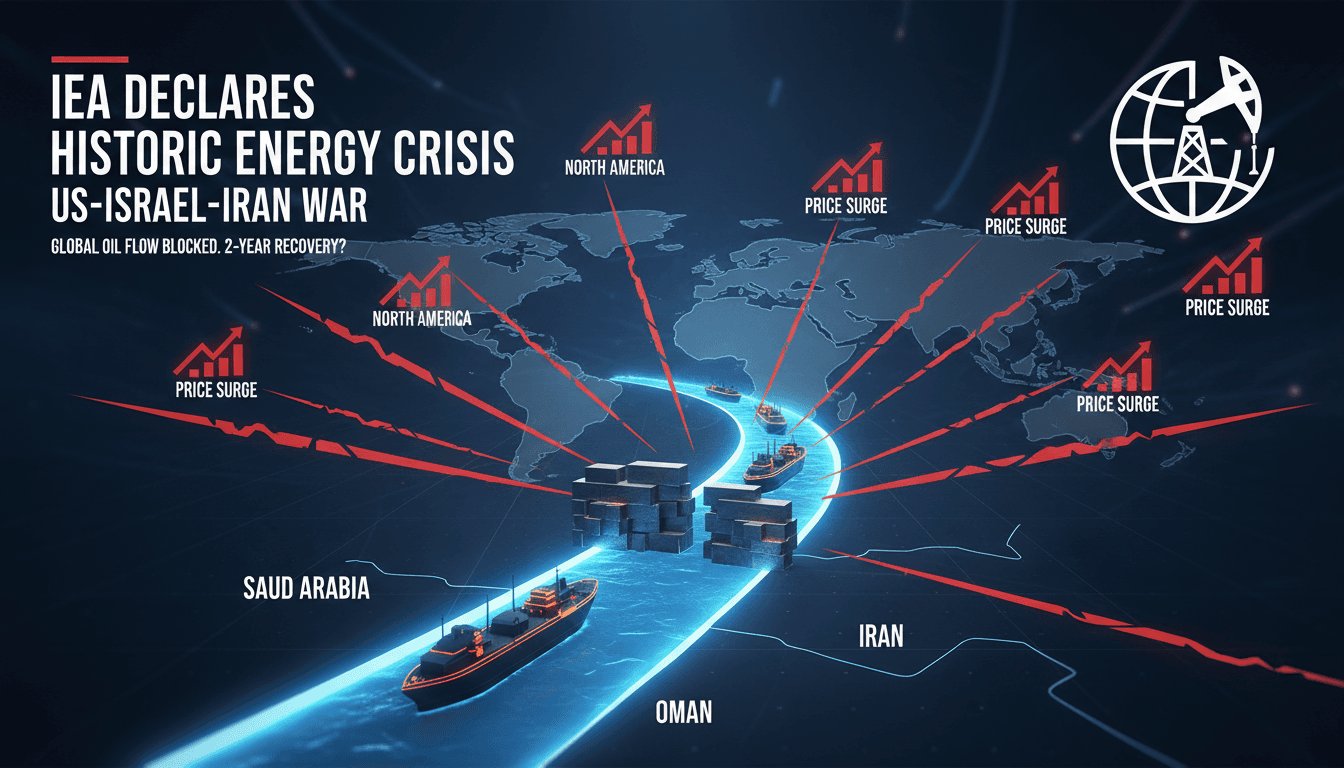
- The Strait of Hormuz blockade has disrupted one-fifth of global oil and LNG flows, causing prices to surge.
- Birol warns of a potential 11 million barrels per day supply loss, with recovery possibly taking two years.
The context you actually need
- The conflict began on February 28, 2026, with US-Israeli airstrikes on Iran, leading to immediate geopolitical tensions.
- The Strait of Hormuz is a critical chokepoint for global oil trade, making its blockade a significant threat to energy security.
- Previous energy shocks from the 1970s and 2022 are being eclipsed by the current crisis, which is compounded by the lingering effects of the Ukraine conflict.
What's really happening
The 2026 Iran war, initiated by coordinated airstrikes from the US and Israel, has escalated into a full-blown conflict that has severely disrupted energy supplies. The immediate consequence of Iran's blockade of the Strait of Hormuz—a vital maritime route for oil and liquefied natural gas—has sent shockwaves through global energy markets. This chokepoint is responsible for approximately 20% of the world's oil trade, and its closure has led to a dramatic surge in prices, with Brent crude exceeding $95 per barrel.
Fatih Birol's alarming assessment highlights a potential loss of 11 million barrels per day in global oil supply, a figure that surpasses the disruptions seen during the oil crises of the 1970s. The International Energy Agency (IEA) has responded by coordinating the release of a record 400 million barrels from strategic reserves to mitigate the impact on markets. However, the long-term outlook remains grim, with Birol projecting that recovery in Middle Eastern energy output could take up to two years.
The crisis is further exacerbated by the residual effects of Russia's invasion of Ukraine, which had already strained European energy supplies. The combination of these geopolitical tensions has created a perfect storm, leading to unprecedented disruptions in maritime operations and infrastructure damage across the Persian Gulf. As a result, countries reliant on Middle Eastern oil are scrambling to adapt, implementing measures such as remote work mandates and fuel rationing to cope with soaring prices.
In Dubai, the ramifications are particularly acute. The Abu Dhabi National Oil Company (ADNOC) has halved its crude output due to export halts, and the Fujairah terminal has suffered damage, leading to significant operational challenges. The tourism sector is also feeling the pinch, with over 450 hotels shuttered and an estimated $40 billion in regional tourism losses. The Burj Al Arab has announced an 18-month closure, highlighting the crisis's impact on high-profile landmarks. With 80% of Dubai's food and water supplies imported, the blockade poses serious risks to essential services, including power and desalination plants.
Who feels it first (and how)
- Consumers: Higher gasoline prices and increased costs for goods and services.
- Airlines: Increased operational costs leading to potential flight cancellations and surcharges.
- Tourism sector: Significant revenue losses and hotel closures affecting employment.
- Energy-dependent industries: Manufacturing and logistics sectors facing supply chain disruptions.
- Middle Eastern countries: Economies heavily reliant on oil exports experiencing immediate financial strain.
What to watch next
- Ceasefire negotiations: Progress in talks could stabilize oil prices and restore supply chains.
- Global oil prices: Continued fluctuations will indicate the severity of the crisis and its impact on economies.
- Government responses: New policies or measures to manage energy consumption and mitigate economic fallout.
The Strait of Hormuz blockade is significantly impacting global oil supply.
Energy prices will remain high, affecting consumer costs and economic stability.
The timeline for recovery in Middle Eastern energy output and its broader economic implications.
Frequently Asked Questions
- Why it matters?
- The ongoing energy crisis is reshaping global markets and could lead to prolonged economic instability.
- What happened (in 30 seconds)?
- On April 21, 2026, IEA Executive Director Fatih Birol declared the world is facing its worst energy crisis in history due to the US-Israel-Iran war. The Strait of Hormuz blockade has disrupted one-fifth of global oil and LNG flows, causing prices to surge. Birol warns of a potential 11 million barrels per day supply loss, with recovery possibly taking two years.
- What's really happening?
- The 2026 Iran war, initiated by coordinated airstrikes from the US and Israel, has escalated into a full-blown conflict that has severely disrupted energy supplies. The immediate consequence of Iran's blockade of the Strait of Hormuz—a vital maritime route for oil and liquefied natural gas—has sent shockwaves through global energy markets. This chokepoint is responsible for approximately 20% of the world's oil trade, and its closure has led to a dramatic surge in prices, with Brent crude exceedi
- Who feels it first (and how)?
- Consumers: Higher gasoline prices and increased costs for goods and services. Airlines: Increased operational costs leading to potential flight cancellations and surcharges. Tourism sector: Significant revenue losses and hotel closures affecting employment. Energy-dependent industries: Manufacturing and logistics sectors facing supply chain disruptions. Middle Eastern countries: Economies heavily reliant on oil exports experiencing immediate financial strain.
- What to watch next?
- Ceasefire negotiations: Progress in talks could stabilize oil prices and restore supply chains. Global oil prices: Continued fluctuations will indicate the severity of the crisis and its impact on economies. Government responses: New policies or measures to manage energy consumption and mitigate economic fallout.
Global business headlines with AI angles.
"General business outlet that frequently covers AI."
— A47 Editor
World Experiencing Its Worst Energy Crisis In History Due To Iran War, IEA Head Says
The International Energy Agency (IEA) has declared that the world is currently facing its worst energy crisis in history, primarily attributed to the ongoing conflict in Iran. IEA head Fatih Birol emphasized that the war has severely disrupted energy...
Sports reporting with a focus on Saudi and regional competitions.
"Okaz sports coverage is broad and audience-friendly, with strong attention to Saudi teams and leagues."
— A47 Editor
بيرول: تقلبات أسواق الطاقة قد تستمر 24 شهراً
Fatih Birol, the Director of the International Energy Agency, stated that the ongoing conflict between Iran, the United States, and Israel is leading to the worst energy crisis the world has ever faced, with potential fluctuations in global energy ma...