
Oldest Dog Genomes Confirm Pre-Neolithic Domestication by Hunter-Gatherers
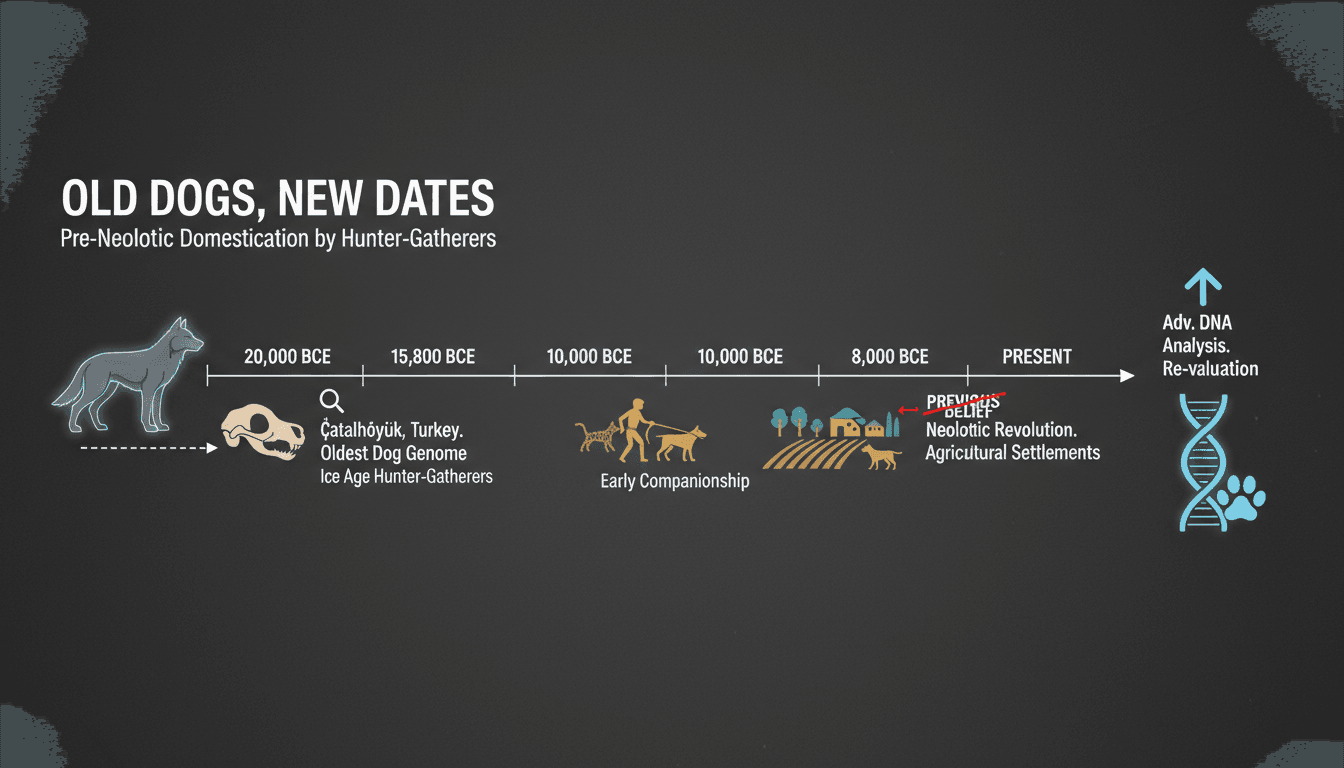
Here's what it means for you.
Understanding the deep-rooted relationship between humans and dogs can reshape pet care industries and cultural narratives globally.
Why it matters
This discovery redefines the timeline of human-animal companionship, influencing fields from archaeology to pet ownership trends.
What happened (in 30 seconds)
- Publication of two Nature studies on March 26, 2026, unveiled the oldest sequenced dog genomes, dating back 15,800 years.
- Research confirmed that dogs were domesticated by Ice Age hunter-gatherers in Western Eurasia, 5,000 years earlier than previously thought.
- Genetic analysis of over 130 canid remains indicated a widespread, culturally integrated dog population by 14,200 years ago.
The context you actually need
- Debates on dog domestication have historically centered around timelines of 10,000–15,000 years ago, often linked to the rise of Neolithic farming.
- Advances in ancient DNA techniques have allowed for clearer differentiation between wolves and dogs, shifting focus to Palaeolithic hunter-gatherer societies.
- Cultural practices such as shared diets and burial rituals indicate that dogs played significant roles in human lives long before agriculture emerged.
What's really happening
The recent studies published in Nature mark a significant shift in our understanding of dog domestication. Researchers sequenced genomes from over 130 canid remains, successfully identifying 14 as dogs through innovative microbial decontamination methods. The oldest specimen, a female puppy skull fragment from Pınarbaşı, Turkey, dated back 15,800 years, was found buried alongside humans, suggesting a close relationship between species.
This research challenges the long-held belief that dogs were domesticated around the time of the Neolithic revolution, pushing the timeline back by at least 5,000 years. It indicates that hunter-gatherers across Western Eurasia had already begun to integrate dogs into their lives, sharing diets and burial practices, which implies a level of social and cultural complexity previously unrecognized.
The isotopic data collected from these ancient remains revealed that these early dogs shared a diet with humans, reinforcing the idea that they were not just companions but integral members of the community. The findings from two concurrent papers, "Genomic history of early dogs in Europe" and "Dogs were widely distributed across western Eurasia during the Palaeolithic," highlight the genetic homogeneity of these early dog populations, suggesting a widespread acceptance and integration of dogs into human societies.
The implications of these findings extend beyond historical curiosity; they prompt a reevaluation of how we view the evolution of human-animal relationships. As pet ownership trends surge globally, understanding the origins of these bonds can influence everything from pet care industries to cultural narratives about companionship and loyalty.
Who feels it first (and how)
- Archaeologists and geneticists: They will likely see increased funding and interest in ancient DNA research.
- Pet care industry: Companies may adapt marketing strategies to emphasize the historical bond between humans and dogs.
- Cultural historians: They will explore new narratives around human-animal relationships in early societies.
What to watch next
- Increased funding for archaeogenetics: As interest in ancient DNA research grows, expect more resources allocated to studies exploring human-animal relationships.
- Shifts in pet ownership trends: With the UAE pet market projected to grow, understanding historical bonds may influence consumer behavior and product offerings.
- Cultural narratives around companionship: Watch for evolving discussions in media and literature that reflect the newfound understanding of the human-dog relationship.
The oldest sequenced dog genome is 15,800 years old, confirming earlier domestication than previously thought.
There will be a rise in funding for research into ancient human-animal relationships and their implications for modern society.
The long-term impact on pet ownership trends and cultural narratives remains to be fully understood.
Insights by A47 Intelligence
UAE-based newspaper covering Gulf politics, society, and international developments.
"Gulf News is one of the UAE’s most prominent English-language publications."
— A47 Editor
Oldest dog DNA suggests 16,000 years of human companionship
Recent findings of the oldest dog DNA indicate that dogs have been companions to humans for approximately 16,000 years, highlighting a long-standing bond between the two species. This discovery sheds light on the historical relationship and co-evolut...
A curated Gulf News feed featuring major stories across news, business, opinion, and lifestyle.
"Gulf News is a major UAE newspaper whose featured stories feed reflects a broad editorial mix shaped for a Gulf audience."
— A47 Editor
Oldest dog DNA suggests 16,000 years of human companionship
Recent findings of the oldest dog DNA indicate that dogs have been companions to humans for approximately 16,000 years, highlighting a long-standing bond between the two species. This discovery sheds light on the historical relationship and co-evolut...
24/7 international news from a French perspective in multiple languages.
"France 24 is viewed as a globally focused outlet with balanced coverage and a European perspective."
— A47 Editor
Ancient dog DNA suggests 16,000-year history as man's best friend
New research has revealed the oldest known canine DNA, suggesting that dogs have been companions to humans for approximately 16,000 years. This significant discovery was published on Wednesday and highlights the long-standing relationship between hum...
Reports on science policy, discoveries, and public debate in the scientific realm.
"The Guardian’s science section is known for thoughtful and critical reporting on global research, ethics, and public understanding of science."
— A47 Editor
Bond between dogs and humans dates back more than 15,000 years, study finds
Recent research published in the journal Nature indicates that the bond between dogs and humans dates back over 15,000 years, with evidence suggesting that hunter-gatherers were feeding and giving ritual burials to dogs during the last ice age. This ...
Top international stories selected by The Guardian editors.
"The Guardian is known for its progressive editorial stance and in-depth analysis."
— A47 Editor
Bond between dogs and humans dates back more than 15,000 years, study finds
Recent research published in the journal Nature indicates that the bond between dogs and humans dates back over 15,000 years, with evidence suggesting that hunter-gatherers were feeding and giving ritual burials to dogs during the last ice age. This ...