
French Naval Officer Accidentally Reveals Aircraft Carrier Location via Strava App
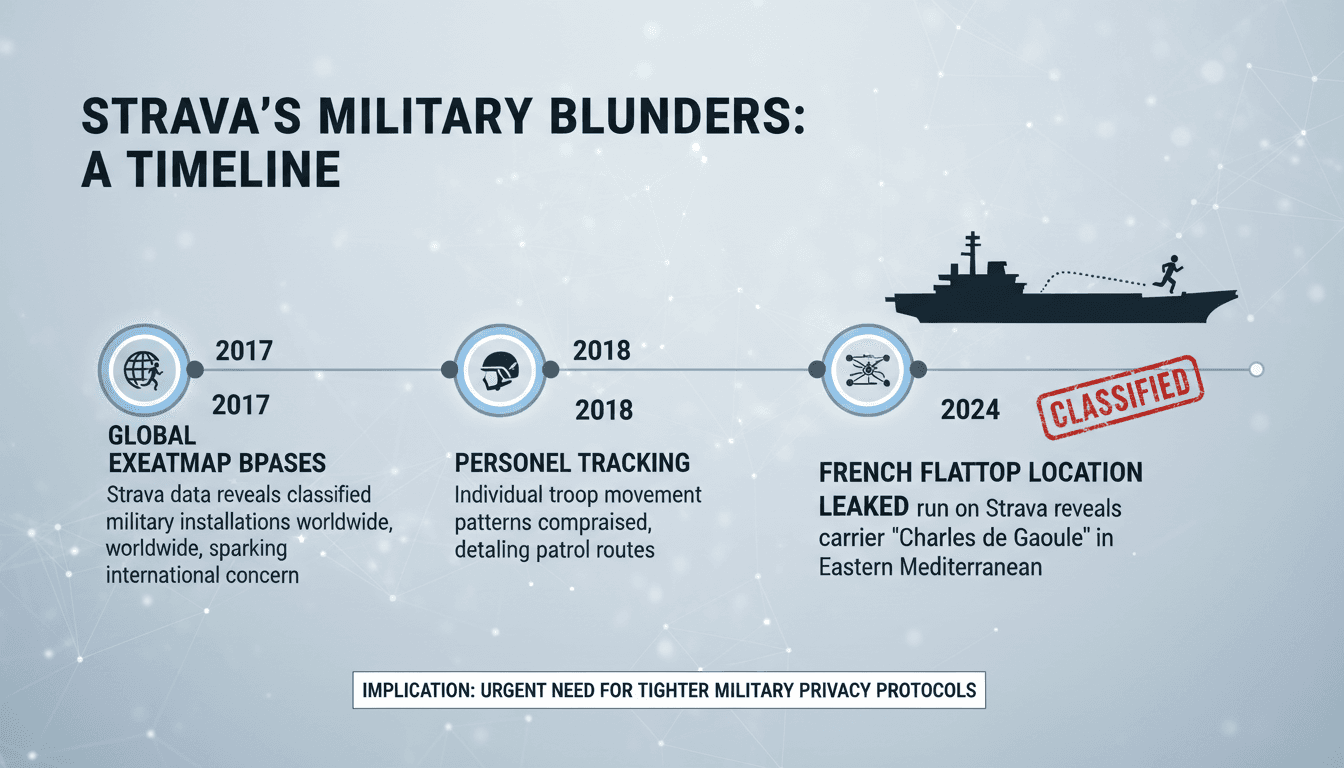
Here's what it means for you.
As fitness tracking apps gain popularity, the risk of operational security breaches increases, affecting military personnel and potentially impacting your privacy.
Why it matters
This incident underscores the vulnerabilities of using public fitness tracking platforms, which can inadvertently expose sensitive military operations.
What happened (in 30 seconds)
- French naval officer 'Arthur' logged a 35-minute run on March 13, 2026, revealing the location of the aircraft carrier Charles de Gaulle.
- The incident occurred in the eastern Mediterranean, approximately 100 km from the Turkish coast, amid rising tensions related to Iran.
- Strava's role as a fitness tracking app has previously led to similar security breaches, prompting military reviews of operational security protocols.
The context you actually need
- Strava's global heatmap was first scrutinized in November 2017, revealing sensitive military locations based on user data.
- Past incidents include exposures of U.S. military bases and security details of world leaders, highlighting ongoing vulnerabilities in operational security.
- The French Armed Forces have committed to reviewing compliance and implementing privacy adjustments following the recent breach.
What's really happening
The incident involving the French aircraft carrier Charles de Gaulle illustrates a recurring theme in the intersection of technology and military operations. Strava, a popular fitness tracking app, aggregates GPS data from millions of users, creating a global heatmap that visualizes user activity. This heatmap, while useful for fitness enthusiasts, poses significant risks for military personnel who may inadvertently disclose sensitive information through their activities.
The breach on March 13, 2026, occurred during a critical deployment in the eastern Mediterranean, a region already fraught with geopolitical tensions. The logged run by Officer 'Arthur' not only pinpointed the carrier's location but also raised alarms about the operational security protocols within the French Navy. This incident is not isolated; it follows a pattern of similar exposures that have prompted military organizations worldwide to reassess their security measures regarding the use of fitness apps.
Since Strava's heatmap release, military analysts have identified outlines of secret bases and sensitive locations, leading to significant policy reviews. The U.S. military, for instance, has taken steps to educate personnel on the risks associated with sharing location data through fitness apps. However, the allure of tracking personal fitness progress often outweighs these concerns for many users, leading to a disconnect between personal habits and operational security.
The French Armed Forces have acknowledged the breach as a violation of established instructions, indicating a need for stricter compliance and enhanced privacy controls. Strava has responded by maintaining opt-out options for its heatmap feature, allowing users to protect their data. However, the challenge remains for military personnel to balance their fitness goals with the imperative of safeguarding sensitive information.
As fitness tracking becomes increasingly integrated into daily life, the potential for operational security breaches will likely continue to rise. This incident serves as a cautionary tale for military organizations and individuals alike, emphasizing the need for heightened awareness and proactive measures to protect sensitive information in an age where personal data is easily shared and exploited.
Who feels it first (and how)
- Military personnel: Increased scrutiny on fitness tracking practices and potential disciplinary actions for breaches.
- Defense contractors: Heightened demand for secure communication and tracking solutions.
- Fitness app developers: Pressure to enhance privacy features and educate users on security risks.
- Government agencies: Need to reassess operational security protocols and training for personnel.
What to watch next
- Increased military training on the risks of using fitness tracking apps: This will matter as it could lead to stricter guidelines and compliance measures.
- Strava's user engagement and privacy feature adjustments: Monitoring how the platform adapts in response to security concerns will be crucial for understanding user behavior.
- Emergence of alternative fitness tracking solutions: The development of apps with enhanced privacy controls may reshape the market landscape.
The incident involved a breach of operational security due to fitness tracking data.
Military organizations will implement stricter guidelines on the use of fitness apps.
The long-term impact on Strava's user base and how it will adapt to privacy concerns.
Frequently Asked Questions
- Why it matters?
- This incident underscores the vulnerabilities of using public fitness tracking platforms, which can inadvertently expose sensitive military operations.
- What happened (in 30 seconds)?
- French naval officer 'Arthur' logged a 35-minute run on March 13, 2026, revealing the location of the aircraft carrier Charles de Gaulle. The incident occurred in the eastern Mediterranean, approximately 100 km from the Turkish coast, amid rising tensions related to Iran. Strava's role as a fitness tracking app has previously led to similar security breaches, prompting military reviews of operational security protocols.
- What's really happening?
- The incident involving the French aircraft carrier Charles de Gaulle illustrates a recurring theme in the intersection of technology and military operations. Strava, a popular fitness tracking app, aggregates GPS data from millions of users, creating a global heatmap that visualizes user activity. This heatmap, while useful for fitness enthusiasts, poses significant risks for military personnel who may inadvertently disclose sensitive information through their activities. The breach on March 13
- Who feels it first (and how)?
- Military personnel: Increased scrutiny on fitness tracking practices and potential disciplinary actions for breaches. Defense contractors: Heightened demand for secure communication and tracking solutions. Fitness app developers: Pressure to enhance privacy features and educate users on security risks. Government agencies: Need to reassess operational security protocols and training for personnel.
- What to watch next?
- Increased military training on the risks of using fitness tracking apps: This will matter as it could lead to stricter guidelines and compliance measures. Strava's user engagement and privacy feature adjustments: Monitoring how the platform adapts in response to security concerns will be crucial for understanding user behavior. Emergence of alternative fitness tracking solutions: The development of apps with enhanced privacy controls may reshape the market landscape.
Consumer technology news with AI coverage.
"Gadget and tech site reporting on AI in products."
— A47 Editor
Here's how not to leak military information with your Strava run
A French officer recently leaked the location of the aircraft carrier FS Charles de Gaulle due to a run tracked on the sports app Strava. This incident highlights ongoing concerns regarding the app's ability to expose sensitive military information, ...
Covers consumer technology, electronics, gadgets, and product reviews.
"Engadget is a trusted source for gadget reviews and consumer tech news, known for its hands-on analysis and industry coverage."
— A47 Editor
Here's how not to leak military information with your Strava run
A French officer recently leaked the location of the aircraft carrier FS Charles de Gaulle due to a run tracked on the sports app Strava. This incident highlights ongoing concerns regarding the app's ability to expose sensitive military information, ...
Startup news with frequent AI coverage.
"Covers launches, funding, and product updates in AI."
— A47 Editor
A French Navy officer accidentally leaked the location of an aircraft carrier by logging his run on Strava
A French Navy officer inadvertently disclosed the location of the aircraft carrier Charles de Gaulle by logging his run on the fitness app Strava. This incident occurred when the officer uploaded his workout data, which included the coordinates of th...
RT is a Russian state-funded network covering global events from a Russian perspective.
"RT is widely criticized for promoting pro-Kremlin narratives and is considered by many to be a state propaganda outlet."
— A47 Editor
Fitness apps as security threat: French aircraft carrier position exposed by jogging officer
A French aircraft carrier's position was inadvertently revealed due to a jogging officer using the Strava fitness app, as reported by Le Monde. This incident highlights the potential security risks associated with fitness trackers and location-sharin...