
Israel Supports U.S. Ceasefire Proposal for Iran Excluding Lebanon
Here's what it means for you.
If you’re in the Middle East or have investments tied to the region, the recent ceasefire announcement could impact economic stability and security dynamics.
Why it matters
This diplomatic maneuver could reshape regional alliances and economic conditions, particularly affecting oil prices and stock markets.
What happened (in 30 seconds)
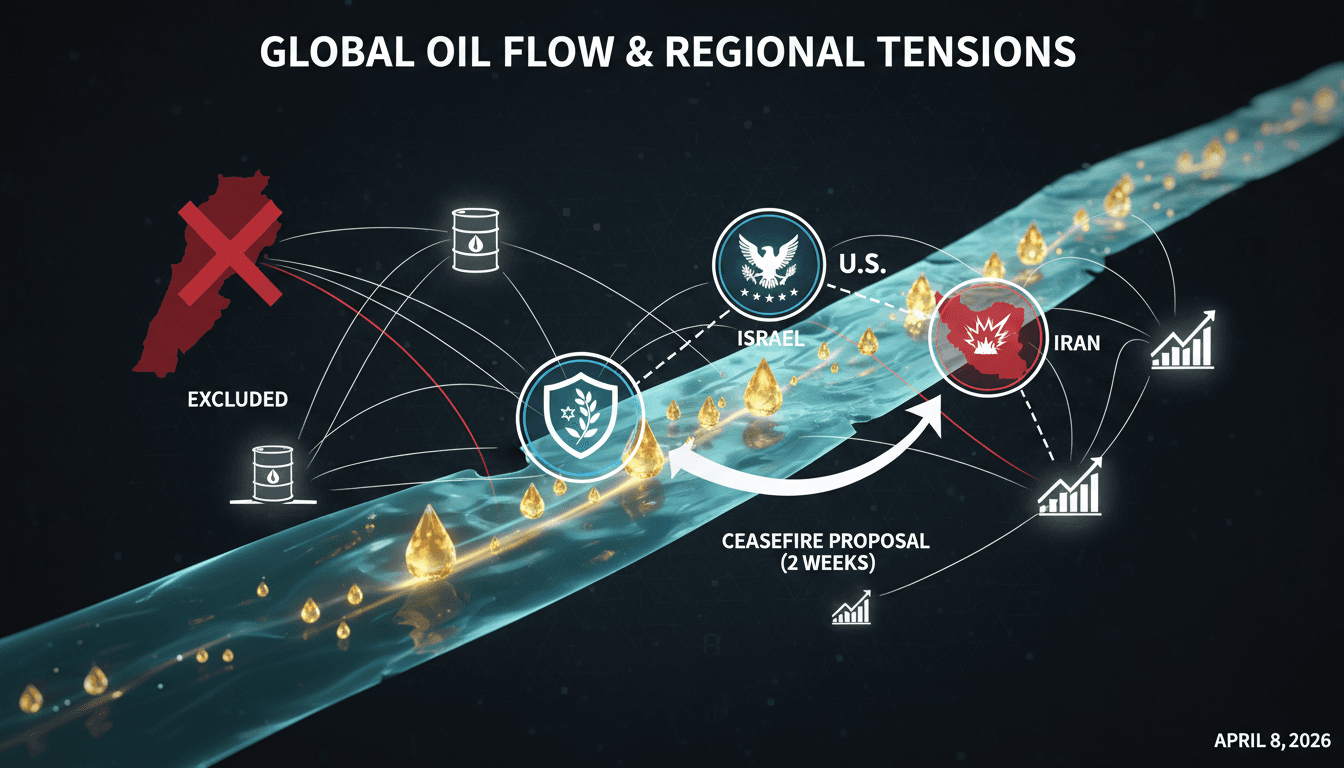
- On April 8, 2026, Israel endorsed a U.S.-proposed two-week suspension of strikes on Iran, contingent on Iran reopening the Strait of Hormuz.
- Hezbollah's attacks from Lebanon prompted Israel to continue military operations, as the ceasefire does not include Lebanon.
- Negotiations are scheduled for April 10 in Islamabad, Pakistan, amid ongoing tensions and military actions.
The context you actually need
- Joint U.S.-Israeli airstrikes on Iran began on February 28, 2026, escalating tensions and leading to Iran's closure of the Strait of Hormuz.
- Hezbollah's rocket attacks on Israel from Lebanon were a direct response to the strikes, prompting Israeli counteroffensives.
- The economic fallout from the conflict has already cost Dubai and Abu Dhabi stock exchanges approximately $120 billion, highlighting the war's broader implications.
What's really happening
The endorsement of a two-week suspension of strikes on Iran by Israel reflects a complex interplay of military strategy and diplomatic necessity. Following the coordinated airstrikes on February 28, which included the assassination of Iran's Supreme Leader Ali Khamenei, Iran retaliated by closing the Strait of Hormuz, a critical chokepoint for global oil shipments. This closure not only disrupted oil supplies but also triggered a series of ultimatums from U.S. President Donald Trump, who threatened significant infrastructure destruction in Iran if hostilities continued.
The U.S. proposal for a ceasefire aims to create a window for negotiations, with the hope of curbing Iran's nuclear ambitions and regional aggression. However, Israel's explicit exclusion of Lebanon from the ceasefire indicates a strategic focus on neutralizing Hezbollah, Iran's proxy, which has been actively engaging in military operations against Israel. This dual approach—supporting U.S. diplomatic efforts while maintaining military pressure on Hezbollah—illustrates Israel's intent to secure its borders and mitigate threats from Iran-backed forces.
The economic implications are significant. The ongoing conflict has already led to a staggering loss of $120 billion in market value across UAE stock exchanges, as investor confidence wanes amid escalating tensions. The recent announcement of a ceasefire has sparked a relief rally in global oil prices, with Brent crude dropping to $103.40, suggesting that the market is cautiously optimistic about de-escalation. However, the continued military operations in Lebanon could sustain regional anxiety and volatility.
As the situation unfolds, the negotiations set for April 10 in Islamabad will be critical. The outcomes will likely influence not only regional stability but also global oil markets and geopolitical alignments. The stakes are high, and the potential for both conflict and cooperation hangs in the balance.
Who feels it first (and how)
- Investors in the UAE: Facing volatility in stock markets and potential recovery or further losses depending on the conflict's resolution.
- Oil-dependent economies: Countries reliant on stable oil prices will feel immediate impacts from fluctuations linked to the ceasefire and ongoing tensions.
- Residents of Lebanon and Israel: Civilians in these regions are directly affected by military operations and the threat of escalated conflict.
What to watch next
- Negotiation outcomes: The April 10 talks in Islamabad will be pivotal in determining the future of U.S.-Iran relations and regional stability.
- Military actions in Lebanon: Continued Israeli operations against Hezbollah could escalate tensions, impacting regional security and economic conditions.
- Oil price fluctuations: Watch for changes in Brent and WTI crude prices as the market reacts to developments in the ceasefire and ongoing military actions.
The suspension of strikes on Iran is conditional and does not include Lebanon, where military operations will continue.
Economic recovery in the UAE markets may be volatile, influenced by ongoing military actions and negotiation outcomes.
The long-term effectiveness of the ceasefire in achieving lasting peace and stability in the region remains uncertain.
Frequently Asked Questions
- Why it matters?
- This diplomatic maneuver could reshape regional alliances and economic conditions, particularly affecting oil prices and stock markets.
- What happened (in 30 seconds)?
- On April 8, 2026, Israel endorsed a U.S.-proposed two-week suspension of strikes on Iran, contingent on Iran reopening the Strait of Hormuz. Hezbollah's attacks from Lebanon prompted Israel to continue military operations, as the ceasefire does not include Lebanon. Negotiations are scheduled for April 10 in Islamabad, Pakistan, amid ongoing tensions and military actions.
- What's really happening?
- The endorsement of a two-week suspension of strikes on Iran by Israel reflects a complex interplay of military strategy and diplomatic necessity. Following the coordinated airstrikes on February 28, which included the assassination of Iran's Supreme Leader Ali Khamenei, Iran retaliated by closing the Strait of Hormuz, a critical chokepoint for global oil shipments. This closure not only disrupted oil supplies but also triggered a series of ultimatums from U.S. President Donald Trump, who threate
- Who feels it first (and how)?
- Investors in the UAE: Facing volatility in stock markets and potential recovery or further losses depending on the conflict's resolution. Oil-dependent economies: Countries reliant on stable oil prices will feel immediate impacts from fluctuations linked to the ceasefire and ongoing tensions. Residents of Lebanon and Israel: Civilians in these regions are directly affected by military operations and the threat of escalated conflict.
- What to watch next?
- Negotiation outcomes: The April 10 talks in Islamabad will be pivotal in determining the future of U.S.-Iran relations and regional stability. Military actions in Lebanon: Continued Israeli operations against Hezbollah could escalate tensions, impacting regional security and economic conditions. Oil price fluctuations: Watch for changes in Brent and WTI crude prices as the market reacts to developments in the ceasefire and ongoing military actions.
Pan-Arab news coverage spanning politics, business, sports, and regional affairs.
"Asharq Al-Awsat reflects a broad Arab editorial perspective with strong attention to regional geopolitics."
— A47 Editor
إسرائيل: ندعم تعليق قصف إيران لكنه لا يشمل لبنان
The Israeli Prime Minister's Office announced support for U.S. President Donald Trump's decision to suspend attacks on Iran for two weeks, indicating a shift in military strategy in the region. However, this support does not extend to Lebanon, sugges...
Oil, metals, and agriculture: supply/demand headlines, OPEC chatter, inventories, and price action.
"Solid tape for energy and metals traders tracking macro and micro catalysts."
— A47 Editor
Israel backs Trump’s two-week pause on Iran strikes, says Lebanon excluded
Israel has expressed support for former President Donald Trump's decision to implement a two-week pause on military strikes against Iran, clarifying that this ceasefire does not extend to Lebanon. This development comes amid ongoing diplomatic negoti...