
Zelenskyy Highlights Patriot Missile Shortage for Ukraine Amid U.S. Resource Strain from Iran Conflict
Here's what it means for you.
If you rely on global stability for business or travel, the escalating conflict in the Middle East could disrupt supply chains and elevate energy prices.
Why it matters
The depletion of U.S. military resources in the Middle East directly threatens Ukraine's defense capabilities and could destabilize global markets.
What happened (in 30 seconds)
- Zelenskyy issued a warning about a potential shortage of Patriot missiles for Ukraine due to U.S. military resource depletion amid the Iran conflict.
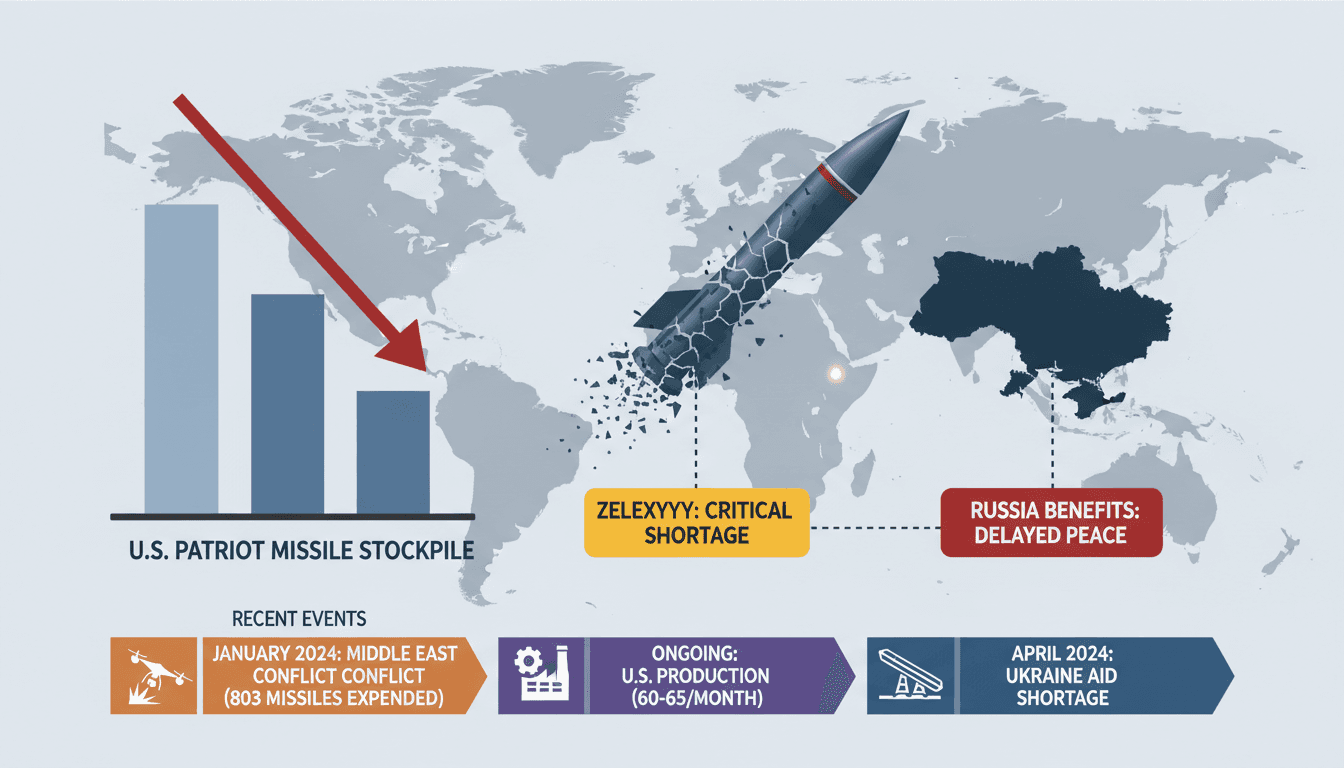
- U.S. production is lagging at 60-65 missiles per month, while 803 were used on the first day of the U.S.-Israel offensive against Iran.
- The situation benefits Russia, as strained Western stockpiles delay peace efforts and bolster its military position.
The context you actually need
- Ukraine has relied heavily on Western military aid, particularly U.S. Patriot air defense systems, since Russia's invasion began in February 2022.
- The Middle East conflict erupted on February 28, 2026, following U.S.-Israeli strikes on Iran, leading to significant military and civilian casualties.
- Energy prices have surged, and supply chains are disrupted, impacting global markets and increasing costs for consumers.
What's really happening
The warning from Ukrainian President Volodymyr Zelenskyy highlights a critical juncture in military resource allocation and geopolitical strategy. The U.S. has been a cornerstone of Ukraine's defense against Russian aggression, supplying advanced weaponry and military support. However, the recent escalation of conflict in the Middle East has diverted attention and resources away from Ukraine, creating a precarious situation.
Zelenskyy's assertion that 803 Patriot missiles were expended on the first day of the U.S.-Israel offensive starkly contrasts with the U.S. production rate of only 60-65 missiles per month. This disparity raises alarms about the sustainability of military support for Ukraine, especially as the conflict with Russia continues to evolve. The depletion of U.S. reserves not only weakens Ukraine's defense capabilities but also emboldens Russia, which may perceive this as an opportunity to advance its military objectives.
As the U.S. military focuses on the Middle East, the implications for Ukraine are profound. The potential shortage of Patriot missiles could lead to increased vulnerability to Russian air assaults, further complicating the already strained peace negotiations. Zelenskyy's warning serves as a call to action for Western allies to reassess their military commitments and ensure that Ukraine remains adequately supported.
Moreover, the situation is compounded by the broader geopolitical landscape. The Middle East conflict has already resulted in approximately 1,300 deaths and has disrupted global supply chains, leading to increased energy prices. As oil prices surge by 10-13% to around $80-82 per barrel, consumers worldwide may feel the pinch at the pump, affecting everything from transportation costs to consumer goods pricing.
The interconnectedness of these conflicts illustrates the delicate balance of global military resources and the cascading effects on international stability. As the U.S. grapples with resource allocation, the implications for Ukraine and global markets cannot be understated. The urgency of the situation calls for a unified response from Western leaders to mitigate the risks posed by both the Middle East conflict and the ongoing war in Ukraine.
Who feels it first (and how)
- U.S. Military: Faces resource strain and potential operational limitations.
- Ukrainian Defense Forces: Risk increased vulnerability due to reduced missile supply.
- Global Consumers: Likely to experience higher energy prices and supply chain disruptions.
- Middle Eastern Economies: May see escalated conflict affecting regional stability and trade.
What to watch next
- U.S. military production rates: Monitoring changes in production capacity for Patriot missiles will indicate how quickly resources can be replenished.
- International diplomatic efforts: Watch for any new initiatives aimed at stabilizing both the Ukraine and Middle East conflicts, as these could influence military support dynamics.
- Energy market fluctuations: Keep an eye on oil prices and supply chain impacts, as these will affect global economic conditions and consumer costs.
The U.S. is currently producing 60-65 Patriot missiles per month.
Continued strain on Western military stockpiles will affect Ukraine's defense capabilities.
The long-term implications of the Middle East conflict on global military support for Ukraine.
Frequently Asked Questions
- Why it matters?
- The depletion of U.S. military resources in the Middle East directly threatens Ukraine's defense capabilities and could destabilize global markets.
- What happened (in 30 seconds)?
- Zelenskyy issued a warning about a potential shortage of Patriot missiles for Ukraine due to U.S. military resource depletion amid the Iran conflict. U.S. production is lagging at 60-65 missiles per month, while 803 were used on the first day of the U.S.-Israel offensive against Iran. The situation benefits Russia, as strained Western stockpiles delay peace efforts and bolster its military position.
- What's really happening?
- The warning from Ukrainian President Volodymyr Zelenskyy highlights a critical juncture in military resource allocation and geopolitical strategy. The U.S. has been a cornerstone of Ukraine's defense against Russian aggression, supplying advanced weaponry and military support. However, the recent escalation of conflict in the Middle East has diverted attention and resources away from Ukraine, creating a precarious situation. Zelenskyy's assertion that 803 Patriot missiles were expended on the f
- Who feels it first (and how)?
- U.S. Military: Faces resource strain and potential operational limitations. Ukrainian Defense Forces: Risk increased vulnerability due to reduced missile supply. Global Consumers: Likely to experience higher energy prices and supply chain disruptions. Middle Eastern Economies: May see escalated conflict affecting regional stability and trade.
- What to watch next?
- U.S. military production rates: Monitoring changes in production capacity for Patriot missiles will indicate how quickly resources can be replenished. International diplomatic efforts: Watch for any new initiatives aimed at stabilizing both the Ukraine and Middle East conflicts, as these could influence military support dynamics. Energy market fluctuations: Keep an eye on oil prices and supply chain impacts, as these will affect global economic conditions and consumer costs.
English-language reporting on Saudi politics, policy, and society.
"Saudi Gazette reflects mainstream Saudi institutional perspectives."
— A47 Editor
Ukraine faces shortage of missiles due to war in Middle East: Zelenskyy
Ukrainian President Volodymyr Zelenskyy has expressed concerns over a potential missile shortage in Ukraine, attributing this to the ongoing war in the Middle East, which is diverting resources and delaying peace efforts in the Russia-Ukraine conflic...
Political developments, policy debates, elections, and government affairs in the UK.
"BBC News is widely regarded as a reputable international news organization, known for its impartial tone and public service mandate."
— A47 Editor
Ukraine faces missile shortage due to Middle East war, says Zelensky
Ukrainian President Volodymyr Zelensky has warned of a missile shortage for Ukraine due to the ongoing conflict in the Middle East, suggesting that Russian President Vladimir Putin aims for a prolonged war involving the US and Iran. This statement hi...
International coverage of politics, security, and social issues.
"Global News is a mainstream Canadian outlet with a centrist editorial stance, focusing on factual reporting."
— A47 Editor
Ukraine, allies seek support against Russia as Iran war shifts focus
Ukrainian President Volodymyr Zelenskyy has called on Ukraine's allies, particularly the U.S., to continue supporting the country amidst ongoing conflicts with Russia, emphasizing the potential use of Ukraine's anti-drone technology in the war.