
Pakistan Mediates Two-Week Ceasefire in US-Israel-Iran Conflict
Here's what it means for you.
If you’re in the energy sector or travel industry, this ceasefire could stabilize oil prices and restore disrupted travel routes.
Why it matters
The ceasefire could lead to a significant reduction in oil price volatility, impacting global markets and consumer costs.
What happened (in 30 seconds)
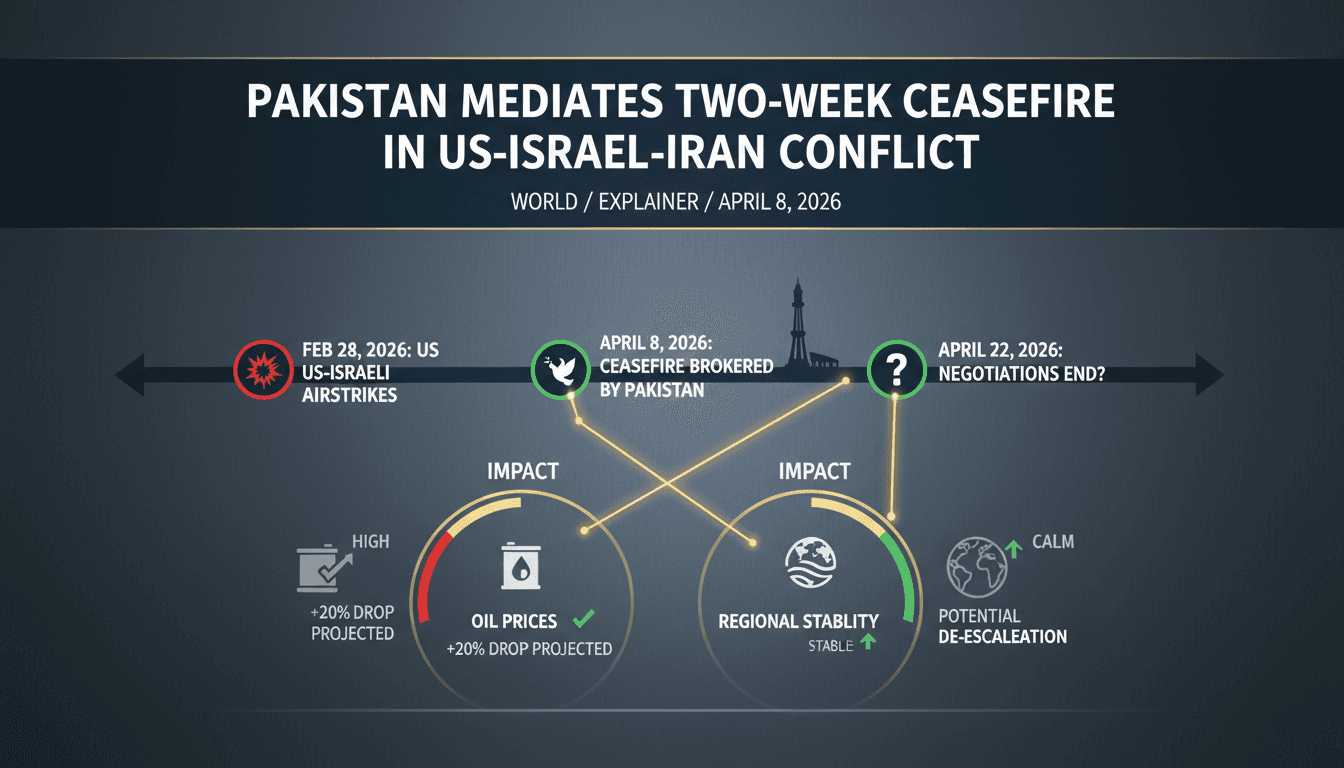
- Pakistan announced a two-week ceasefire on April 8, 2026, between the United States, Israel, and Iran, leveraging its diplomatic ties.
- Escalating hostilities began with US-Israeli airstrikes on February 28, 2026, leading to a regional conflict that threatened oil supply chains.
- Negotiations are set to begin on April 10, 2026, in Islamabad, with the ceasefire suspending hostilities 'everywhere' except Lebanon.
The context you actually need
- The 2026 Iran war was triggered by US-Israeli airstrikes aimed at Iranian targets, following Iran's support for proxy groups and threats in the Strait of Hormuz.
- Pakistan's strategic position as a neighbor to Iran and its defense pact with Saudi Arabia allowed it to act as a neutral mediator in the conflict.
- Regional consultations hosted by Pakistan included key players like Saudi Arabia, Turkey, and Egypt, highlighting Islamabad's role in promoting de-escalation.
What's really happening
The recent ceasefire brokered by Pakistan is a pivotal moment in a conflict that has escalated since February 2026, when US-Israeli airstrikes initiated hostilities against Iran. This military action was a response to Iran's increasing support for proxy groups and threats to maritime security in the Strait of Hormuz, a vital oil shipping route. The conflict has had immediate repercussions, including a 36% rise in Brent crude futures prices from February 27 to March 27, 2026, reflecting market anxiety over potential supply disruptions.
Pakistan's involvement as a mediator stems from its unique geopolitical position. Sharing a border with Iran and maintaining a defense pact with Saudi Arabia, Pakistan has cultivated ties with both the Trump administration and regional powers. This positioning has allowed Islamabad to facilitate dialogue among conflicting parties, culminating in the recent ceasefire announcement by Prime Minister Shehbaz Sharif. The ceasefire, which excludes Lebanon, is seen as a temporary measure to halt hostilities and create a conducive environment for negotiations.
The ceasefire's announcement has been met with cautious optimism in global markets, particularly in the oil sector. If the Strait of Hormuz reopens fully, oil prices may stabilize, benefiting economies reliant on energy exports and reducing costs for consumers. However, the situation remains delicate. Ongoing missile interceptions in the UAE and the lack of a Saudi invocation of its defense pact with Pakistan indicate that tensions persist. Both US President Trump and Iranian officials have claimed victories in the ceasefire, while Israel has clarified its stance regarding Lebanon's exclusion.
Analysts view Pakistan's successful mediation as a diplomatic victory, with China endorsing Islamabad's role in fostering regional stability. However, the fragile trust among involved parties necessitates sustained dialogue to ensure that the ceasefire leads to a more permanent resolution. The outcome of the upcoming negotiations on April 10 will be crucial in determining whether this ceasefire can evolve into a lasting peace agreement or if hostilities will resume.
Who feels it first (and how)
- Energy sector professionals: Fluctuations in oil prices directly impact their operations and profitability.
- Travel and tourism industries: Disruptions in air travel and regional stability affect bookings and operational costs.
- Consumers: Rising oil prices can lead to increased transportation and goods costs, affecting daily expenses.
What to watch next
- Negotiation outcomes on April 10: The success or failure of talks will indicate the potential for long-term peace or renewed conflict.
- Oil price trends: Monitor Brent crude prices for signs of stabilization or volatility as the ceasefire progresses.
- Regional military movements: Watch for any escalations or troop deployments that could signal a breakdown of the ceasefire.
A two-week ceasefire is currently in effect, with negotiations scheduled.
Oil prices may stabilize if the Strait of Hormuz reopens fully.
The long-term effectiveness of the ceasefire and the potential for lasting peace in the region.
Frequently Asked Questions
- Why it matters?
- The ceasefire could lead to a significant reduction in oil price volatility, impacting global markets and consumer costs.
- What happened (in 30 seconds)?
- Pakistan announced a two-week ceasefire on April 8, 2026, between the United States, Israel, and Iran, leveraging its diplomatic ties. Escalating hostilities began with US-Israeli airstrikes on February 28, 2026, leading to a regional conflict that threatened oil supply chains. Negotiations are set to begin on April 10, 2026, in Islamabad, with the ceasefire suspending hostilities 'everywhere' except Lebanon.
- What's really happening?
- The recent ceasefire brokered by Pakistan is a pivotal moment in a conflict that has escalated since February 2026, when US-Israeli airstrikes initiated hostilities against Iran. This military action was a response to Iran's increasing support for proxy groups and threats to maritime security in the Strait of Hormuz, a vital oil shipping route. The conflict has had immediate repercussions, including a 36% rise in Brent crude futures prices from February 27 to March 27, 2026, reflecting market an
- Who feels it first (and how)?
- Energy sector professionals: Fluctuations in oil prices directly impact their operations and profitability. Travel and tourism industries: Disruptions in air travel and regional stability affect bookings and operational costs. Consumers: Rising oil prices can lead to increased transportation and goods costs, affecting daily expenses.
- What to watch next?
- Negotiation outcomes on April 10: The success or failure of talks will indicate the potential for long-term peace or renewed conflict. Oil price trends: Monitor Brent crude prices for signs of stabilization or volatility as the ceasefire progresses. Regional military movements: Watch for any escalations or troop deployments that could signal a breakdown of the ceasefire.
International stories from NPR’s global desk.
"NPR is an American public media organization known for thoughtful reporting and a slightly left-leaning editorial tone."
— A47 Editor
Iranians weigh in on the fragile ceasefire
A fragile two-week ceasefire has been announced between the United States and Iran, following a month of escalating military conflict. This truce, facilitated by diplomatic efforts from Pakistan, aims to halt military actions and allow for negotiatio...
International stories from NPR’s global desk.
"NPR is an American public media organization known for thoughtful reporting and a slightly left-leaning editorial tone."
— A47 Editor
How did Pakistan bring Iran and the U.S. to the negotiating table?
Pakistan has successfully mediated a two-week ceasefire between the United States and Iran, facilitating negotiations aimed at de-escalating tensions that have escalated in recent weeks. This diplomatic breakthrough was achieved through extensive tal...
Regional coverage and analysis focused on politics, diplomacy, and business across the Middle East.
"Al-Monitor is known for analytical reporting on Middle East politics and policy developments."
— A47 Editor
Sanctions relief, Pakistan role propel China backing of Iran-US ceasefire
A two-week ceasefire between the United States and Iran has been successfully brokered by Pakistan, following escalating tensions in the region. This diplomatic breakthrough comes just before a deadline set by President Donald Trump for Iran to reope...
Coverage of current events and conflicts in the Middle East.
"France 24 is viewed as a globally focused outlet with balanced coverage and a European perspective."
— A47 Editor
Pakistan plays major role trying to mediate an end to Iran war
Pakistan has emerged as a crucial mediator in the ongoing tensions between the United States and Iran, successfully facilitating a two-week ceasefire agreement. This diplomatic achievement comes amid escalating conflicts in the region, with Islamabad...
European coverage of Middle East politics and security issues.
"France 24 offers international reporting with a European editorial perspective."
— A47 Editor
Pakistan plays major role trying to mediate an end to Iran war
Pakistan has emerged as a crucial mediator in the ongoing conflict between the United States and Iran, successfully brokering a two-week ceasefire agreement aimed at reducing escalating tensions in the Middle East. This diplomatic effort is set again...
UAE-based newspaper covering Gulf politics, society, and international developments.
"Gulf News is one of the UAE’s most prominent English-language publications."
— A47 Editor
Pakistan declares Islamabad holidays ahead of US-Iran talks
Pakistan has declared holidays in Islamabad ahead of anticipated talks between the United States and Iran, which are set to commence on Friday. This diplomatic engagement follows a two-week ceasefire brokered by Pakistan, aimed at alleviating escalat...
A curated Gulf News feed featuring major stories across news, business, opinion, and lifestyle.
"Gulf News is a major UAE newspaper whose featured stories feed reflects a broad editorial mix shaped for a Gulf audience."
— A47 Editor
Pakistan declares Islamabad holidays ahead of US-Iran talks
Pakistan has declared holidays in Islamabad ahead of anticipated talks between the United States and Iran, which are set to commence on Friday. This diplomatic engagement follows a two-week ceasefire brokered by Pakistan, aimed at alleviating escalat...