
US-Israeli conflict with Iran triggers unprecedented oil supply shock
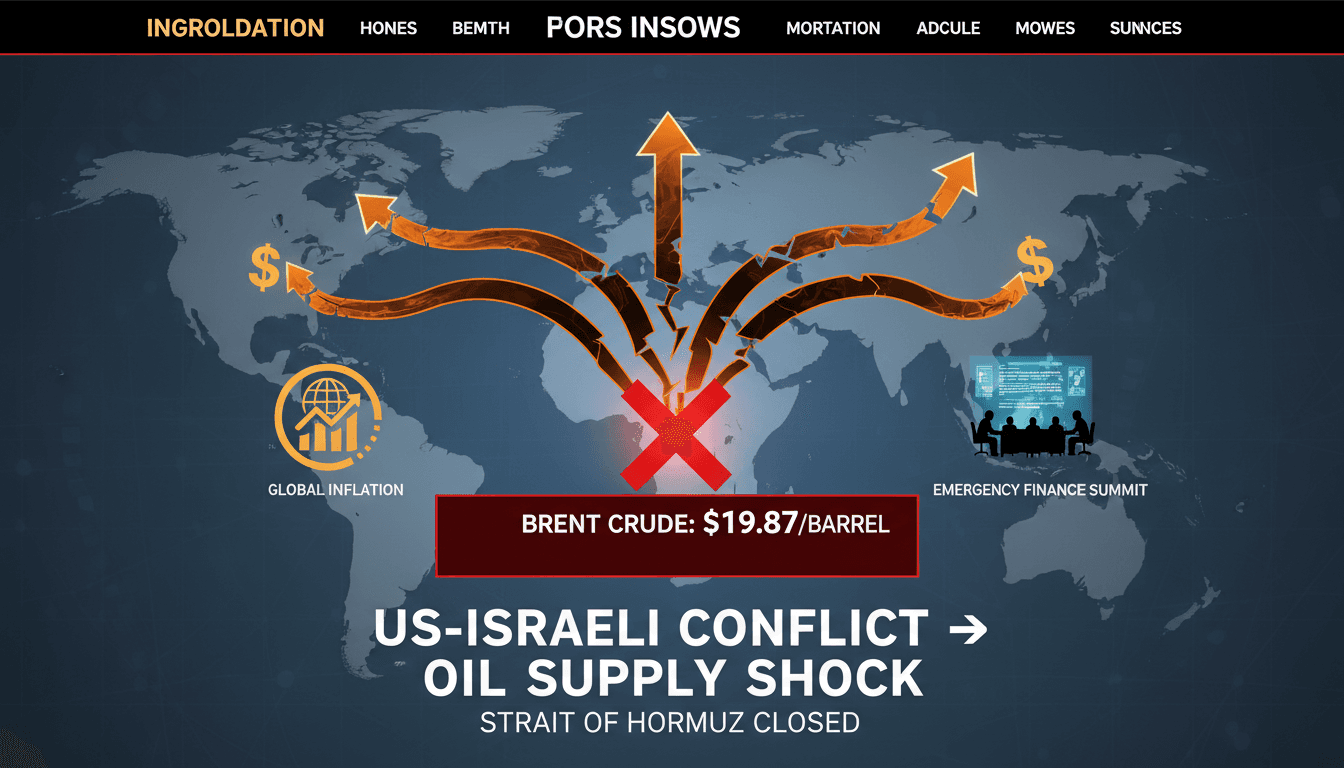
Here's what it means for you.
If you're in any sector reliant on energy prices, brace for volatility and potential cost increases.
Why it matters
This conflict has disrupted 20% of global oil flows, triggering inflationary pressures that could affect economic stability worldwide.
What happened (in 30 seconds)
- The US-Israeli war against Iran began in late February 2026, leading to significant geopolitical tensions.
- The closure of the Strait of Hormuz has halted oil exports, causing Brent crude prices to peak near $120 per barrel.
- Global leaders convened in Washington on April 12, 2026, to address the economic fallout and revise growth forecasts.
The context you actually need
- Escalating tensions in the Middle East, exacerbated by the COVID-19 pandemic and the Ukraine invasion, set the stage for this conflict.
- Iran's retaliation included drone attacks on oil infrastructure and the closure of crucial shipping lanes, significantly impacting supply chains.
- The IMF and World Bank are now focusing on cooperative measures to mitigate the economic fallout, with warnings of potential long-term scarring.
What's really happening
The war between the US, Israel, and Iran has created a ripple effect across global markets, primarily through the disruption of oil supplies. The Strait of Hormuz, a critical chokepoint for oil transportation, has been closed due to Iranian counterstrikes, which has halted approximately 20% of the world's oil flow. This disruption has sent Brent crude prices soaring to nearly $120 per barrel, a level not seen in years.
The immediate consequence of this price surge is a spike in inflation, which has prompted finance ministers and central bankers to gather in Washington for urgent discussions. The IMF has already revised its 2026 growth forecasts downward, signaling a potential economic slowdown. Kristalina Georgieva, the Managing Director of the IMF, has emphasized the need for multilateral cooperation to address these challenges, warning against unilateral measures that could exacerbate the situation.
As the conflict continues, the economic implications are profound. The oil supply shock has not only affected energy prices but has also led to increased costs across various sectors, from transportation to manufacturing. The situation is further complicated by the fact that insurance costs for shipping in the region have skyrocketed, creating additional barriers for global trade.
In Dubai, for instance, fuel prices surged by up to 33% in April 2026, marking the largest monthly increase on record. This spike reflects the acute pricing stress faced by Middle Eastern oil markets and highlights the interconnectedness of global energy supply chains. The potential for Iranian strikes on Dubai-linked tankers adds another layer of vulnerability to the region's economic stability.
The ongoing ceasefire talks in Pakistan offer a glimmer of hope for de-escalation, but the path forward remains uncertain. The conflict has already inflicted significant damage on global economic confidence, and the long-term effects could be felt for years to come, particularly if oil prices remain elevated.
Who feels it first (and how)
- Energy sector professionals: Increased operational costs and price volatility.
- Transportation companies: Higher fuel prices leading to increased logistics costs.
- Consumers: Rising prices at the pump and for goods reliant on oil.
- Investors: Market corrections and shifts in investment strategies due to inflation concerns.
- Middle Eastern economies: Increased economic instability and potential for reduced foreign investment.
What to watch next
- Oil price trends: Continued fluctuations in Brent crude prices will indicate the ongoing impact of the conflict on global markets.
- Ceasefire developments: Progress or setbacks in peace talks could significantly alter economic forecasts and market stability.
- Inflation rates: Monitoring inflation trends in major economies will provide insight into the broader economic impact of the oil supply shock.
The conflict has disrupted 20% of global oil flows and caused significant price increases.
Continued inflationary pressures as energy prices remain volatile.
The long-term economic impacts of the conflict and the effectiveness of international cooperative measures.
Frequently Asked Questions
- Why it matters?
- This conflict has disrupted 20% of global oil flows, triggering inflationary pressures that could affect economic stability worldwide.
- What happened (in 30 seconds)?
- The US-Israeli war against Iran began in late February 2026, leading to significant geopolitical tensions. The closure of the Strait of Hormuz has halted oil exports, causing Brent crude prices to peak near $120 per barrel. Global leaders convened in Washington on April 12, 2026, to address the economic fallout and revise growth forecasts.
- What's really happening?
- The war between the US, Israel, and Iran has created a ripple effect across global markets, primarily through the disruption of oil supplies. The Strait of Hormuz, a critical chokepoint for oil transportation, has been closed due to Iranian counterstrikes, which has halted approximately 20% of the world's oil flow. This disruption has sent Brent crude prices soaring to nearly $120 per barrel, a level not seen in years. The immediate consequence of this price surge is a spike in inflation, which
- Who feels it first (and how)?
- Energy sector professionals: Increased operational costs and price volatility. Transportation companies: Higher fuel prices leading to increased logistics costs. Consumers: Rising prices at the pump and for goods reliant on oil. Investors: Market corrections and shifts in investment strategies due to inflation concerns. Middle Eastern economies: Increased economic instability and potential for reduced foreign investment.
- What to watch next?
- Oil price trends: Continued fluctuations in Brent crude prices will indicate the ongoing impact of the conflict on global markets. Ceasefire developments: Progress or setbacks in peace talks could significantly alter economic forecasts and market stability. Inflation rates: Monitoring inflation trends in major economies will provide insight into the broader economic impact of the oil supply shock.
UK and international business news, economics, and corporate coverage.
"The Guardian’s business section covers finance and markets with a progressive editorial tone."
— A47 Editor
Task for the week: limit the fallout from biggest oil shock in decades | Richard Partington
The ongoing conflict involving Iran has led to significant economic repercussions, as evidenced by rising energy prices and inflation, prompting the World Bank and IMF to convene in Washington to address these challenges. The situation is reminiscent...
Top international stories selected by The Guardian editors.
"The Guardian is known for its progressive editorial stance and in-depth analysis."
— A47 Editor
Task for the week: limit the fallout from biggest oil shock in decades | Richard Partington
The ongoing conflict involving Iran has led to significant economic repercussions, as evidenced by rising energy prices and inflation, prompting the World Bank and IMF to convene in Washington to address these challenges. The situation is reminiscent...
Regional and international reporting focused on Middle Eastern politics, diplomacy, and economics.
"Asharq Al-Awsat is a Saudi-owned international newspaper reflecting mainstream Gulf political perspectives."
— A47 Editor
Economic Shock of Mideast War to Cast Shadow over IMF, World Bank Meetings
The ongoing conflict in the Middle East, particularly the war in Iran, is casting a significant shadow over the upcoming meetings of the International Monetary Fund (IMF) and World Bank. The economic repercussions of this war are expected to dominate...
Arabic-language economic and business reporting with strong UAE market relevance.
"Emarat Al Youm business coverage often centers UAE property, banking, consumer issues, and economic policy."
— A47 Editor
تبعات حرب إيران تهيمن على اجتماعات صندوق النقد والبنك الدوليين تبعات حرب إيران تهيمن على اجتماعات صندوق النقد والبنك الدوليين
Senior financial officials from around the world are set to convene in Washington this week amid the ongoing war in the Middle East, which has raised expectations of reduced growth and increased inflation due to the conflict.
Macro commentary, policy analysis, growth/inflation themes, and global outlooks.
"Contextual macro coverage that complements day-to-day market headlines."
— A47 Editor
Economic shock of Middle East war to cast shadow over IMF, World Bank meetings
The ongoing conflict in the Middle East is expected to significantly impact the upcoming meetings of the International Monetary Fund (IMF) and the World Bank, as economic shocks from the war are anticipated to lead to rising prices and slower global ...