
Ukrainian Drone Strikes Target Russian Oil Infrastructure in Novorossiysk and Ust-Luga
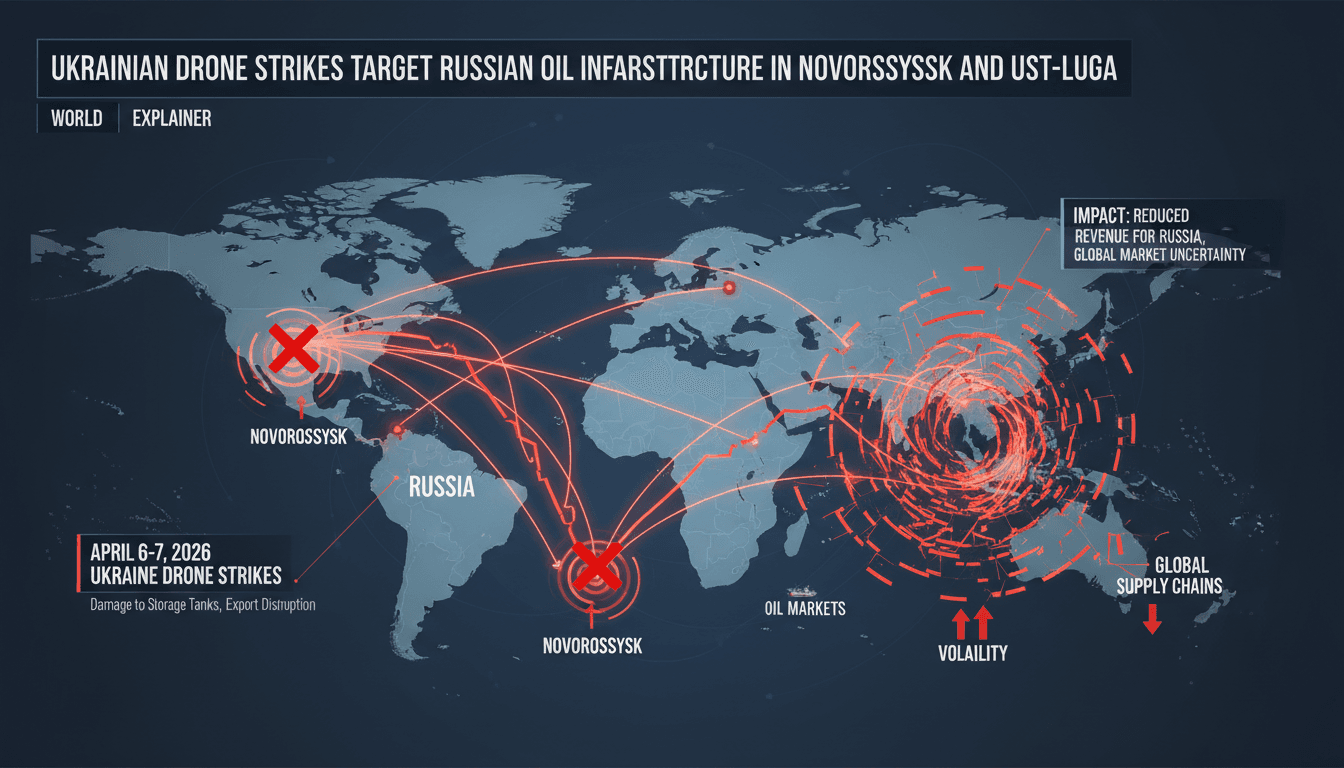
Here's what it means for you.
If you rely on stable fuel prices, the recent attacks on Russian oil infrastructure could lead to increased costs at the pump.
Why it matters
These strikes target a critical source of revenue for Russia, potentially impacting global oil supply and prices.
What happened (in 30 seconds)
- Ukrainian drones struck the Ust-Luga oil terminal and Novorossiysk facilities on April 6-7, 2026, causing significant damage.
- Three storage tanks at Ust-Luga and multiple loading stands at Novorossiysk were affected, disrupting operations.
- Russian officials confirmed the damage, accusing Ukraine of destabilizing hydrocarbon markets.
The context you actually need
- Energy infrastructure is a key target: Ukraine has intensified drone operations against Russian oil facilities to diminish Moscow's military funding.
- Ust-Luga and Novorossiysk are vital: These terminals are critical for Russian oil exports, with Sheskharis terminal alone handling 20% of seaborne oil exports.
- Geopolitical tensions are rising: The strikes come amid heightened conflict, with previous attacks on similar facilities indicating a strategic shift in Ukraine's military approach.
What's really happening
The recent drone strikes on Russian oil terminals represent a significant escalation in Ukraine's efforts to undermine Russia's military capabilities through targeted attacks on its energy infrastructure. This strategy is rooted in the understanding that oil revenues are a primary funding source for Russia's ongoing military operations in Ukraine. By disrupting these facilities, Ukraine aims to create a ripple effect that not only impacts Russia's immediate logistics but also sends shockwaves through the global oil market.
Ust-Luga serves as a crucial transshipment hub for Russian crude oil exports to Europe and beyond, while Novorossiysk is integral for Black Sea exports, including significant volumes from Kazakhstan. The damage inflicted on these terminals, including confirmed destruction of storage tanks and loading infrastructure, is expected to lead to temporary reductions in Russian oil exports. This disruption is particularly relevant as global oil markets are already sensitive to supply fluctuations, and any reduction in Russian output could lead to increased prices worldwide.
Moreover, the strikes are part of a broader campaign by Ukraine to leverage its drone capabilities, which have proven effective in targeting high-value assets. The Ukrainian military's use of drones reflects a shift in modern warfare, where technology plays a pivotal role in asymmetrical conflicts. As these operations continue, they could lead to further retaliatory measures from Russia, potentially escalating the conflict even further.
The immediate aftermath of the strikes has seen Russian officials accusing Ukraine of destabilizing hydrocarbon markets, which could lead to increased volatility in global oil prices. While the Caspian Pipeline Consortium has remained silent on the matter, the implications for oil supply chains are significant, particularly for countries reliant on Russian oil exports. As the situation evolves, the interconnectedness of global oil markets means that even minor disruptions can lead to price increases felt by consumers worldwide.
Who feels it first (and how)
- Consumers: Increased fuel prices at the pump due to global oil market volatility.
- Energy companies: Potential disruptions in supply contracts and increased operational costs.
- Investors: Heightened uncertainty in oil markets could lead to fluctuations in stock prices for energy firms.
- Geopolitical analysts: Increased focus on the impact of military actions on global energy supply chains.
What to watch next
- Oil price fluctuations: Monitor changes in crude oil prices as the market reacts to the strikes and potential supply disruptions.
- Further military actions: Watch for additional Ukrainian drone strikes or Russian retaliatory measures that could escalate the conflict.
- Energy policy shifts: Keep an eye on how countries dependent on Russian oil may adjust their energy strategies in response to ongoing disruptions.
Damage to Russian oil infrastructure has been confirmed, impacting export capabilities.
Global oil prices will experience upward pressure due to reduced Russian exports.
The long-term impact on the Russo-Ukrainian conflict and how it will shape future military strategies.
Frequently Asked Questions
- Why it matters?
- These strikes target a critical source of revenue for Russia, potentially impacting global oil supply and prices.
- What happened (in 30 seconds)?
- Ukrainian drones struck the Ust-Luga oil terminal and Novorossiysk facilities on April 6-7, 2026, causing significant damage. Three storage tanks at Ust-Luga and multiple loading stands at Novorossiysk were affected, disrupting operations. Russian officials confirmed the damage, accusing Ukraine of destabilizing hydrocarbon markets.
- What's really happening?
- The recent drone strikes on Russian oil terminals represent a significant escalation in Ukraine's efforts to undermine Russia's military capabilities through targeted attacks on its energy infrastructure. This strategy is rooted in the understanding that oil revenues are a primary funding source for Russia's ongoing military operations in Ukraine. By disrupting these facilities, Ukraine aims to create a ripple effect that not only impacts Russia's immediate logistics but also sends shockwaves th
- Who feels it first (and how)?
- Consumers: Increased fuel prices at the pump due to global oil market volatility. Energy companies: Potential disruptions in supply contracts and increased operational costs. Investors: Heightened uncertainty in oil markets could lead to fluctuations in stock prices for energy firms. Geopolitical analysts: Increased focus on the impact of military actions on global energy supply chains.
- What to watch next?
- Oil price fluctuations: Monitor changes in crude oil prices as the market reacts to the strikes and potential supply disruptions. Further military actions: Watch for additional Ukrainian drone strikes or Russian retaliatory measures that could escalate the conflict. Energy policy shifts: Keep an eye on how countries dependent on Russian oil may adjust their energy strategies in response to ongoing disruptions.
Arabic-language UAE newspaper coverage focused on domestic affairs, public institutions, business, society, and regional developments.
"Al Khaleej coverage generally reflects a mainstream UAE editorial lens with strong attention to public affairs, institutions, and regional developments."
— A47 Editor
أوكرانيا تعلن قصف محطة نفط روسية
The Ukrainian military announced an attack on the Russian oil terminal at 'Ost-Luga' in the Leningrad region, confirming initial damage to three tanks belonging to 'Transneft-Baltika'. This follows a previous drone strike on a Caspian pipeline consor...
24/7 international news from a French perspective in multiple languages.
"France 24 is viewed as a globally focused outlet with balanced coverage and a European perspective."
— A47 Editor
Ukraine hits major oil terminal in southern Russia in drone strike
Ukrainian drones targeted the Caspian Pipeline Consortium's marine terminal in southern Russia, damaging a mooring point and igniting four oil tanks, according to the Russian defense ministry. The Ukrainian army claimed the strike was aimed at a diff...
Domestic Russian news, politics, and society.
"RT is widely criticized for promoting pro-Kremlin narratives and is considered by many to be a state propaganda outlet."
— A47 Editor
Ukrainian drones target key US-linked oil hub in Russia – Defense Ministry
Ukrainian drones have targeted the Caspian Pipeline Consortium's infrastructure in Novorossiysk, Russia, according to the Russian Defense Ministry. This attack is part of Ukraine's ongoing military operations aimed at disrupting Russian energy suppli...