
IAEA Chief Grossi Critiques U.S.-Iran Nuclear Deal Without Agency Oversight
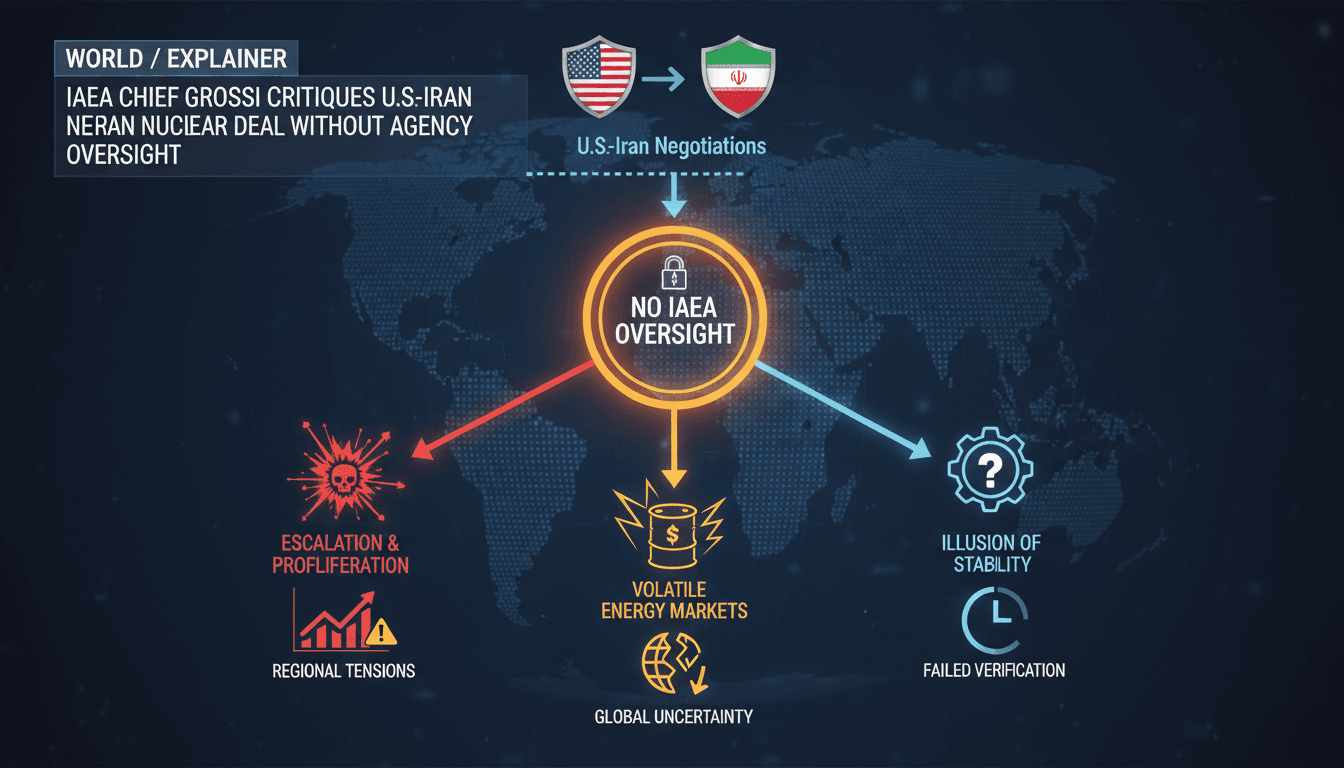
Here's what it means for you.
The ongoing U.S.-Iran nuclear negotiations could significantly impact global energy markets and regional stability.
Why it matters
The outcome of these negotiations could reshape geopolitical alliances and energy prices, affecting economies worldwide.
What happened (in 30 seconds)
- Rafael Grossi, IAEA Director General, warned that any U.S.-Iran nuclear deal without IAEA verification is an "illusion."
- Ongoing negotiations between the U.S. and Iran follow a ceasefire after U.S. strikes on Iranian nuclear sites in 2025.
- Iran's enriched uranium stockpile has raised concerns, with current levels nearing weapons-grade.
The context you actually need
- The 2015 JCPOA, which aimed to limit Iran's nuclear capabilities, was abandoned by the U.S. in 2018, leading to increased tensions.
- Iran's uranium stockpile reached 9,874.9 kg as of June 2025, raising alarms about potential nuclear proliferation in the region.
- Regional players, including Saudi Arabia and the UAE, are closely monitoring developments, as they could influence their own security and energy strategies.
What's really happening
The U.S.-Iran negotiations are unfolding against a backdrop of heightened geopolitical tensions and complex historical grievances. Following the U.S. withdrawal from the Joint Comprehensive Plan of Action (JCPOA) in 2018, Iran ramped up its uranium enrichment activities, accumulating a stockpile that has raised alarms among Gulf states and the international community. The IAEA's role as a verification body is crucial in this context, as it provides the necessary oversight to ensure compliance with any agreements made.
Rafael Grossi's recent remarks highlight the agency's unique expertise and the importance of its involvement in any nuclear deal. Without IAEA verification, any agreement risks being perceived as lacking credibility, which could undermine global efforts to prevent nuclear proliferation. The stakes are particularly high given the potential for a nuclear arms race in the Middle East, with countries like Saudi Arabia and the UAE considering their own nuclear capabilities in response to Iran's actions.
The negotiations have been complicated by Iran's non-compliance with IAEA inspections and its continued accumulation of near-weapons-grade uranium. This situation has created a sense of urgency among U.S. negotiators, who are seeking a more comprehensive deal than the previous JCPOA. President Trump's administration is pushing for stringent safeguards that would require Iran to cease uranium enrichment and relocate its stockpiles, a move that could significantly alter the balance of power in the region.
As the talks continue, the potential for escalation remains. The Gulf states are particularly vulnerable to disruptions in the Strait of Hormuz, a critical chokepoint for global oil transit. Any instability in this region could have far-reaching implications for energy prices and economic stability, particularly for trade-dependent economies like the UAE, valued at $500 billion annually.
Who feels it first (and how)
- Energy sector professionals: Fluctuations in oil prices could impact jobs and investments.
- Regional governments: Increased military readiness and potential shifts in defense spending.
- Global investors: Market volatility could affect investment strategies and risk assessments.
What to watch next
- Resumption of U.S.-Iran talks: The outcome of upcoming negotiations will be critical in determining the future of nuclear compliance and regional stability.
- IAEA's inspection reports: Any changes in Iran's compliance with IAEA inspections will signal the likelihood of a successful agreement.
- Regional military developments: Increased military activity in the Gulf could indicate rising tensions and the potential for conflict.
The IAEA's role is essential for any credible nuclear agreement.
Continued tensions in the region will affect global energy markets.
The long-term impact of these negotiations on U.S.-Iran relations remains uncertain.
Frequently Asked Questions
- Why it matters?
- The outcome of these negotiations could reshape geopolitical alliances and energy prices, affecting economies worldwide.
- What happened (in 30 seconds)?
- Rafael Grossi, IAEA Director General, warned that any U.S.-Iran nuclear deal without IAEA verification is an "illusion." Ongoing negotiations between the U.S. and Iran follow a ceasefire after U.S. strikes on Iranian nuclear sites in 2025. Iran's enriched uranium stockpile has raised concerns, with current levels nearing weapons-grade.
- What's really happening?
- The U.S.-Iran negotiations are unfolding against a backdrop of heightened geopolitical tensions and complex historical grievances. Following the U.S. withdrawal from the Joint Comprehensive Plan of Action (JCPOA) in 2018, Iran ramped up its uranium enrichment activities, accumulating a stockpile that has raised alarms among Gulf states and the international community. The IAEA's role as a verification body is crucial in this context, as it provides the necessary oversight to ensure compliance wi
- Who feels it first (and how)?
- Energy sector professionals: Fluctuations in oil prices could impact jobs and investments. Regional governments: Increased military readiness and potential shifts in defense spending. Global investors: Market volatility could affect investment strategies and risk assessments.
- What to watch next?
- Resumption of U.S.-Iran talks: The outcome of upcoming negotiations will be critical in determining the future of nuclear compliance and regional stability. IAEA's inspection reports: Any changes in Iran's compliance with IAEA inspections will signal the likelihood of a successful agreement. Regional military developments: Increased military activity in the Gulf could indicate rising tensions and the potential for conflict.
Arabic-language coverage of political affairs and current events.
"Okaz political coverage typically follows mainstream Saudi framing on national and regional affairs."
— A47 Editor
«الطاقة الذرية»: أي اتفاق مع طهران دون مشاركتنا سيكون وهماً
U.S. President Donald Trump described the anticipated nuclear agreement with Iran as potentially better than previous deals, asserting he is working on a more favorable arrangement than that achieved during Barack Obama's administration. Rafael Gross...
Arabic-language political and world news coverage for UAE readers.
"Emarat Al Youm world coverage usually presents international developments through a UAE and Arab audience lens."
— A47 Editor
ترامب: الاتفاق الجديد مع إيران سيكون أفضل من القديم ترامب: الاتفاق الجديد مع إيران سيكون أفضل من القديم
On Monday, U.S. President Donald Trump expressed his belief that the new nuclear agreement being negotiated with Iran will be superior to the previous one. This statement reflects ongoing diplomatic efforts between the United States and Iran regardin...