
Saudi Arabia Intercepts Multiple Ballistic Missiles and Drones Targeting Eastern Province
Here's what it means for you.
Increased military tensions in the Gulf could impact oil prices and regional security, affecting global markets.
Why it matters
Escalating conflicts and missile threats in the Gulf region can disrupt oil supply chains and heighten geopolitical risks.
What happened (in 30 seconds)
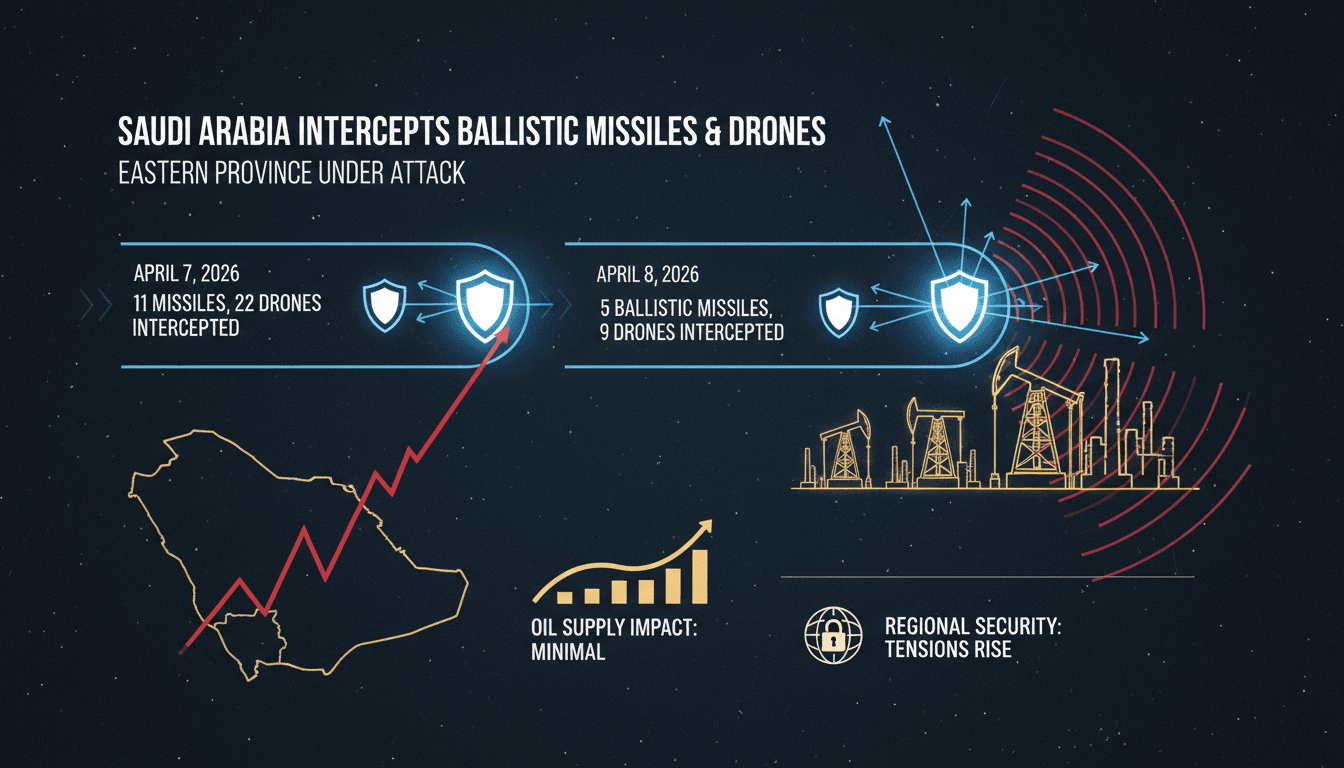
- Saudi Arabia intercepted five ballistic missiles and nine drones targeting the Eastern Province on April 8, 2026.
- This followed the interception of 11 missiles and 22 drones just a day earlier, indicating a surge in hostile activities.
- No casualties or major disruptions were reported, but damage assessments are ongoing from debris falling near energy facilities.
The context you actually need
- Regional tensions have escalated since the onset of war involving Iran on February 28, 2026, leading to increased missile and drone incursions.
- Saudi Arabia's air defenses have neutralized hundreds of threats since late February, focusing on protecting critical energy infrastructure in the Eastern Province.
- Gulf states are coordinating their defenses amid these threats, reflecting a collective security approach to regional stability.
What's really happening
The recent interceptions of ballistic missiles and drones by Saudi Arabia are part of a broader pattern of escalating military tensions in the Gulf region, primarily driven by the ongoing conflict involving Iran. Since late February 2026, the geopolitical landscape has shifted dramatically, with Gulf states, including Saudi Arabia, facing a surge in missile and drone incursions. This uptick in hostile activities is largely attributed to Iran's military posturing, which has prompted neighboring countries to bolster their air defense systems significantly.
The Saudi Ministry of Defense's successful interception of 16 ballistic missiles and drones over a 24-hour period highlights the effectiveness of their military capabilities. However, it also underscores the persistent threat to critical infrastructure, particularly in the Eastern Province, which is vital for the country's oil production. The debris from intercepted missiles falling near energy facilities raises concerns about potential damage and operational disruptions, even if no immediate casualties were reported.
The regional dynamics are further complicated by the coordinated defense efforts among Gulf states. Countries like the UAE have similarly faced missile threats and have activated their air defense systems in response. This collective approach not only enhances individual national security but also reflects a growing recognition of the interconnectedness of security in the Gulf. The implications of these military actions extend beyond immediate defense measures; they can influence global oil markets and economic stability, as any disruption in oil supply can have far-reaching effects on prices and availability.
As tensions continue to rise, the likelihood of further military engagements remains high. The ongoing vigilance of Saudi air defenses and the proactive measures taken by Gulf states indicate a commitment to safeguarding their territories. However, the situation remains fluid, and the potential for escalation cannot be overlooked. The international community will be closely monitoring these developments, as they could reshape the geopolitical landscape in the region.
Who feels it first (and how)
- Energy sector professionals: Increased military tensions may lead to operational disruptions and heightened security measures at energy facilities.
- Investors and traders: Fluctuations in oil prices due to geopolitical instability can impact investment strategies and market performance.
- Residents of Gulf states: Heightened security alerts and potential flight restrictions may affect daily life and travel plans.
What to watch next
- Military engagements: Monitor any further missile or drone attacks in the region, as they could escalate tensions and lead to retaliatory actions.
- Oil price fluctuations: Keep an eye on oil market responses to these interceptions, as disruptions in supply could lead to price increases.
- International diplomatic responses: Watch for statements or actions from global powers regarding the situation, which could influence regional stability.
Saudi Arabia successfully intercepted multiple ballistic missiles and drones targeting its territory.
Continued military vigilance and potential for further interceptions as tensions persist.
The long-term impact on oil prices and regional stability remains uncertain amid ongoing conflicts.
Frequently Asked Questions
- Why it matters?
- Escalating conflicts and missile threats in the Gulf region can disrupt oil supply chains and heighten geopolitical risks.
- What happened (in 30 seconds)?
- Saudi Arabia intercepted five ballistic missiles and nine drones targeting the Eastern Province on April 8, 2026. This followed the interception of 11 missiles and 22 drones just a day earlier, indicating a surge in hostile activities. No casualties or major disruptions were reported, but damage assessments are ongoing from debris falling near energy facilities.
- What's really happening?
- The recent interceptions of ballistic missiles and drones by Saudi Arabia are part of a broader pattern of escalating military tensions in the Gulf region, primarily driven by the ongoing conflict involving Iran. Since late February 2026, the geopolitical landscape has shifted dramatically, with Gulf states, including Saudi Arabia, facing a surge in missile and drone incursions. This uptick in hostile activities is largely attributed to Iran's military posturing, which has prompted neighboring c
- Who feels it first (and how)?
- Energy sector professionals: Increased military tensions may lead to operational disruptions and heightened security measures at energy facilities. Investors and traders: Fluctuations in oil prices due to geopolitical instability can impact investment strategies and market performance. Residents of Gulf states: Heightened security alerts and potential flight restrictions may affect daily life and travel plans.
- What to watch next?
- Military engagements: Monitor any further missile or drone attacks in the region, as they could escalate tensions and lead to retaliatory actions. Oil price fluctuations: Keep an eye on oil market responses to these interceptions, as disruptions in supply could lead to price increases. International diplomatic responses: Watch for statements or actions from global powers regarding the situation, which could influence regional stability.
Regional and international reporting focused on Middle Eastern politics, diplomacy, and economics.
"Asharq Al-Awsat is a Saudi-owned international newspaper reflecting mainstream Gulf political perspectives."
— A47 Editor
Saudi Arabia Intercepts 5 Ballistic Missiles and 9 Drones in Recent Hours
In recent hours, Saudi Arabian air defenses successfully intercepted five ballistic missiles and nine drones, reflecting the kingdom's ongoing military operations to counter aerial threats. This operation highlights the effectiveness of Saudi Arabia'...
UAE-based English-language newspaper covering regional politics, economics, and global affairs.
"The National reflects Emirati policy perspectives while maintaining international editorial standards."
— A47 Editor
UAE intercepts 17 ballistic missiles and 35 drones, says Defence Ministry
On April 8, 2026, the United Arab Emirates (UAE) intercepted 17 ballistic missiles and 35 drones, as reported by the Defence Ministry. This operation reflects the UAE's ongoing commitment to safeguarding its airspace amid escalating military tensions...
UAE-based newspaper covering Gulf politics, society, and international developments.
"Gulf News is one of the UAE’s most prominent English-language publications."
— A47 Editor
UAE air defences intercept 17 ballistic missiles and 35 drones
On April 8, 2026, the United Arab Emirates (UAE) successfully intercepted 17 ballistic missiles and 35 drones, continuing its defensive operations amid escalating military tensions in the region. This interception underscores the UAE's commitment to ...
A curated Gulf News feed featuring major stories across news, business, opinion, and lifestyle.
"Gulf News is a major UAE newspaper whose featured stories feed reflects a broad editorial mix shaped for a Gulf audience."
— A47 Editor
UAE air defences intercept 17 ballistic missiles and 35 drones
On April 8, 2026, the United Arab Emirates (UAE) successfully intercepted 17 ballistic missiles and 35 drones, continuing its defensive operations amid escalating military tensions in the region. This interception underscores the UAE's commitment to ...
English-language reporting on Saudi politics, policy, and society.
"Saudi Gazette reflects mainstream Saudi institutional perspectives."
— A47 Editor
Saudi air defenses intercept 5 ballistic missiles, down 4 drones
Saudi air defenses successfully intercepted five ballistic missiles and four drones over the Eastern Province between Tuesday and Wednesday, as reported by the Ministry of Defense. This operation was confirmed by Maj. Gen. Turki Al-Maliki, who noted ...
English-language reporting focused on Saudi Arabia and regional affairs.
"Saudi Gazette provides English-language coverage that often aligns with mainstream Saudi news priorities."
— A47 Editor
Saudi air defenses intercept 5 ballistic missiles, down 4 drones
Saudi air defenses successfully intercepted five ballistic missiles and four drones over the Eastern Province between Tuesday and Wednesday, as reported by the Ministry of Defense. This operation highlights the ongoing military readiness of Saudi Ara...
UAE-based English-language newspaper covering regional politics, economics, and global affairs.
"The National reflects Emirati policy perspectives while maintaining international editorial standards."
— A47 Editor
UAE intercepts one ballistic missile and 11 drones on Tuesday
On April 7, 2026, the United Arab Emirates (UAE) intercepted one ballistic missile and 11 drones, marking a continuation of its defensive operations amid escalating military tensions in the region. This incident underscores the UAE's commitment to sa...