
Iran Releases NHK Journalist on Bail Amid Ongoing Protests and Diplomatic Tensions
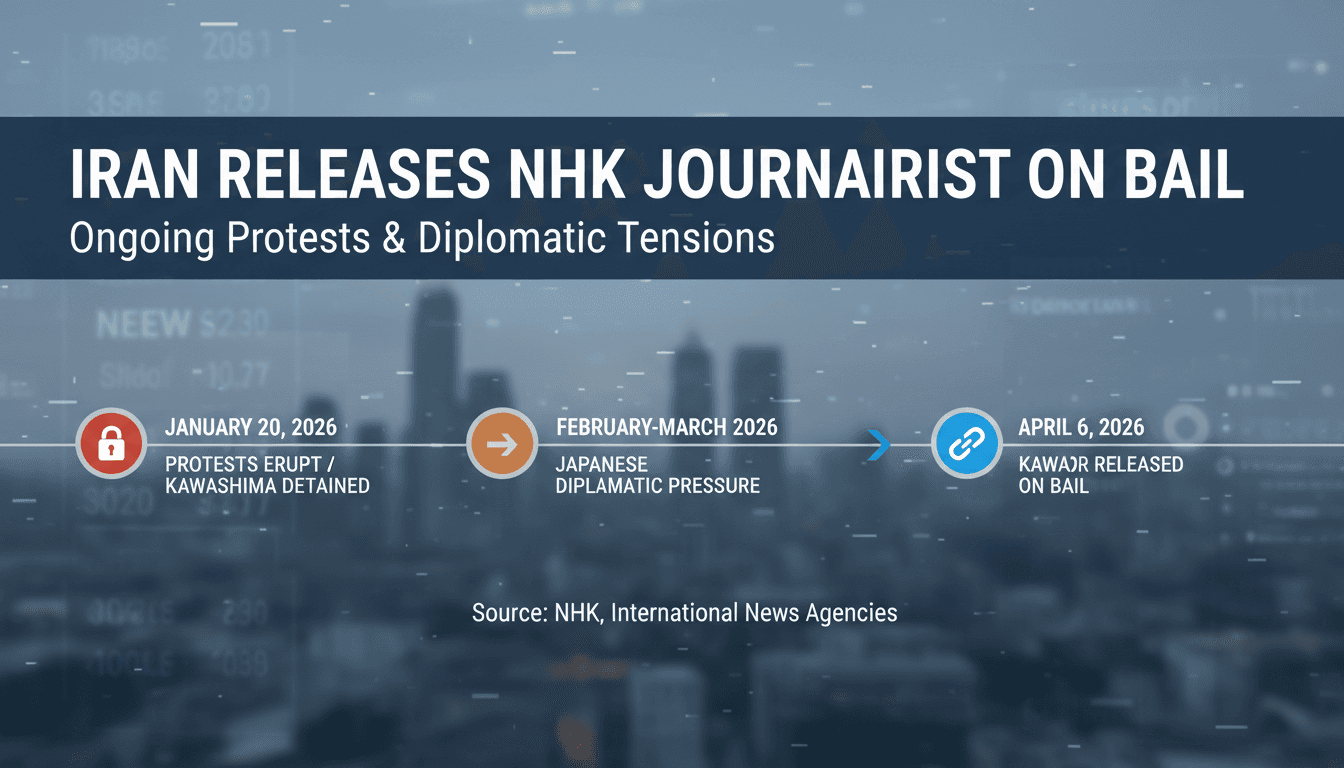
Here's what it means for you.
The release of Shinnosuke Kawashima highlights the precarious environment for journalists in conflict zones, impacting how global media operates in politically sensitive regions.
Why it matters
The ongoing tensions in Iran and the release of foreign journalists signal potential shifts in diplomatic relations and media freedom, affecting international reporting and economic stability.
What happened (in 30 seconds)
- April 6, 2026: Shinnosuke Kawashima, NHK Tehran bureau chief, released on bail after being detained since January 20.
- January 20, 2026: Kawashima was arrested by the Islamic Revolutionary Guard Corps amid widespread antigovernment protests.
- Diplomatic Efforts: Japan's government intervened, leading to Kawashima's release amid escalating regional tensions.
The context you actually need
- Protests began in late December 2025: Triggered by economic hardship due to U.S. sanctions, leading to nationwide unrest and violence.
- Media Crackdown: Iranian authorities have arrested at least 12 journalists since the protests began, indicating a broader suppression of dissent.
- Regional Instability: The protests and subsequent crackdown coincided with significant geopolitical events, including the U.S.-Israeli 'Operation Epic Fury' that intensified conflict in the region.
What's really happening
The release of Shinnosuke Kawashima on bail is a significant event amidst a backdrop of escalating unrest in Iran, driven by economic distress and political repression. The protests that erupted in late December 2025 were fueled by soaring living costs, exacerbated by U.S. sanctions that have crippled the Iranian economy. As inflation skyrocketed and basic goods became increasingly unaffordable, public discontent reached a boiling point, resulting in widespread demonstrations across the country.
Kawashima's arrest on January 20, 2026, by the Islamic Revolutionary Guard Corps (IRGC) was part of a broader crackdown on dissent, which included the detention of journalists and media workers. The Iranian government has historically viewed foreign journalists with suspicion, especially during times of internal strife. The IRGC's actions reflect a strategy to stifle independent reporting and control the narrative surrounding the protests, which have already led to significant casualties and thousands of arrests.
The international response to Kawashima's detention was swift, with Japan's government applying diplomatic pressure for his release. Foreign Minister Toshimitsu Motegi's direct engagement with Iranian officials underscores the importance of media freedom and the safety of journalists in conflict zones. While Kawashima has been released on bail, he remains barred from leaving Iran, indicating that the Iranian authorities continue to exert control over foreign nationals and their activities within the country.
The implications of this situation extend beyond Kawashima's personal circumstances. The ongoing conflict in Iran, coupled with the geopolitical tensions involving the U.S. and Israel, has created a volatile environment for journalists. The Committee to Protect Journalists (CPJ) has documented a worrying trend of arrests, with 12 journalists detained since the protests began, highlighting the risks faced by media professionals in authoritarian regimes.
Moreover, the situation in Iran is closely tied to broader regional dynamics. The aftermath of 'Operation Epic Fury' has not only intensified military conflict but has also prompted many expatriates, particularly from the large Iranian community in Dubai, to reconsider their safety and future in the region. This has led to a significant outflow of individuals, further straining the local economy and impacting Dubai's status as a trade hub.
Who feels it first (and how)
- Journalists and Media Organizations: Increased risks and restrictions on reporting in conflict zones.
- Expatriates in the UAE: Concerns for family and friends in Iran, leading to potential relocations.
- Global Energy Markets: Heightened tensions may sustain elevated oil prices, affecting economies reliant on energy imports.
What to watch next
- Diplomatic Engagements: Monitor Japan's ongoing discussions with Iran regarding journalist safety, as these could influence future media operations in the region.
- Protest Dynamics: Watch for changes in protest activity in Iran, which may signal shifts in public sentiment or government response.
- Media Freedom Trends: Observe global reactions to the treatment of journalists in Iran, as this could impact international reporting standards and practices.
- Shinnosuke Kawashima was detained amid protests and released on bail.
- Continued diplomatic pressure from Japan and other nations regarding journalist safety in Iran.
- The long-term implications of the protests on Iran's political landscape and international relations.
Frequently Asked Questions
- Why it matters?
- The ongoing tensions in Iran and the release of foreign journalists signal potential shifts in diplomatic relations and media freedom, affecting international reporting and economic stability.
- What happened (in 30 seconds)?
- April 6, 2026: Shinnosuke Kawashima, NHK Tehran bureau chief, released on bail after being detained since January 20. January 20, 2026: Kawashima was arrested by the Islamic Revolutionary Guard Corps amid widespread antigovernment protests. Diplomatic Efforts: Japan's government intervened, leading to Kawashima's release amid escalating regional tensions.
- What's really happening?
- The release of Shinnosuke Kawashima on bail is a significant event amidst a backdrop of escalating unrest in Iran, driven by economic distress and political repression. The protests that erupted in late December 2025 were fueled by soaring living costs, exacerbated by U.S. sanctions that have crippled the Iranian economy. As inflation skyrocketed and basic goods became increasingly unaffordable, public discontent reached a boiling point, resulting in widespread demonstrations across the country.
- Who feels it first (and how)?
- Journalists and Media Organizations: Increased risks and restrictions on reporting in conflict zones. Expatriates in the UAE: Concerns for family and friends in Iran, leading to potential relocations. Global Energy Markets: Heightened tensions may sustain elevated oil prices, affecting economies reliant on energy imports.
- What to watch next?
- Diplomatic Engagements: Monitor Japan's ongoing discussions with Iran regarding journalist safety, as these could influence future media operations in the region. Protest Dynamics: Watch for changes in protest activity in Iran, which may signal shifts in public sentiment or government response. Media Freedom Trends: Observe global reactions to the treatment of journalists in Iran, as this could impact international reporting standards and practices.
Global news coverage with extensive reporting on Middle Eastern conflicts and geopolitics.
"Al Jazeera is a Qatar-based broadcaster known for wide regional coverage and alternative perspectives."
— A47 Editor
Iran releases on bail Japan national jailed amid antigovernment protests
Iran has released Shinnosuke Kawashima, the Tehran bureau chief for Japanese broadcaster NHK, on bail after he was jailed amid antigovernment protests. This decision marks a significant development in the case of a foreign national caught in the poli...
Comprehensive coverage of Middle Eastern and global issues.
"Al Jazeera is a prominent voice from the Global South, especially the Middle East, with an emphasis on underreported stories."
— A47 Editor
Iran releases on bail Japan national jailed amid antigovernment protests
Iran has released Shinnosuke Kawashima, the Tehran bureau chief for Japanese broadcaster NHK, on bail after he was jailed amid antigovernment protests. This decision marks a significant development in the case of a foreign national caught in the poli...
Regional coverage and analysis focused on politics, diplomacy, and business across the Middle East.
"Al-Monitor is known for analytical reporting on Middle East politics and policy developments."
— A47 Editor
Japanese freed in Iran not allowed to leave country: report
A Japanese national, reportedly the Tehran bureau chief for NHK, has been released by Iranian authorities after being detained since January 20. The Japanese government confirmed the release, which occurred on April 6, but noted that the individual i...
Pan-Arab news coverage spanning politics, business, sports, and regional affairs.
"Asharq Al-Awsat reflects a broad Arab editorial perspective with strong attention to regional geopolitics."
— A47 Editor
إطلاق سراح مواطن ياباني كان محتجزاً في إيران
Iran has released a Japanese citizen who had been detained since January, believed to be the head of the Japan Broadcasting Corporation's office in Tehran. This release marks a significant development in diplomatic relations between Japan and Iran, r...