
Global Airlines Cut Capacity Due to Jet Fuel Price Surge Amid Iran Conflict
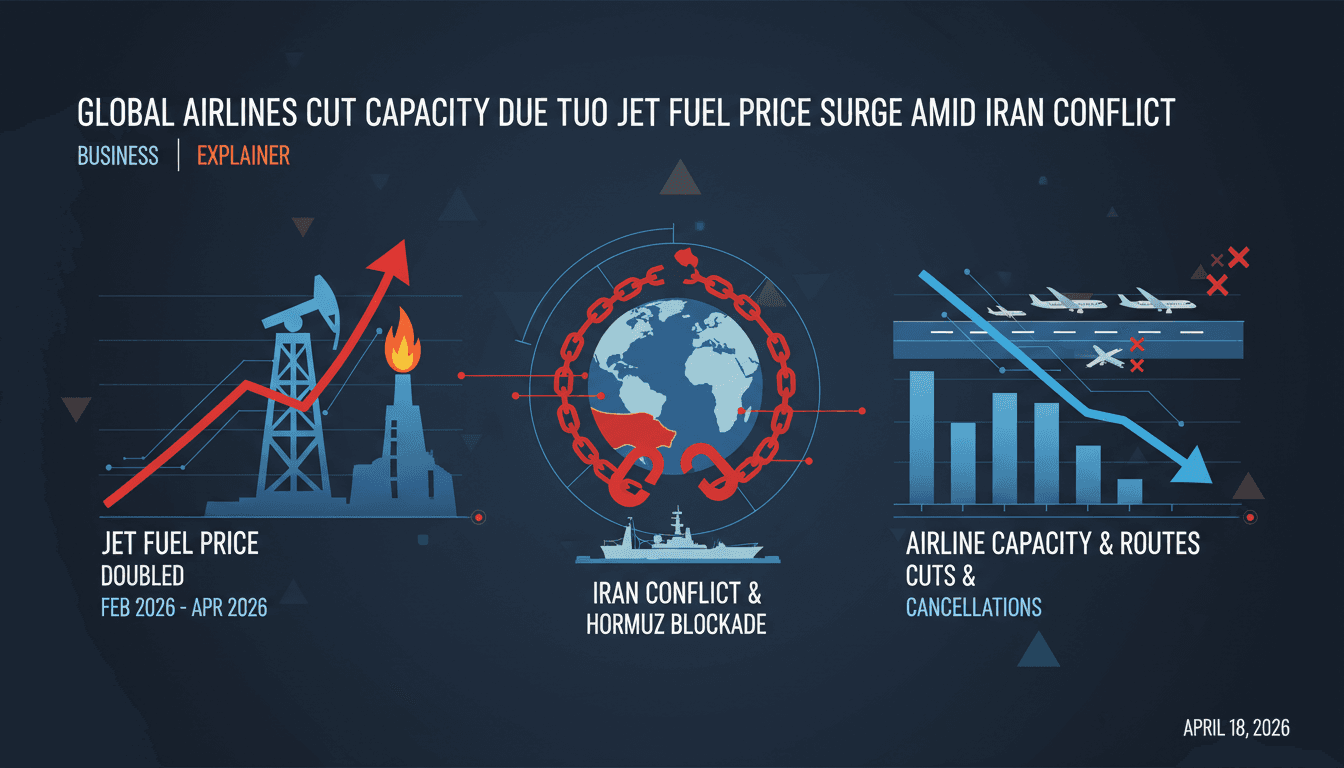
Here's what it means for you.
If you travel frequently, expect higher airfares and fewer flight options in the coming months.
Why it matters
The surge in jet fuel prices is reshaping global airline operations, impacting travel costs and availability.
What happened (in 30 seconds)
- On April 18, 2026, a spike in jet fuel prices due to the Iran war led airlines to cut flight capacity and cancel routes.
- Major carriers like Delta, United, and Lufthansa announced reductions, with global airline capacity for May dropping by approximately 3 percentage points.
- European airlines are facing potential fuel shortages within six weeks, prompting urgent calls for intervention.
The context you actually need
- The Iran war, which began on February 28, 2026, has disrupted oil supplies critical for jet fuel, particularly through the Strait of Hormuz.
- Jet fuel prices have roughly doubled since late February, forcing airlines to implement surcharges and ground aircraft.
- Infrastructure damage in the Persian Gulf region, valued at $50 billion, has exacerbated supply chain vulnerabilities, delaying recovery efforts.
What's really happening
The ongoing conflict in Iran has created a perfect storm for the global aviation industry. The U.S. and Israeli strikes on Iranian targets initiated a series of retaliatory actions, including the closure of the Strait of Hormuz, a vital artery for oil transport. This closure has led to a U.S. naval blockade of Iranian ports, halting crude oil exports and disrupting jet fuel shipments from key Persian Gulf refineries. As a result, jet fuel prices have surged from a baseline of $2.50 per gallon to approximately $5.00, effectively doubling costs for airlines.
In response to these soaring prices, major airlines have been forced to make difficult decisions. Delta Air Lines, for instance, has projected an additional $2.5 billion in costs due to the crisis. To mitigate these financial pressures, airlines have begun imposing fuel surcharges, which can reach up to $400 on long-haul flights. Additionally, they are cutting unprofitable routes and grounding fleets, with Delta trimming its capacity by 3.5% and United by 5%. Lufthansa has grounded 27 planes, contributing to a global capacity reduction of about 3 percentage points for May.
The International Energy Agency (IEA) has warned of looming fuel shortages in Europe, with stockpiles expected to last only six weeks. This situation has prompted European carriers to urge the EU for emergency fuel measures and diversification strategies to secure alternative supplies. The damage to refinery infrastructure in Kuwait, the UAE, and Bahrain has further complicated recovery efforts, with analysts predicting that it could take months for the aviation sector to stabilize.
As airlines navigate this crisis, the market has reacted with fluctuating airline shares and persistent fare increases. While there is currently no widespread rationing of flights, the ongoing conflict and its implications for fuel supply suggest that high prices may persist for the foreseeable future.
Who feels it first (and how)
- Frequent travelers: Higher airfares and fewer flight options will directly impact travel plans and budgets.
- Airline employees: Job security may be threatened as airlines cut routes and reduce capacity.
- European consumers: Potential shortages could lead to increased travel costs and limited availability of flights.
- Middle Eastern economies: Countries reliant on aviation and tourism may experience economic downturns due to reduced flight operations.
What to watch next
- Airline financial reports: Monitor how major carriers report their earnings in the coming quarters to gauge the financial impact of the crisis.
- Fuel price trends: Keep an eye on jet fuel prices and crude oil market fluctuations, as these will influence airline operational costs.
- Government interventions: Watch for potential EU or U.S. government measures aimed at stabilizing fuel supplies and supporting the aviation sector.
Jet fuel prices have doubled since late February 2026.
Airlines will continue to impose surcharges and cut routes as the crisis unfolds.
The timeline for recovery in jet fuel supply and airline capacity remains uncertain.
Frequently Asked Questions
- Why it matters?
- The surge in jet fuel prices is reshaping global airline operations, impacting travel costs and availability.
- What happened (in 30 seconds)?
- On April 18, 2026, a spike in jet fuel prices due to the Iran war led airlines to cut flight capacity and cancel routes. Major carriers like Delta, United, and Lufthansa announced reductions, with global airline capacity for May dropping by approximately 3 percentage points. European airlines are facing potential fuel shortages within six weeks, prompting urgent calls for intervention.
- What's really happening?
- The ongoing conflict in Iran has created a perfect storm for the global aviation industry. The U.S. and Israeli strikes on Iranian targets initiated a series of retaliatory actions, including the closure of the Strait of Hormuz, a vital artery for oil transport. This closure has led to a U.S. naval blockade of Iranian ports, halting crude oil exports and disrupting jet fuel shipments from key Persian Gulf refineries. As a result, jet fuel prices have surged from a baseline of $2.50 per gallon to
- Who feels it first (and how)?
- Frequent travelers: Higher airfares and fewer flight options will directly impact travel plans and budgets. Airline employees: Job security may be threatened as airlines cut routes and reduce capacity. European consumers: Potential shortages could lead to increased travel costs and limited availability of flights. Middle Eastern economies: Countries reliant on aviation and tourism may experience economic downturns due to reduced flight operations.
- What to watch next?
- Airline financial reports: Monitor how major carriers report their earnings in the coming quarters to gauge the financial impact of the crisis. Fuel price trends: Keep an eye on jet fuel prices and crude oil market fluctuations, as these will influence airline operational costs. Government interventions: Watch for potential EU or U.S. government measures aimed at stabilizing fuel supplies and supporting the aviation sector.
Corporate leadership, finance, technology, and market trends.
"Fortune covers financial trends, leadership, and innovation with a pragmatic editorial approach."
— A47 Editor
The jet-fuel surge is making global flight connections disappear
The International Energy Agency (IEA) has issued a stark warning that Europe has only about six weeks of jet fuel supplies left, primarily due to ongoing disruptions linked to the conflict in Iran. This situation has led to significant concerns among...
UK and international business news, economics, and corporate coverage.
"The Guardian’s business section covers finance and markets with a progressive editorial tone."
— A47 Editor
Can Europe avoid a summer of holiday flight and cross-Channel travel chaos?
Passengers planning summer holidays in Europe face potential flight cancellations and long airport queues due to fuel shortages and the EU's new entry-exit system. The ongoing conflict in Iran has led to concerns about the availability of jet fuel, w...
News and current affairs from across Europe.
"The Guardian is known for its progressive editorial stance and in-depth analysis."
— A47 Editor
Can Europe avoid a summer of holiday flight and cross-Channel travel chaos?
Passengers planning summer holidays in Europe face potential flight cancellations and long airport queues due to fuel shortages and the EU's new entry-exit system. The ongoing conflict in Iran has led to concerns about the availability of jet fuel, w...
European current affairs, EU politics, and regional developments.
"France 24 is viewed as a globally focused outlet with balanced coverage and a European perspective."
— A47 Editor
Europe faces looming jet fuel shortage: 'Six weeks of fuel left', energy boss warns
Europe is facing a critical jet fuel shortage, with warnings from energy officials indicating that only six weeks of supply remain due to ongoing disruptions linked to the conflict in Iran and the blockade of the Strait of Hormuz. Airlines are alread...