
LG Electronics Projects 33% Year-on-Year Q1 2026 Operating Profit Rebound to 1.67 Trillion Won Driven by Appliance Demand
Here's what it means for you.
If you’re in the market for home appliances or HVAC systems, LG's financial recovery could influence product availability and pricing in your region.
Why it matters
LG Electronics' rebound signals a potential shift in consumer demand and market dynamics, impacting both retail and supply chains globally.
What happened (in 30 seconds)
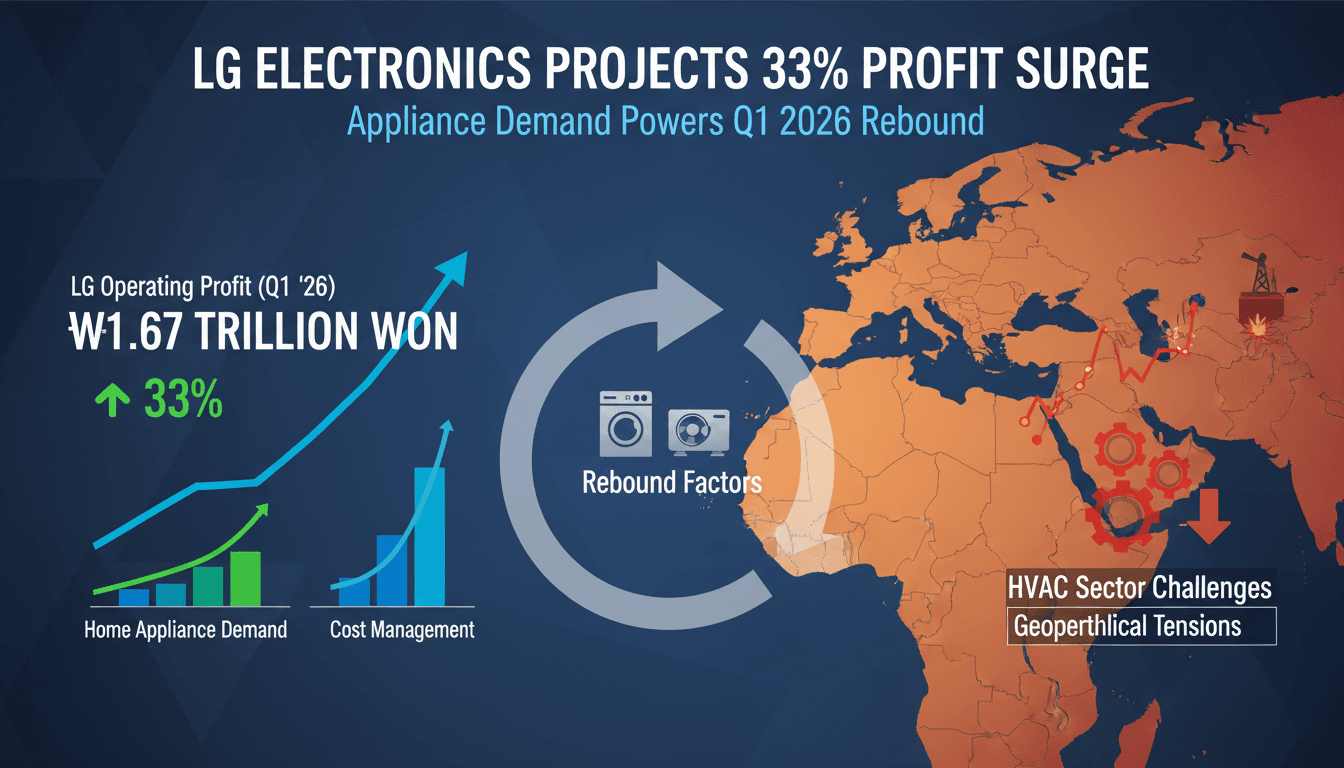
- LG Electronics announced a preliminary operating profit of 1.67 trillion won for Q1 2026, marking a 33% increase year-on-year.
- Record revenue of 23.73 trillion won was reported, exceeding analyst expectations, driven by strong home appliance sales.
- HVAC revenues declined due to geopolitical tensions in the Middle East, affecting overall performance but not enough to overshadow appliance gains.
The context you actually need
- Previous losses: LG faced an operating loss of 109 billion won in Q4 2025, the first quarterly loss in a year, primarily due to high marketing costs and sluggish demand recovery.
- Structural reforms: The company has been optimizing production and expanding into higher-margin B2B segments and subscription services to mitigate risks and enhance profitability.
- Market pressures: Global economic challenges and geopolitical uncertainties, particularly in the Middle East, have created a complex landscape for LG's HVAC division, impacting supply and costs.
What's really happening
LG Electronics' preliminary Q1 2026 results highlight a significant recovery from the previous quarter's losses, driven primarily by robust demand for home appliances. The company reported an operating profit of 1.67 trillion won, a 33% increase from the same period last year, and a record revenue of 23.73 trillion won. This performance exceeded analyst forecasts, indicating a strong rebound in core business areas.
The surge in appliance sales can be attributed to several factors. First, LG has successfully enhanced its product competitiveness, particularly in the premium segment, which has seen increased consumer interest. The shift towards online sales channels has also played a crucial role, as more consumers prefer the convenience of shopping from home. Additionally, the expansion of subscription services has provided a steady revenue stream, allowing LG to capitalize on ongoing consumer relationships.
However, not all segments are thriving. The HVAC division has faced challenges due to geopolitical tensions in the Middle East, which have led to declines in revenue and profit. This is particularly relevant for regions like Dubai and the broader UAE, where air conditioning systems are essential due to the climate. The uncertainties in the Middle East could constrain supply chains or elevate costs, affecting product availability and pricing in these markets.
Despite the initial dip in LG's shares following the announcement, market sentiment quickly shifted, with shares rebounding approximately 4% as investors reacted positively to the earnings beat. Analysts view this as a sign of recovery in LG's core business, emphasizing the importance of sustained cost controls and growth in B2B segments for the company's outlook in 2026.
The underlying mechanisms driving LG's recovery are multifaceted. The company has implemented structural reforms to optimize production and enhance margins, which have proven effective in navigating the challenges posed by global economic pressures. As LG continues to adapt to changing market conditions, its ability to balance growth in high-demand segments while managing risks in others will be critical to its long-term success.
Who feels it first (and how)
- Consumers in the UAE: Increased appliance availability and potential pricing shifts in home appliances and HVAC systems.
- Retailers: Adjustments in inventory and sales strategies to align with LG's product offerings.
- Investors: Fluctuations in LG's stock performance based on ongoing financial results and market conditions.
- Supply chain partners: Changes in demand dynamics may affect logistics and procurement strategies.
What to watch next
- Consumer demand trends: Monitoring shifts in consumer preferences for home appliances and HVAC systems will be crucial for understanding market dynamics.
- Geopolitical developments: Any escalation in Middle East tensions could further impact LG's HVAC division and overall supply chain stability.
- Financial performance updates: The final Q1 2026 results, expected later in April, will provide deeper insights into LG's operational health and future guidance.
LG Electronics has reported a 33% year-on-year increase in operating profit for Q1 2026.
Continued strong demand for home appliances will support LG's revenue growth in the coming quarters.
The long-term impact of geopolitical tensions on LG's HVAC division remains uncertain.
Frequently Asked Questions
- Why it matters?
- LG Electronics' rebound signals a potential shift in consumer demand and market dynamics, impacting both retail and supply chains globally.
- What happened (in 30 seconds)?
- LG Electronics announced a preliminary operating profit of 1.67 trillion won for Q1 2026, marking a 33% increase year-on-year. Record revenue of 23.73 trillion won was reported, exceeding analyst expectations, driven by strong home appliance sales. HVAC revenues declined due to geopolitical tensions in the Middle East, affecting overall performance but not enough to overshadow appliance gains.
- What's really happening?
- LG Electronics' preliminary Q1 2026 results highlight a significant recovery from the previous quarter's losses, driven primarily by robust demand for home appliances. The company reported an operating profit of 1.67 trillion won, a 33% increase from the same period last year, and a record revenue of 23.73 trillion won. This performance exceeded analyst forecasts, indicating a strong rebound in core business areas. The surge in appliance sales can be attributed to several factors. First, LG has
- Who feels it first (and how)?
- Consumers in the UAE: Increased appliance availability and potential pricing shifts in home appliances and HVAC systems. Retailers: Adjustments in inventory and sales strategies to align with LG's product offerings. Investors: Fluctuations in LG's stock performance based on ongoing financial results and market conditions. Supply chain partners: Changes in demand dynamics may affect logistics and procurement strategies.
- What to watch next?
- Consumer demand trends: Monitoring shifts in consumer preferences for home appliances and HVAC systems will be crucial for understanding market dynamics. Geopolitical developments: Any escalation in Middle East tensions could further impact LG's HVAC division and overall supply chain stability. Financial performance updates: The final Q1 2026 results, expected later in April, will provide deeper insights into LG's operational health and future guidance.
U.S. business news, corporate developments, and economy.
"The Wall Street Journal is respected for deep financial and economic reporting with a center-right editorial perspective."
— A47 Editor
LG Electronics Expects First-Quarter Earnings Rebound
LG Electronics has projected a significant rebound in first-quarter earnings, attributing this positive outlook to record revenue and enhanced profitability across its home-appliance, television, and vehicle-component sectors.
Market-moving headlines impacting equities, bonds, and related risk assets.
"Real-time catalysts and volatility drivers across indices and sectors."
— A47 Editor
LG Electronics flags strong Q1 profit rebound on robust appliance demand
LG Electronics has reported a strong rebound in profits for the first quarter, driven by robust demand for its appliances. This positive trend indicates a significant recovery for the company following previous challenges in the market.