
World Aquatics Allows Russian and Belarusian Swimmers to Compete Under National Flags
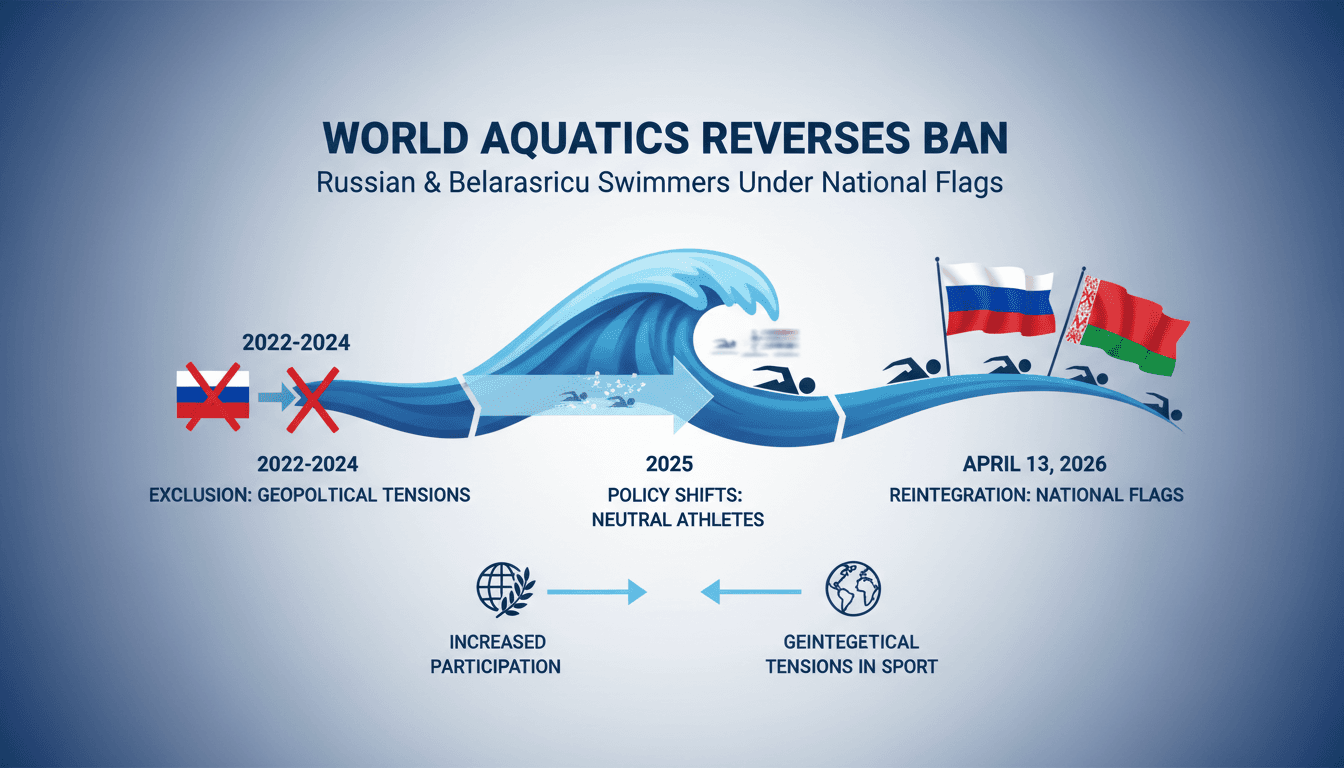
Here's what it means for you.
The decision to allow Russian and Belarusian swimmers to compete under their national flags could reshape international aquatics events, impacting athletes and fans alike.
Why it matters
This policy shift reflects ongoing geopolitical tensions and the complexities of sports diplomacy, influencing athlete participation and national representation.
What happened (in 30 seconds)
- On April 13, 2026, World Aquatics amended its guidelines, allowing senior athletes from Russia and Belarus to compete under their national flags.
- This decision reverses the neutral status imposed after Russia's 2022 invasion of Ukraine, requiring only four anti-doping tests for eligibility.
- The move follows previous permissions for junior athletes and aims to promote peaceful competition among nations.
The context you actually need
- In February 2022, World Aquatics banned all Russian and Belarusian athletes following the invasion of Ukraine, citing integrity and safety concerns.
- By September 2023, a neutral athlete program was established, allowing individual participation under strict vetting by the Aquatics Integrity Unit (AQIU).
- The recent amendment comes after over 700 screenings of athletes and reflects a broader trend of reintegrating athletes amid ongoing geopolitical conflicts.
What's really happening
The decision by World Aquatics to lift restrictions on Russian and Belarusian senior swimmers is a complex interplay of sports governance, international relations, and athlete welfare. Since the onset of the Ukraine conflict, sports organizations have grappled with how to balance integrity and inclusivity. The initial ban on Russian and Belarusian athletes was a response to geopolitical tensions, aiming to uphold the values of fair play and safety in sports. However, as the conflict has persisted, the need for a more nuanced approach has emerged.
The amendment allows these athletes to compete under their national flags, uniforms, and anthems, a significant shift from the neutral status that had been in place. This change is predicated on the completion of four successive anti-doping tests, a measure designed to maintain the integrity of the sport while facilitating the reintegration of athletes. The decision reflects a growing sentiment within the sports community that athletes should not be penalized for the actions of their governments, especially when they have demonstrated compliance with anti-doping regulations.
The broader implications of this policy shift are multifaceted. For one, it may lead to increased participation from Russian and Belarusian athletes in international competitions, potentially altering the competitive landscape. This could also influence sponsorship dynamics, as brands may reassess their associations with athletes from these nations. Furthermore, the decision has sparked significant backlash, particularly from Ukraine, which views the move as a disregard for the ongoing conflict and its impact on athletes. This tension underscores the delicate balance sports organizations must navigate between fostering competition and addressing geopolitical realities.
As the landscape of international aquatics evolves, the decision to allow national representation for Russian and Belarusian swimmers may set a precedent for other sports organizations facing similar dilemmas. The ongoing dialogue about athlete participation amid political conflict will likely continue to shape the future of competitive sports.
Who feels it first (and how)
- Athletes from Russia and Belarus: They regain the ability to compete under their national flags, impacting their careers and visibility.
- Ukrainian athletes: They may feel marginalized or pressured to compete against nations they perceive as aggressors, affecting their mental and emotional well-being.
- Sports organizations: They must navigate the backlash and potential boycotts from nations opposing the decision, influencing event attendance and sponsorships.
- Fans and spectators: They may experience mixed feelings about the participation of athletes from nations involved in geopolitical conflicts, affecting their engagement with the sport.
What to watch next
- Reactions from other sports organizations: How will other governing bodies respond to this precedent? Their decisions could influence global sports diplomacy.
- Impact on international competitions: Monitor participation rates and performance outcomes in upcoming events, particularly those involving Russian and Belarusian athletes.
- Sponsorship dynamics: Watch for shifts in sponsorship deals and partnerships as brands reassess their affiliations in light of this policy change.
The amendment allows Russian and Belarusian swimmers to compete under national flags after meeting anti-doping requirements.
Increased participation from these athletes in international competitions will occur, potentially altering competitive dynamics.
The long-term impact on athlete relations and sponsorships remains uncertain as the sports community navigates these geopolitical tensions.
Frequently Asked Questions
- Why it matters?
- This policy shift reflects ongoing geopolitical tensions and the complexities of sports diplomacy, influencing athlete participation and national representation.
- What happened (in 30 seconds)?
- On April 13, 2026, World Aquatics amended its guidelines, allowing senior athletes from Russia and Belarus to compete under their national flags. This decision reverses the neutral status imposed after Russia's 2022 invasion of Ukraine, requiring only four anti-doping tests for eligibility. The move follows previous permissions for junior athletes and aims to promote peaceful competition among nations.
- What's really happening?
- The decision by World Aquatics to lift restrictions on Russian and Belarusian senior swimmers is a complex interplay of sports governance, international relations, and athlete welfare. Since the onset of the Ukraine conflict, sports organizations have grappled with how to balance integrity and inclusivity. The initial ban on Russian and Belarusian athletes was a response to geopolitical tensions, aiming to uphold the values of fair play and safety in sports. However, as the conflict has persiste
- Who feels it first (and how)?
- Athletes from Russia and Belarus: They regain the ability to compete under their national flags, impacting their careers and visibility. Ukrainian athletes: They may feel marginalized or pressured to compete against nations they perceive as aggressors, affecting their mental and emotional well-being. Sports organizations: They must navigate the backlash and potential boycotts from nations opposing the decision, influencing event attendance and sponsorships. Fans and spectators: They may ex
- What to watch next?
- Reactions from other sports organizations: How will other governing bodies respond to this precedent? Their decisions could influence global sports diplomacy. Impact on international competitions: Monitor participation rates and performance outcomes in upcoming events, particularly those involving Russian and Belarusian athletes. Sponsorship dynamics: Watch for shifts in sponsorship deals and partnerships as brands reassess their affiliations in light of this policy change.
Breaking news, scores, player stats, and analysis across all major sports.
"Yahoo Sports is a comprehensive digital sports destination known for stats, fantasy sports, and real-time updates."
— A47 Editor
Russian, Belarusian swimmers free to compete under own flag
Athletes from Russia and Belarus are now permitted to compete under their own flags in senior World Aquatics events, following the lifting of a ban by the global governing body. This decision allows these athletes to participate with their national u...
Global news coverage with extensive reporting on Middle Eastern conflicts and geopolitics.
"Al Jazeera is a Qatar-based broadcaster known for wide regional coverage and alternative perspectives."
— A47 Editor
Flag, anthem restrictions dropped for Russian, Belarusian swimmers
Sports-governing bodies have announced the removal of restrictions on the display of flags and anthems for Russian and Belarusian swimmers, signaling a significant shift in policy towards athletes from these countries. This decision reflects a broade...
Comprehensive coverage of Middle Eastern and global issues.
"Al Jazeera is a prominent voice from the Global South, especially the Middle East, with an emphasis on underreported stories."
— A47 Editor
Flag, anthem restrictions dropped for Russian, Belarusian swimmers
Sports-governing bodies have announced the removal of restrictions on the display of flags and anthems for Russian and Belarusian swimmers, signaling a significant shift in policy towards athletes from these countries. This decision reflects a broade...
Regional and international reporting focused on Middle Eastern politics, diplomacy, and economics.
"Asharq Al-Awsat is a Saudi-owned international newspaper reflecting mainstream Gulf political perspectives."
— A47 Editor
Russian Swimmers to be Allowed to Compete with Flag and Anthem after Restrictions Dropped
Russian swimmers will now be permitted to compete under their national flag and anthem following the lifting of previous restrictions. This decision marks a significant change in the competitive landscape for these athletes, allowing them to represen...
Pan-Arab news coverage spanning politics, business, sports, and regional affairs.
"Asharq Al-Awsat reflects a broad Arab editorial perspective with strong attention to regional geopolitics."
— A47 Editor
السماح للسباحين الروس والبيلاروس بالمشاركة في البطولات «دون قيود»
The International Swimming Federation announced on Monday the lifting of all restrictions on Russian and Belarusian swimmers, allowing them to participate in international competitions without limitations. This decision marks a significant change in ...