
2026 Iran War Causes Economic and Security Crisis in Arabian Peninsula
Here's what it means for you.
If you operate in or with the Arabian Peninsula, the ongoing conflict is reshaping market dynamics and security protocols that could directly impact your business operations.
Why it matters
The 2026 Iran War is destabilizing the Arabian Peninsula, leading to economic disruptions and heightened security risks that affect global trade and investment.
What happened (in 30 seconds)
- February 28, 2026: U.S. and Israeli airstrikes target Iran, killing Supreme Leader Ali Khamenei and escalating tensions.
- Iran retaliates: Launching over 1,200 missiles and 2,300 drones at Gulf states, leading to significant infrastructure damage.
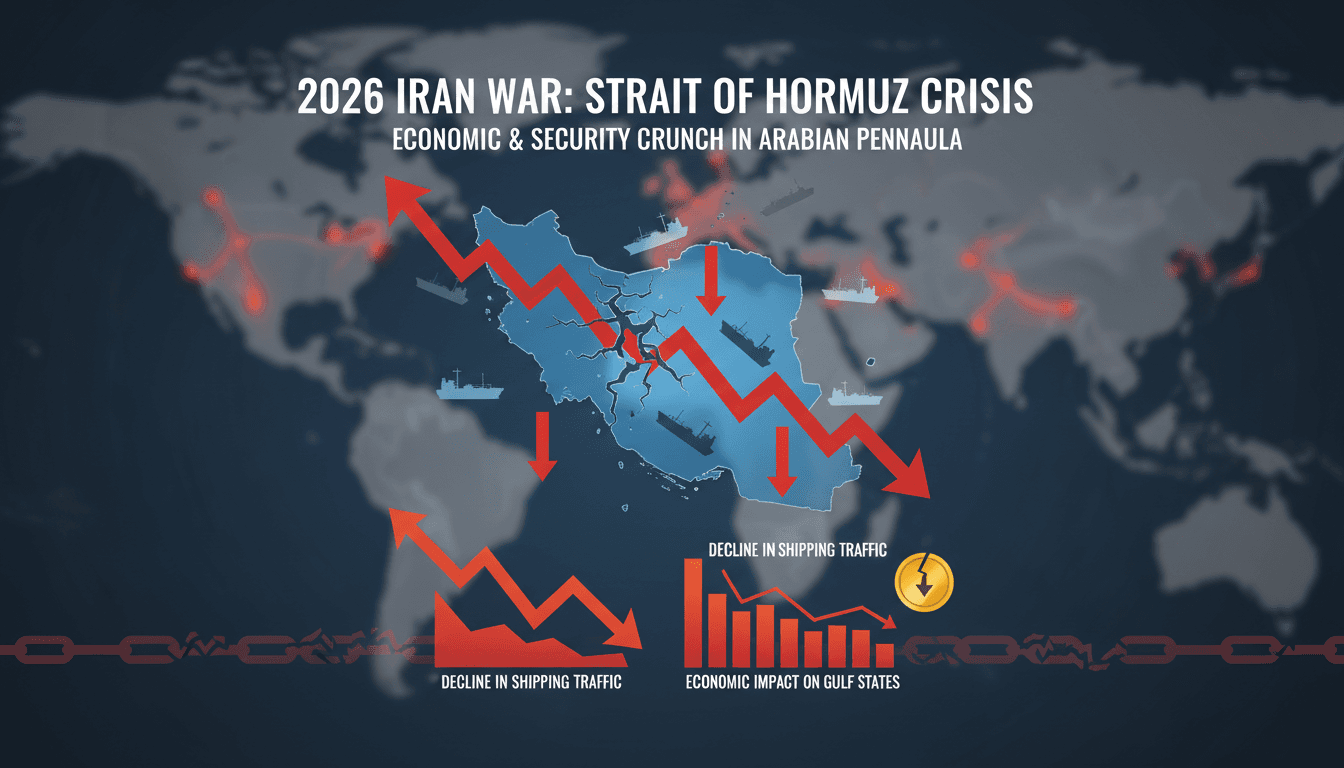
- Current status: A strained ceasefire is in place, but the Strait of Hormuz remains largely closed, severely impacting shipping traffic.
The context you actually need
- Failed negotiations: U.S.-Iran talks collapsed over nuclear issues, leading to military action.
- Regional alliances: Gulf states are aligning more closely with the U.S. for security, while also fearing Iranian retaliation.
- Economic fallout: The conflict has led to a projected 1.5% growth in the UAE, down from previous forecasts, with significant losses in tourism and trade.
What's really happening
The 2026 Iran War has emerged from a complex backdrop of failed diplomatic negotiations and escalating military tensions. Following the collapse of U.S.-Iran talks mediated by Oman and Pakistan, the U.S. and Israel launched Operation Epic Fury, targeting Iranian nuclear sites and leadership. This preemptive strike was a response to Iran's continued nuclear enrichment and support for proxy groups, which the U.S. deemed unacceptable.
In retaliation, Iran initiated Operation True Promise IV, unleashing a barrage of missiles and drones aimed at U.S. bases and Gulf infrastructure. The immediate impact was catastrophic: key facilities in Dubai and Saudi Arabia were damaged, leading to a significant decline in regional tourism and economic activity. The closure of the Strait of Hormuz, a vital shipping route for oil and goods, has further exacerbated the situation, with ship traffic plummeting to less than 10% of pre-war levels.
The economic implications are profound. The UAE, which was projected to see robust growth, is now facing a contraction, with forecasts slashed to just 1.5%. The tourism sector, a cornerstone of Dubai's economy, is expected to lose between 23 to 38 million visitors in 2026 alone. This downturn has led to stock market losses estimated at $120 billion and prompted the government to announce a $270 million relief package for affected businesses and families.
Moreover, the conflict has heightened regional tensions, with Gulf states like Saudi Arabia and Bahrain supporting U.S. military actions while also fearing Iranian reprisals. The economic measures taken include prosecutions for misinformation related to the war and efforts to repatriate refugees, indicating a shift in domestic policies as governments brace for prolonged instability.
As the war continues, the geopolitical landscape is shifting, with Gulf states increasingly reliant on U.S. military support while grappling with the economic fallout of the conflict. The situation remains fluid, with potential for further escalation or a drawn-out conflict that could reshape the region's security and economic frameworks.
Who feels it first (and how)
- Tourism operators: Significant declines in visitor numbers lead to layoffs and business closures.
- Construction and service workers: Migrant workers face job losses as economic activity contracts.
- Investors: Stock market volatility and economic uncertainty create a challenging environment for investment.
- Shipping companies: The blockade and reduced traffic through the Strait of Hormuz disrupt global supply chains.
What to watch next
- Ceasefire negotiations: Continued efforts to establish a lasting ceasefire could stabilize the region and restore some economic activity.
- Oil prices: Fluctuations in Brent crude prices, currently above $120/barrel, will impact global markets and regional economies.
- U.S. military presence: Changes in U.S. military strategy in the Gulf could signal shifts in regional security dynamics and economic stability.
The conflict has led to significant economic disruptions and infrastructure damage across the Arabian Peninsula.
Continued volatility in oil prices and regional security risks will persist as the war unfolds.
The long-term geopolitical implications of the war and its impact on U.S.-Iran relations remain uncertain.
Frequently Asked Questions
- Why it matters?
- The 2026 Iran War is destabilizing the Arabian Peninsula, leading to economic disruptions and heightened security risks that affect global trade and investment.
- What happened (in 30 seconds)?
- February 28, 2026: U.S. and Israeli airstrikes target Iran, killing Supreme Leader Ali Khamenei and escalating tensions. Iran retaliates: Launching over 1,200 missiles and 2,300 drones at Gulf states, leading to significant infrastructure damage. Current status: A strained ceasefire is in place, but the Strait of Hormuz remains largely closed, severely impacting shipping traffic.
- What's really happening?
- The 2026 Iran War has emerged from a complex backdrop of failed diplomatic negotiations and escalating military tensions. Following the collapse of U.S.-Iran talks mediated by Oman and Pakistan, the U.S. and Israel launched Operation Epic Fury, targeting Iranian nuclear sites and leadership. This preemptive strike was a response to Iran's continued nuclear enrichment and support for proxy groups, which the U.S. deemed unacceptable. In retaliation, Iran initiated Operation True Promise IV, unlea
- Who feels it first (and how)?
- Tourism operators: Significant declines in visitor numbers lead to layoffs and business closures. Construction and service workers: Migrant workers face job losses as economic activity contracts. Investors: Stock market volatility and economic uncertainty create a challenging environment for investment. Shipping companies: The blockade and reduced traffic through the Strait of Hormuz disrupt global supply chains.
- What to watch next?
- Ceasefire negotiations: Continued efforts to establish a lasting ceasefire could stabilize the region and restore some economic activity. Oil prices: Fluctuations in Brent crude prices, currently above $120/barrel, will impact global markets and regional economies. U.S. military presence: Changes in U.S. military strategy in the Gulf could signal shifts in regional security dynamics and economic stability.
European coverage of Middle East politics and security issues.
"France 24 offers international reporting with a European editorial perspective."
— A47 Editor
Will the Gulf ever be the same? Trump, Iran and the Arabian Peninsula
The ongoing tensions between the United States and Iran have escalated, with President Donald Trump enforcing a naval blockade of the Strait of Hormuz, a critical chokepoint for global oil and gas supplies. This move follows the breakdown of peace ta...
Coverage of current events and conflicts in the Middle East.
"France 24 is viewed as a globally focused outlet with balanced coverage and a European perspective."
— A47 Editor
Will the Gulf ever be the same? Trump, Iran and the Arabian Peninsula
The ongoing tensions between the United States and Iran have escalated, with President Donald Trump enforcing a naval blockade of the Strait of Hormuz, a critical chokepoint for global oil and gas supplies. This move follows the breakdown of peace ta...
Global markets, investing, and macroeconomics from a premier financial newsroom.
"Bloomberg is respected for in-depth financial reporting and data-driven analysis."
— A47 Editor
US, Iran Consider Second Round of Peace Talks
The United States and Iran are preparing for a second round of peace talks as tensions escalate in the Strait of Hormuz, a critical maritime route for global oil shipments. This comes in the wake of a U.S. blockade initiated by President Trump, which...
Arabic-language reporting on global and regional news.
"BBC Arabic is part of the BBC, generally regarded for editorial standards and broad international coverage."
— A47 Editor
ترامب يلمّح لاستئناف المحادثات مع إيران هذا الأسبوع رغم استمرار الحصار البحري الأمريكي، ولبنان وإسرائيل يتفقان على إجراء محادثات مباشرة
Lebanon and Israel have agreed to engage in direct negotiations following productive talks in Washington, while President Trump hinted at the resumption of discussions with Iran this week despite the ongoing U.S. naval blockade. BBC has verified the ...
National headlines across the United States including breaking stories and societal issues.
"NBC News is a mainstream media outlet known for comprehensive national and international news coverage with a centrist to slightly left-leaning editorial tone."
— A47 Editor
Trump claims new Iran talks starting soon amid blockade
President Trump announced that new talks with Iran are expected to commence soon, despite the ongoing U.S. Navy blockade of the Strait of Hormuz, which was implemented following the collapse of previous peace negotiations. This blockade aims to restr...
Pan-Arab news coverage spanning politics, business, sports, and regional affairs.
"Asharq Al-Awsat reflects a broad Arab editorial perspective with strong attention to regional geopolitics."
— A47 Editor
جولة تفاوض تلوح من «حصار هرمز»
A new round of negotiations between Washington and Tehran appears imminent amid rising maritime tensions in the Strait of Hormuz, following comments from U.S. President Donald Trump indicating that talks with Iran may resume soon.
Capitol Hill news, legislation, and policy insight.
"The Hill specializes in U.S. politics and policy, with a focus on Capitol Hill developments and a reputation for insider reporting."
— A47 Editor
Trump puts squeeze on Iran as GOP worries about price at the pump
President Trump has announced a U.S. Navy blockade of the Strait of Hormuz, a strategic maritime route, following the collapse of peace talks with Iran. This blockade aims to cut off Iranian oil exports and increase pressure on Iran's economy and its...
Global markets, investing, and macroeconomics from a premier financial newsroom.
"Bloomberg is respected for in-depth financial reporting and data-driven analysis."
— A47 Editor
Oil Declines as US, Iran Weigh More Talks With Blockade in Place
Oil prices have declined as indications emerge that the United States and Iran may resume peace talks, coinciding with the initiation of a U.S. blockade of the Strait of Hormuz, a crucial maritime route for global oil shipments.
Breaking news, politics, business, and entertainment from the U.S. and around the world.
"The New York Post is a tabloid-format newspaper known for its sensationalist headlines and conservative-leaning editorial tone."
— A47 Editor
Trump mulls fresh strikes on Iran after peace talks collapse
President Donald Trump is contemplating new military strikes against Iran following the collapse of peace negotiations, with the U.S. Navy set to blockade the Strait of Hormuz. This escalation is a response to Iran's actions that have reportedly halt...