
World Bank Plans $80–100 Billion Aid for Nations Affected by Iran War
Here's what it means for you.
If you’re in a sector tied to global supply chains or energy markets, the fallout from the Iran War could directly impact your business operations and costs.
Why it matters
The World Bank's funding initiative signals a significant response to geopolitical instability, affecting global economic forecasts and market dynamics.
What happened (in 30 seconds)
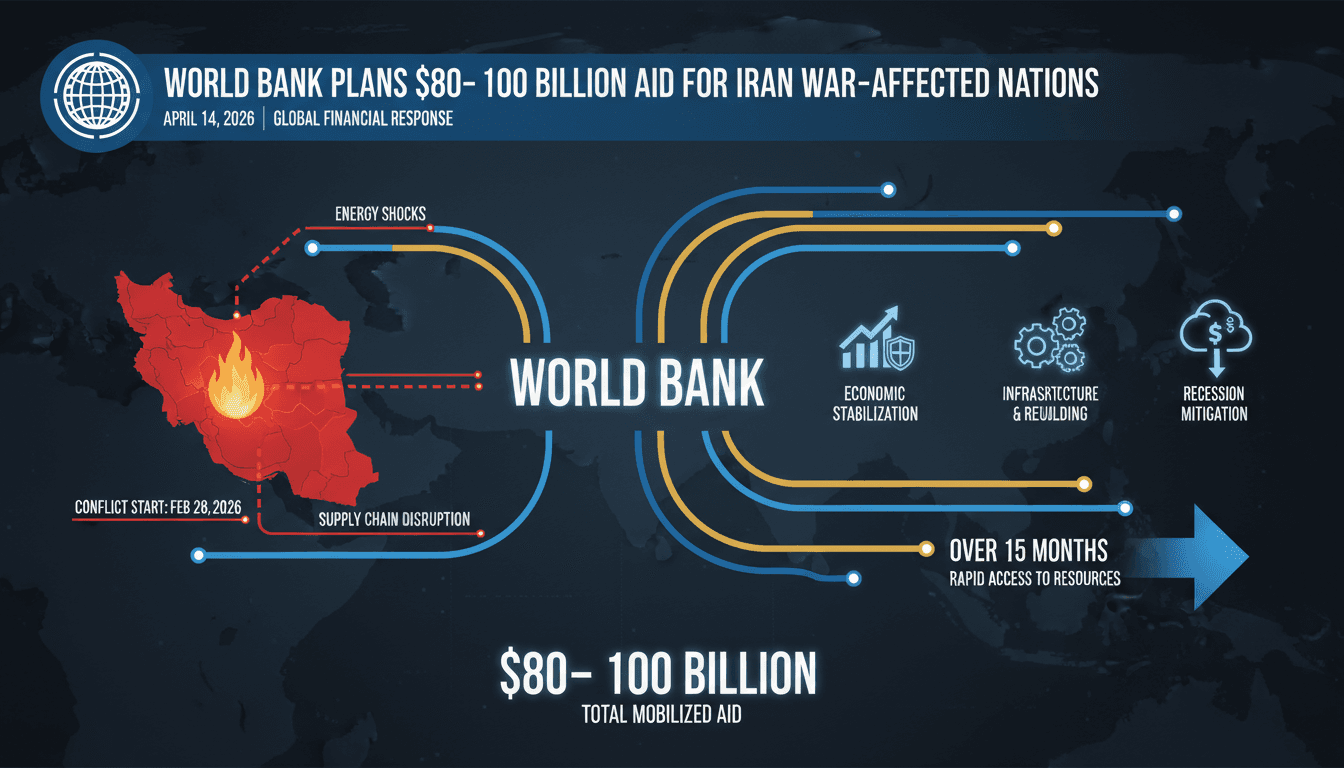
- On April 14, 2026, World Bank President Ajay Banga announced plans to mobilize $80–100 billion to support countries impacted by the Iran War.
- Immediate access of $20–25 billion will be available through crisis response windows, with further funding contingent on the conflict's duration.
- The war, which began on February 28, 2026, has already caused a 50% spike in oil prices and significant disruptions in global supply chains.
The context you actually need
- The 2026 Iran War was ignited by U.S. and Israeli airstrikes, leading to Iranian retaliation that has destabilized energy markets.
- Global growth forecasts have been downgraded, with the IMF predicting a 0.3–0.4% reduction in growth due to the conflict.
- Regional economies, particularly in the Middle East, are facing heightened risks of recession, prompting urgent multilateral financial responses.
What's really happening
The announcement by World Bank President Ajay Banga comes at a critical juncture in global economics, as the Iran War has already begun to ripple through markets and economies worldwide. The conflict, which started with targeted airstrikes on Iranian military sites, has escalated tensions in the Middle East, leading to Iranian missile and drone attacks on Gulf energy infrastructure. This has resulted in a staggering 50% increase in oil prices, which is a direct consequence of supply chain disruptions and fears of further escalation.
The World Bank's proposed funding of $80–100 billion over the next 15 months is a strategic move to mitigate the economic fallout from this conflict. The initial $20–25 billion available immediately is designed to provide urgent relief to countries most affected by the war, particularly those reliant on stable energy prices and supply chains. This funding exceeds the $70 billion allocated during the COVID-19 pandemic, underscoring the severity of the current crisis.
The tiered funding approach reflects an understanding that the duration of the conflict will dictate the level of economic support needed. As the war continues, the World Bank plans to repurpose existing funds and utilize its balance sheet to provide additional resources. This proactive stance is crucial as the IMF has already warned of a potential global recession if the conflict persists, with growth forecasts being slashed in response to the ongoing instability.
The implications of this funding initiative extend beyond immediate financial aid. It signals a shift in how international financial institutions respond to geopolitical crises, emphasizing the need for rapid and flexible financial tools to address emerging challenges. Countries in the Middle East, particularly those like the UAE that have already experienced direct impacts from Iranian strikes, are likely to be among the first to access these funds. The UAE government has already announced a 1 billion AED ($270 million) relief package to support local businesses and families affected by the conflict.
As the situation evolves, the World Bank's funding strategy will be closely monitored by global markets, as it could influence investor confidence and economic stability in the region. The interconnectedness of global economies means that disruptions in one area can have cascading effects, making this funding initiative not just a regional concern but a global one.
Who feels it first (and how)
- Energy Sector: Companies reliant on stable oil prices will face immediate cost pressures and potential supply chain disruptions.
- Developing Economies: Nations heavily dependent on energy imports or tourism may experience severe economic downturns.
- Investors: Market volatility will affect investment strategies, particularly in emerging markets and sectors tied to energy and commodities.
- Local Businesses: In conflict-affected regions, businesses may struggle with operational costs and reduced consumer spending.
What to watch next
- Energy Prices: Monitor fluctuations in oil prices as they will directly impact inflation and economic stability globally.
- Global Growth Forecasts: Watch for updates from the IMF and World Bank regarding growth projections, as these will influence market confidence.
- Regional Stability: Keep an eye on developments in the Middle East, particularly any signs of de-escalation or further conflict, which will affect funding needs.
The World Bank has committed to mobilizing $80–100 billion for war-impacted countries.
Continued volatility in energy markets and potential recessionary pressures in developing economies.
The long-term effectiveness of the World Bank's funding strategy in stabilizing affected regions.
Frequently Asked Questions
- Why it matters?
- The World Bank's funding initiative signals a significant response to geopolitical instability, affecting global economic forecasts and market dynamics.
- What happened (in 30 seconds)?
- On April 14, 2026, World Bank President Ajay Banga announced plans to mobilize $80–100 billion to support countries impacted by the Iran War. Immediate access of $20–25 billion will be available through crisis response windows, with further funding contingent on the conflict's duration. The war, which began on February 28, 2026, has already caused a 50% spike in oil prices and significant disruptions in global supply chains.
- What's really happening?
- The announcement by World Bank President Ajay Banga comes at a critical juncture in global economics, as the Iran War has already begun to ripple through markets and economies worldwide. The conflict, which started with targeted airstrikes on Iranian military sites, has escalated tensions in the Middle East, leading to Iranian missile and drone attacks on Gulf energy infrastructure. This has resulted in a staggering 50% increase in oil prices, which is a direct consequence of supply chain disrup
- Who feels it first (and how)?
- Energy Sector: Companies reliant on stable oil prices will face immediate cost pressures and potential supply chain disruptions. Developing Economies: Nations heavily dependent on energy imports or tourism may experience severe economic downturns. Investors: Market volatility will affect investment strategies, particularly in emerging markets and sectors tied to energy and commodities. Local Businesses: In conflict-affected regions, businesses may struggle with operational costs and reduced cons
- What to watch next?
- Energy Prices: Monitor fluctuations in oil prices as they will directly impact inflation and economic stability globally. Global Growth Forecasts: Watch for updates from the IMF and World Bank regarding growth projections, as these will influence market confidence. Regional Stability: Keep an eye on developments in the Middle East, particularly any signs of de-escalation or further conflict, which will affect funding needs.
Arabic-language digital news outlet covering UAE, regional, and international developments with broad general-news coverage.
"Al Ain News coverage typically blends UAE-focused reporting with wider Arab regional and international news."
— A47 Editor
بانجا: البنك الدولي قد يوفر 100 مليار دولار للدول المتضررة من حرب إيران
The World Bank is seeking to mobilize between $80 billion and $100 billion to finance countries most affected by the repercussions of the war in the Middle East over the next 15 months, surpassing the $70 billion provided during the COVID-19 pandemic...
Arabic-language UAE newspaper coverage focused on domestic affairs, public institutions, business, society, and regional developments.
"Al Khaleej coverage generally reflects a mainstream UAE editorial lens with strong attention to public affairs, institutions, and regional developments."
— A47 Editor
100 مليار دولار من البنك الدولي للدول المتضررة من الحرب
On Tuesday, Ajay Banga, the President of the World Bank, announced that the institution could potentially raise between $80 billion to $100 billion to support countries severely affected by the repercussions of war in the Middle East over the next 15...
Jordanian news and regional updates.
"Roya News is a Jordanian outlet focused on breaking news and local affairs."
— A47 Editor
البنك الدولي: 100 مليار دولار تمويلات محتملة للدول المتضررة من الحرب
The World Bank has indicated the potential for $100 billion in funding for countries affected by war, particularly if the conflict persists and financial needs escalate. This funding is aimed at addressing the urgent financial requirements of member ...