
Kuwait Intercepts 28 Iranian Drones Targeting Energy Infrastructure
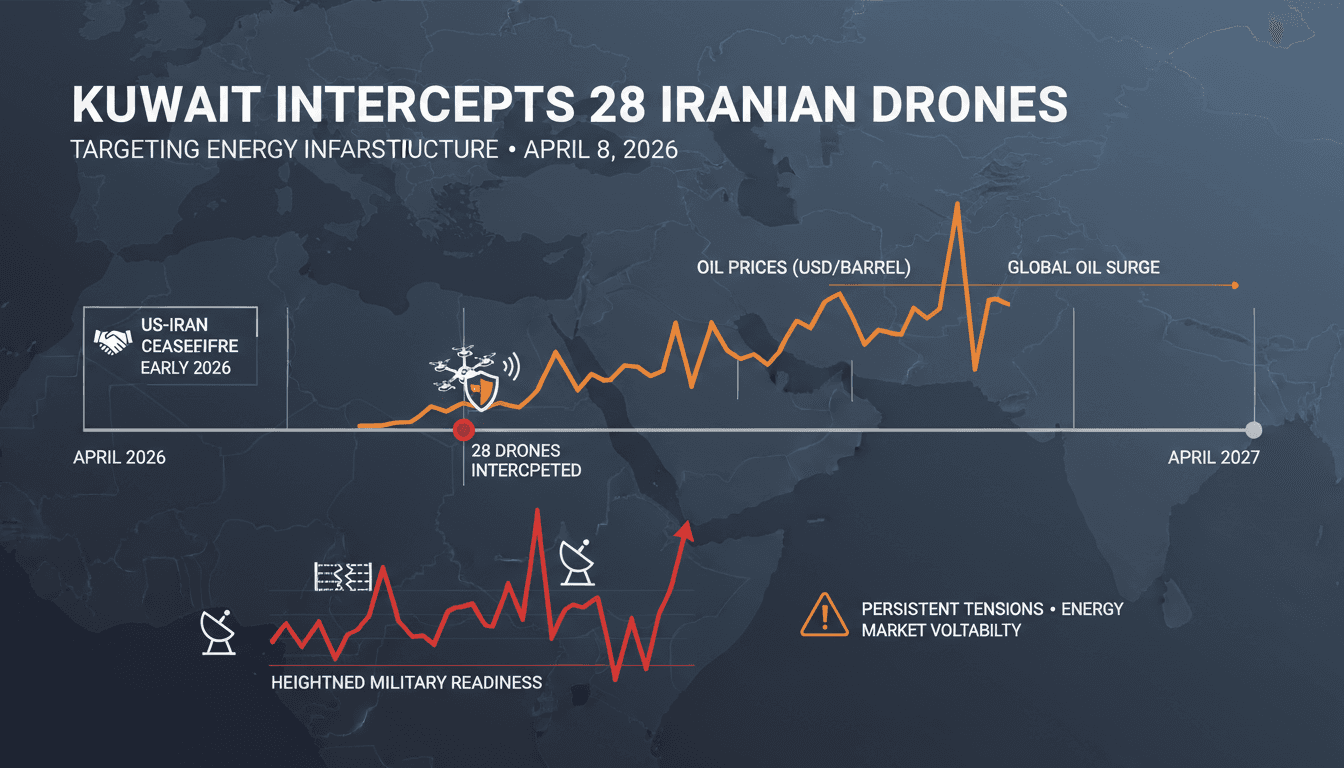
Here's what it means for you.
If you're in the Gulf region, the recent drone attacks could affect your daily life through heightened security measures and potential economic instability.
Why it matters
This incident underscores the fragility of regional security and the potential for escalated conflict, impacting energy markets and economic stability.
What happened (in 30 seconds)
- Kuwaiti air defenses intercepted 28 Iranian drones targeting critical energy infrastructure on April 8, 2026.
- Significant damage was reported to oil facilities, power plants, and water desalination stations, although there were no casualties.
- The attacks occurred despite a US-Iran ceasefire, highlighting ongoing tensions in the region.
The context you actually need
- This incident is part of a broader pattern of Iranian strikes against Gulf states amid escalating US-Iran hostilities.
- Kuwait's interception follows similar actions by the UAE and Bahrain, indicating a coordinated threat to regional security.
- The attacks have immediate implications for oil prices, which surged over 5% following the strikes, affecting both local economies and global markets.
What's really happening
On April 8, 2026, at 8:00 AM local time, Kuwaiti air defenses detected a wave of Iranian drones aimed at critical infrastructure. By mid-morning, the Ministry of Defense confirmed the interception of 28 drones, although several managed to breach defenses, causing substantial damage to energy sites in southern Kuwait. This incident occurred against a backdrop of a fragile ceasefire between the US and Iran, which had been announced just days prior. The ongoing hostilities reflect a complex web of geopolitical tensions, particularly between Iran and Gulf Cooperation Council (GCC) nations.
Iran's drone and missile capabilities have evolved significantly over the past few years, allowing for more sophisticated and widespread attacks. The strikes on Kuwait are part of a broader Iranian strategy to retaliate against perceived aggressions from the US and its allies, including Israel. This strategy has involved targeting critical infrastructure in Gulf states, aiming to disrupt economies and instill fear among populations.
The Kuwaiti government has activated emergency protocols, including shelter advisories for residents, while also initiating repairs on the damaged infrastructure. The UN Security Council has condemned the attacks as a violation of the ceasefire, yet the reality on the ground shows that such agreements are tenuous at best. The GCC nations have united in their condemnation of the strikes, signaling a collective stance against Iranian aggression.
The economic implications are immediate and significant. Oil prices reacted sharply to the news, with Brent crude surging over 5%, reflecting market anxieties about supply disruptions. This volatility can have a cascading effect on regional economies, particularly for residents who may face increased costs for fuel and goods. Additionally, the heightened security measures in the region, including increased military readiness and potential disruptions at major airports like Dubai International, could affect travel and commerce.
As tensions escalate, the potential for further military engagements looms large. The situation remains fluid, with both sides likely to maintain a posture of readiness. The implications of these drone attacks extend beyond immediate security concerns, impacting economic stability and the geopolitical landscape of the Gulf region.
Who feels it first (and how)
- Residents of Kuwait: Increased air raid warnings and potential disruptions to daily life.
- Energy sector workers: Heightened security measures and possible operational disruptions.
- Travelers in the Gulf: Delays and increased scrutiny at airports, particularly in Dubai.
- Investors in oil markets: Volatility in oil prices affecting investment strategies and economic forecasts.
What to watch next
- Further military responses from Kuwait and GCC nations: How these nations choose to respond could escalate or de-escalate tensions.
- Oil price fluctuations: Continued volatility in oil markets will impact regional economies and consumer prices.
- US-Iran diplomatic efforts: Any shifts in negotiations or ceasefire agreements will be crucial in determining the trajectory of regional stability.
The interception of 28 drones and significant damage to Kuwaiti infrastructure.
Increased military readiness and security measures across the Gulf region.
The long-term impact on US-Iran relations and the effectiveness of any diplomatic resolutions.
Frequently Asked Questions
- Why it matters?
- This incident underscores the fragility of regional security and the potential for escalated conflict, impacting energy markets and economic stability.
- What happened (in 30 seconds)?
- Kuwaiti air defenses intercepted 28 Iranian drones targeting critical energy infrastructure on April 8, 2026. Significant damage was reported to oil facilities, power plants, and water desalination stations, although there were no casualties. The attacks occurred despite a US-Iran ceasefire, highlighting ongoing tensions in the region.
- What's really happening?
- On April 8, 2026, at 8:00 AM local time, Kuwaiti air defenses detected a wave of Iranian drones aimed at critical infrastructure. By mid-morning, the Ministry of Defense confirmed the interception of 28 drones, although several managed to breach defenses, causing substantial damage to energy sites in southern Kuwait. This incident occurred against a backdrop of a fragile ceasefire between the US and Iran, which had been announced just days prior. The ongoing hostilities reflect a complex web of
- Who feels it first (and how)?
- Residents of Kuwait: Increased air raid warnings and potential disruptions to daily life. Energy sector workers: Heightened security measures and possible operational disruptions. Travelers in the Gulf: Delays and increased scrutiny at airports, particularly in Dubai. Investors in oil markets: Volatility in oil prices affecting investment strategies and economic forecasts.
- What to watch next?
- Further military responses from Kuwait and GCC nations: How these nations choose to respond could escalate or de-escalate tensions. Oil price fluctuations: Continued volatility in oil markets will impact regional economies and consumer prices. US-Iran diplomatic efforts: Any shifts in negotiations or ceasefire agreements will be crucial in determining the trajectory of regional stability.
Arabic-language political and world news coverage for UAE readers.
"Emarat Al Youm world coverage usually presents international developments through a UAE and Arab audience lens."
— A47 Editor
الدفاع الكويتية: الدفاعات الجوية تتصدى لموجة من هجمات الطائرات الإيرانية المسيّرة منذ 8 صباحاً الدفاع الكويتية: الدفاعات الجوية تتصدى لموجة من هجمات الطائرات الإيرانية المسيّرة منذ 8 صباحاً
The Kuwaiti Ministry of Defense, represented by Colonel Saud Abdulaziz Al-Otaibi, announced that the country's air defenses have been actively responding to a wave of Iranian drone attacks since 8 AM. This ongoing situation highlights the heightened ...
Arabic-language UAE newspaper coverage focused on domestic affairs, public institutions, business, society, and regional developments.
"Al Khaleej coverage generally reflects a mainstream UAE editorial lens with strong attention to public affairs, institutions, and regional developments."
— A47 Editor
الكويت: نتعامل مع موجة مكثفة من الهجمات الإيرانية الآثمة
The Kuwaiti Ministry of Defense, represented by Colonel Saud Abdulaziz Al-Attuan, announced that the country is facing an intense wave of Iranian attacks. This statement highlights the ongoing security challenges Kuwait is experiencing in the region,...