
France and Britain Initiate Diplomatic Talks for Multinational Mission in Strait of Hormuz
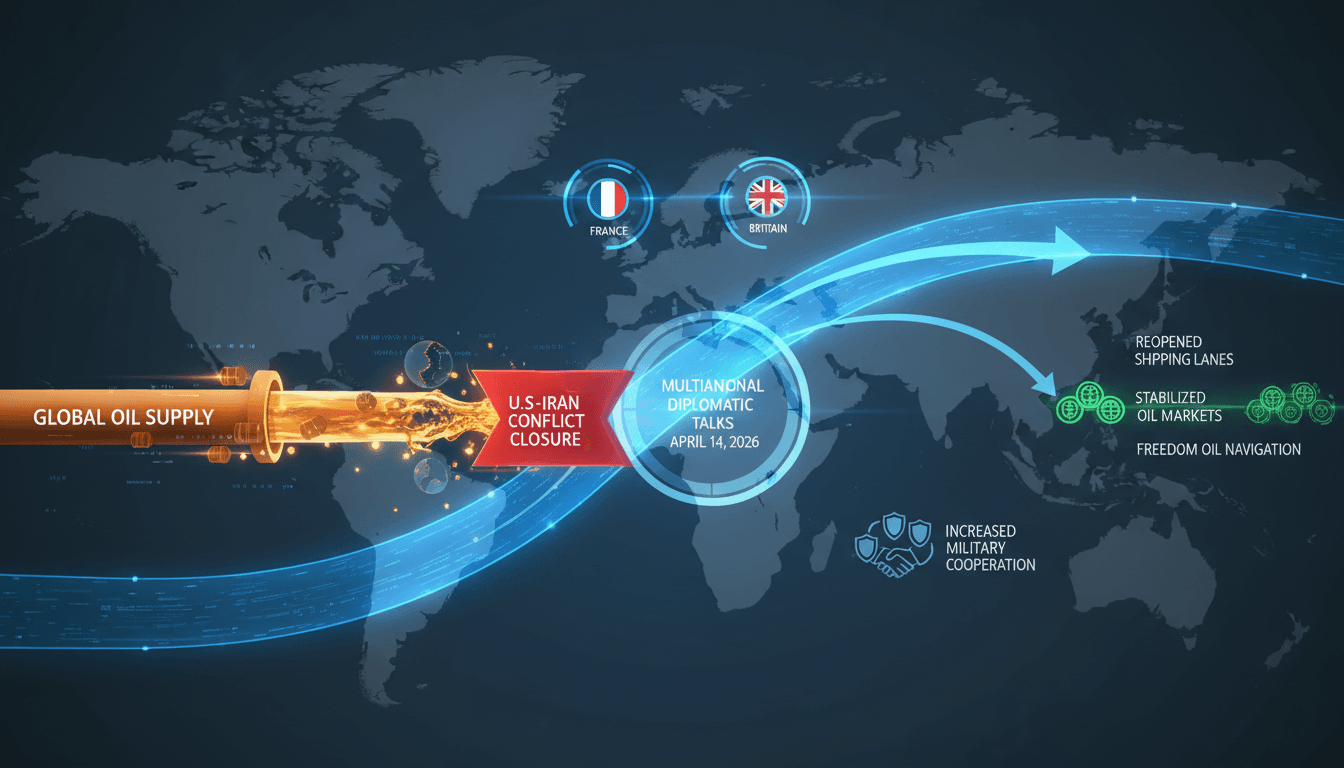
Here's what it means for you.
If you rely on global shipping or oil markets, the outcomes of these talks could directly impact your costs and supply chains.
Why it matters
The Strait of Hormuz is a critical chokepoint for global oil trade, and its security affects energy prices and shipping logistics worldwide.
What happened (in 30 seconds)
- Diplomatic talks led by France and Britain began on April 14, 2026, focusing on a multinational mission in the Strait of Hormuz.
- Key issues include sanctions against Iran, the release of detained seafarers, and resuming shipping operations amid ongoing disruptions.
- A principal conference is scheduled for April 18, 2026, co-chaired by French President Emmanuel Macron and British Prime Minister Keir Starmer, involving around 40 nations.
The context you actually need
- The Strait of Hormuz is vital for global oil trade, with 20% of seaborne oil passing through it.
- Recent tensions escalated following the U.S.-Iran conflict, leading to the effective closure of the strait and stranding hundreds of vessels.
- European nations are seeking to establish a defensive mission distinct from U.S. actions to ensure maritime security and freedom of navigation.
What's really happening
The diplomatic talks initiated by France and Britain are a response to the escalating crisis in the Strait of Hormuz, which has seen significant disruptions to global oil supply since the U.S.-Iran conflict began on February 28, 2026. The Iranian Revolutionary Guard Corps (IRGC) has enforced strict territorial waters protocols, leading to the effective closure of the strait on March 4, 2026. This closure has stranded hundreds of vessels, including oil tankers, and reduced shipping traffic to less than 10% of normal levels.
The urgency of these talks stems from the strait's role as a critical artery for global oil trade, with 20% of the world's seaborne oil passing through it. The ongoing closure has not only disrupted oil supply but has also led to increased shipping costs and delays, impacting economies far beyond the immediate region. As a result, European nations, particularly France and Britain, are taking the lead in seeking a multinational approach to restore security and freedom of navigation in the strait.
The preparatory working groups are focusing on several key issues: the imposition of sanctions against Iran, the release of detained seafarers, and coordination with the shipping industry to resume transit operations. The upcoming video conference on April 18, co-chaired by Macron and Starmer, aims to outline the parameters of a multinational mission that could involve naval deployments to ensure safe passage through the strait.
The geopolitical landscape is further complicated by the U.S. port blockades on Iran, which have heightened tensions and prompted calls for intervention from Gulf states, including the UAE. The UAE government is already feeling the effects of the strait's closure, with rising fuel costs and inflation impacting consumers and businesses alike. As shipping firms comply with Iranian protocols amid mine threats, the situation remains fluid, with potential implications for global oil prices and supply chains.
Who feels it first (and how)
- Shipping companies: Facing increased costs and operational challenges due to the closure and compliance with Iranian protocols.
- Oil traders: Experiencing volatility in oil prices as markets react to the ongoing situation and diplomatic efforts.
- Consumers in Dubai: Encountering higher fuel prices and grocery inflation as supply chains are disrupted.
- Governments in Gulf states: Advocating for international intervention to restore maritime security and protect economic interests.
What to watch next
- Outcomes of the April 18 conference: The decisions made could set the tone for international maritime security and impact oil prices.
- Iran's response to sanctions: Any retaliatory measures could escalate tensions and further disrupt shipping in the region.
- Shipping traffic resumption: Monitoring the number of vessels transiting the strait will provide insights into the effectiveness of diplomatic efforts.
The Strait of Hormuz is critical for global oil supply, with 20% of seaborne oil passing through it.
Increased shipping costs and potential delays in supply chains as a result of ongoing tensions.
The long-term effectiveness of the proposed multinational mission and its impact on regional stability.
Frequently Asked Questions
- Why it matters?
- The Strait of Hormuz is a critical chokepoint for global oil trade, and its security affects energy prices and shipping logistics worldwide.
- What happened (in 30 seconds)?
- Diplomatic talks led by France and Britain began on April 14, 2026, focusing on a multinational mission in the Strait of Hormuz. Key issues include sanctions against Iran, the release of detained seafarers, and resuming shipping operations amid ongoing disruptions. A principal conference is scheduled for April 18, 2026, co-chaired by French President Emmanuel Macron and British Prime Minister Keir Starmer, involving around 40 nations.
- What's really happening?
- The diplomatic talks initiated by France and Britain are a response to the escalating crisis in the Strait of Hormuz, which has seen significant disruptions to global oil supply since the U.S.-Iran conflict began on February 28, 2026. The Iranian Revolutionary Guard Corps (IRGC) has enforced strict territorial waters protocols, leading to the effective closure of the strait on March 4, 2026. This closure has stranded hundreds of vessels, including oil tankers, and reduced shipping traffic to les
- Who feels it first (and how)?
- Shipping companies: Facing increased costs and operational challenges due to the closure and compliance with Iranian protocols. Oil traders: Experiencing volatility in oil prices as markets react to the ongoing situation and diplomatic efforts. Consumers in Dubai: Encountering higher fuel prices and grocery inflation as supply chains are disrupted. Governments in Gulf states: Advocating for international intervention to restore maritime security and protect economic interests.
- What to watch next?
- Outcomes of the April 18 conference: The decisions made could set the tone for international maritime security and impact oil prices. Iran's response to sanctions: Any retaliatory measures could escalate tensions and further disrupt shipping in the region. Shipping traffic resumption: Monitoring the number of vessels transiting the strait will provide insights into the effectiveness of diplomatic efforts.
Regional coverage and analysis focused on politics, diplomacy, and business across the Middle East.
"Al-Monitor is known for analytical reporting on Middle East politics and policy developments."
— A47 Editor
Hormuz mission talks to focus on sanctions, seafarer releases, shipping readiness – source
Diplomatic meetings led by France and Britain are set to take place this week, focusing on a potential multinational mission in the Strait of Hormuz. The discussions will involve working groups addressing sanctions on Iran, the release of seafarers, ...
Regional and international reporting focused on Middle Eastern politics, diplomacy, and economics.
"Asharq Al-Awsat is a Saudi-owned international newspaper reflecting mainstream Gulf political perspectives."
— A47 Editor
France, UK to Host Hormuz Talks Friday
France and the UK are set to co-host a video conference on Friday to discuss a multinational mission aimed at securing the Strait of Hormuz, a vital maritime route for global oil transport. This initiative follows rising tensions in the region, parti...
Arabic-language political and world news coverage for UAE readers.
"Emarat Al Youm world coverage usually presents international developments through a UAE and Arab audience lens."
— A47 Editor
فرنسا وبريطانيا تعدّان لمحاثات بشأن مهمة "سلمية" لمضيق هرمز فرنسا وبريطانيا تعدّان لمحاثات بشأن مهمة "سلمية" لمضيق هرمز
France and Britain announced on Monday that they are preparing for discussions this week to explore the establishment of a multinational mission aimed at facilitating the safe passage of vessels through the Strait of Hormuz. This initiative comes ami...