
ICAO Council Condemns Iran's Missile and Drone Attacks on Regional Airspace
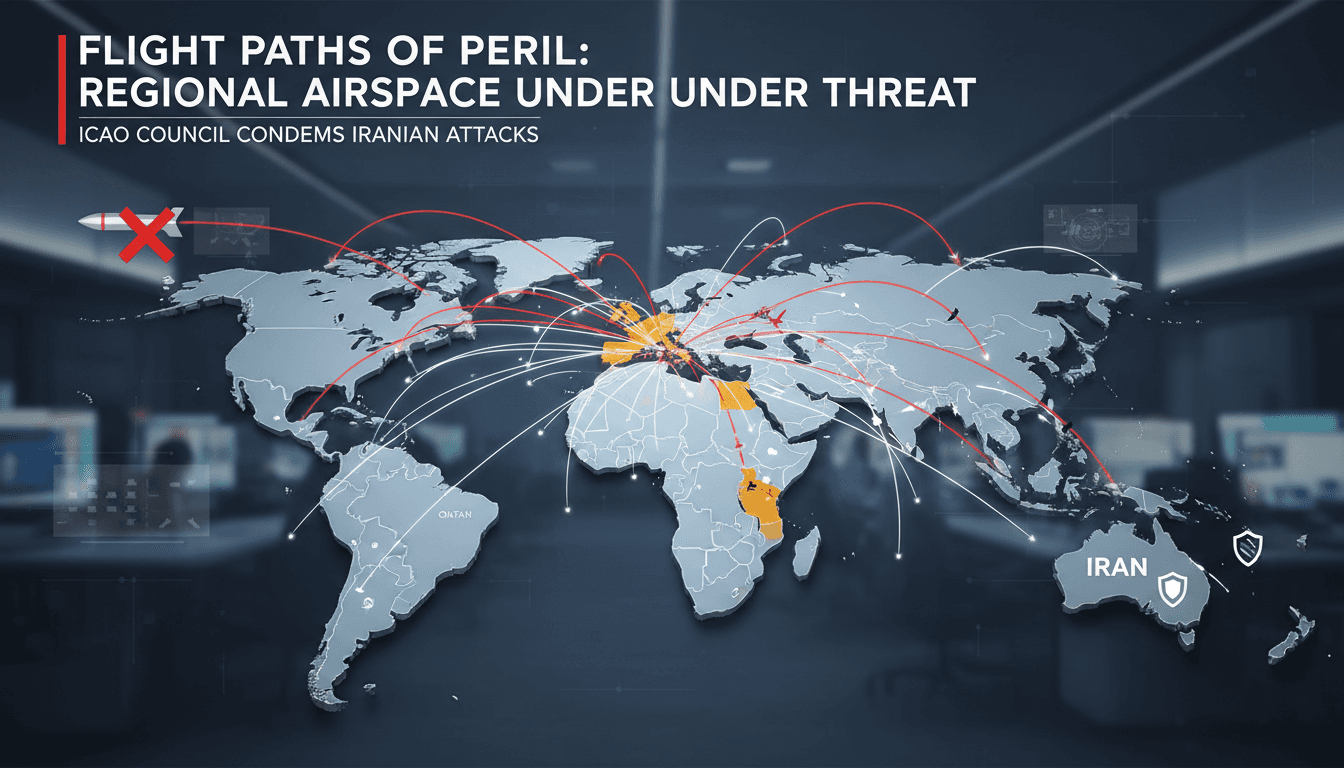
Here's what it means for you.
If you travel through the Gulf region, expect increased flight disruptions and heightened security measures.
Why it matters
The recent attacks threaten not only regional stability but also global aviation safety and economic interests.
What happened (in 30 seconds)
- On 28 February 2026, Iran initiated missile and drone attacks on the airspace of multiple Gulf states and Jordan.
- On 31 March 2026, the ICAO Council condemned these actions, citing violations of international aviation laws and risks to civilian flights.
- As of 7 April 2026, UAE defenses intercepted a total of 2,767 Iranian projectiles, highlighting the ongoing threat to regional airspace.
The context you actually need
- Iran's attacks began amid rising tensions following U.S.-Israeli military actions against Iranian targets, perceived as retaliation against Gulf states hosting U.S. assets.
- The ICAO resolution was a response to a joint paper from nine Arab states, emphasizing the need for international oversight of airspace violations.
- Global airlines have already canceled over 23,000 flights, affecting thousands of passengers and increasing operational costs.
What's really happening
The recent missile and drone attacks by Iran represent a significant escalation in regional tensions, particularly following U.S.-Israeli strikes on Iranian military targets. This backdrop of conflict has led to a series of retaliatory actions by Iran, which have directly impacted the airspace of Gulf Cooperation Council (GCC) states and Jordan. The attacks, which began on 28 February 2026, involved missiles and drones that not only crossed into sovereign airspace but also intersected active commercial flight paths without prior warnings. This blatant disregard for international aviation norms has triggered widespread condemnation from the International Civil Aviation Organization (ICAO) and the United Nations.
The ICAO's resolution, adopted on 31 March 2026, underscores the gravity of these violations, which contravene Article 1 of the Chicago Convention that governs state sovereignty over airspace. The resolution was informed by a joint working paper submitted by nine Arab states, highlighting the urgent need for collective action against threats to civil aviation. The attacks have led to airspace closures, significant disruptions in international air transport, and heightened security measures across the region.
As a direct consequence, the aviation sector has faced severe operational challenges. Dubai International Airport, a major global hub, has been particularly affected, with multiple strikes leading to flight cancellations and evacuations. The economic implications are profound, with global airlines forced to reroute flights, resulting in increased jet fuel costs and operational delays. The situation has also prompted a wave of expatriate exodus from the region, driven by safety concerns and economic instability.
The ongoing conflict has created a precarious environment for air travel, with airlines and passengers alike facing uncertainty. The ICAO's continued oversight and the referral of the situation to UN bodies signal a potential for escalatory measures if Iran does not cease its attacks. As the situation evolves, the aviation industry must navigate these challenges while ensuring the safety of its operations and passengers.
Who feels it first (and how)
- Airline operators: Facing increased operational costs and flight cancellations.
- Travelers: Experiencing delays, cancellations, and heightened security measures.
- Expatriates in the region: Facing safety concerns leading to potential relocations.
- Local businesses: Experiencing economic disruptions due to decreased travel and tourism.
What to watch next
- ICAO's ongoing monitoring: Watch for updates on airspace safety and potential sanctions against Iran.
- Flight cancellations and rerouting: Monitor the impact on global airlines and passenger travel patterns.
- Regional military responses: Keep an eye on any escalatory military actions from GCC states in response to continued threats.
The ICAO has condemned Iran's actions and referred the situation to UN bodies.
Continued disruptions in air travel and increased security measures in the Gulf region.
The long-term implications for regional stability and international relations.
Frequently Asked Questions
- Why it matters?
- The recent attacks threaten not only regional stability but also global aviation safety and economic interests.
- What happened (in 30 seconds)?
- On 28 February 2026, Iran initiated missile and drone attacks on the airspace of multiple Gulf states and Jordan. On 31 March 2026, the ICAO Council condemned these actions, citing violations of international aviation laws and risks to civilian flights. As of 7 April 2026, UAE defenses intercepted a total of 2,767 Iranian projectiles, highlighting the ongoing threat to regional airspace.
- What's really happening?
- The recent missile and drone attacks by Iran represent a significant escalation in regional tensions, particularly following U.S.-Israeli strikes on Iranian military targets. This backdrop of conflict has led to a series of retaliatory actions by Iran, which have directly impacted the airspace of Gulf Cooperation Council (GCC) states and Jordan. The attacks, which began on 28 February 2026, involved missiles and drones that not only crossed into sovereign airspace but also intersected active com
- Who feels it first (and how)?
- Airline operators: Facing increased operational costs and flight cancellations. Travelers: Experiencing delays, cancellations, and heightened security measures. Expatriates in the region: Facing safety concerns leading to potential relocations. Local businesses: Experiencing economic disruptions due to decreased travel and tourism.
- What to watch next?
- ICAO's ongoing monitoring: Watch for updates on airspace safety and potential sanctions against Iran. Flight cancellations and rerouting: Monitor the impact on global airlines and passenger travel patterns. Regional military responses: Keep an eye on any escalatory military actions from GCC states in response to continued threats.
English-language reporting on Saudi politics, policy, and society.
"Saudi Gazette reflects mainstream Saudi institutional perspectives."
— A47 Editor
ICAO condemns Iran attacks on aviation
The International Civil Aviation Organization (ICAO) has condemned Iran's missile attacks targeting civil aviation, emphasizing the risks these actions pose to international air travel and safety. This resolution was adopted during the council's sixt...
English-language reporting focused on Saudi Arabia and regional affairs.
"Saudi Gazette provides English-language coverage that often aligns with mainstream Saudi news priorities."
— A47 Editor
ICAO condemns Iran attacks on aviation
The International Civil Aviation Organization (ICAO) has condemned Iran's missile attacks targeting civil aviation, emphasizing the risks these actions pose to international air travel and safety. This resolution was adopted during the council's sixt...
Regional and international reporting focused on Middle Eastern politics, diplomacy, and economics.
"Asharq Al-Awsat is a Saudi-owned international newspaper reflecting mainstream Gulf political perspectives."
— A47 Editor
ICAO Condemns Iranian Attacks on Civil Aviation
The International Civil Aviation Organization (ICAO) has condemned recent Iranian attacks on civil aviation, highlighting the serious implications for international air travel and safety. These attacks are perceived as violations of established norms...
Pan-Arab news coverage spanning politics, business, sports, and regional affairs.
"Asharq Al-Awsat reflects a broad Arab editorial perspective with strong attention to regional geopolitics."
— A47 Editor
قرار دولي يدين الهجمات الإيرانية على الطيران المدني في المنطقة
The International Civil Aviation Organization (ICAO) Council issued a resolution during its 237th session condemning the Iranian attacks on civil aviation in several countries in the region. This decision reflects growing international concern over t...
Arabic-language coverage of political affairs and current events.
"Okaz political coverage typically follows mainstream Saudi framing on national and regional affairs."
— A47 Editor
«إيكاو»: هجمات إيران انتهاك صريح لاتفاقية شيكاغو ومبدأ السيادة الكاملة للدول على أجوائها
The International Civil Aviation Organization (ICAO) condemned Iran's attacks on several regional countries during its 237th session, following a joint paper submitted by Saudi Arabia, the UAE, Jordan, Bahrain, Kuwait, Qatar, Oman, Egypt, and Morocco...